
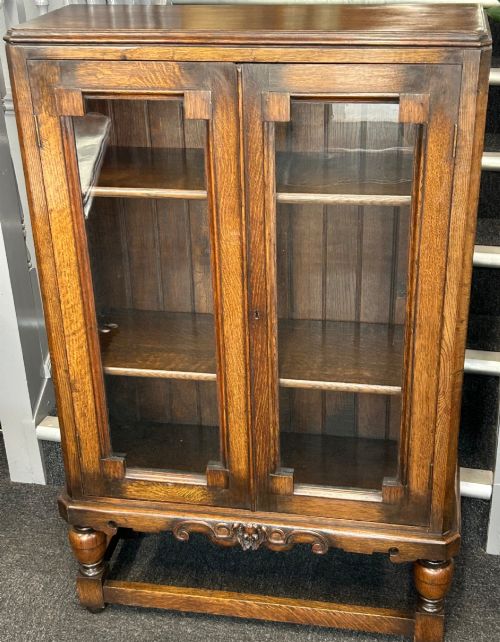
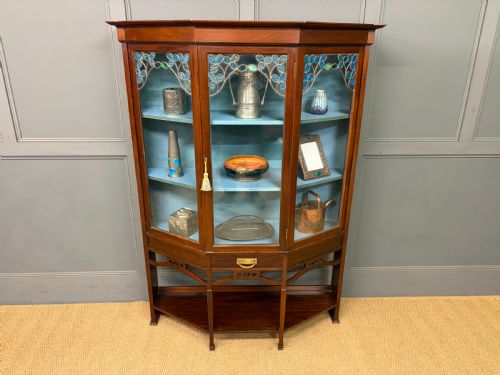


Arts and Crafts Vitrine
An arts and crafts vitrine brings honest construction and botanical lines to a room, offering glazed display space for treasured objects.
Arts and Crafts Vitrine
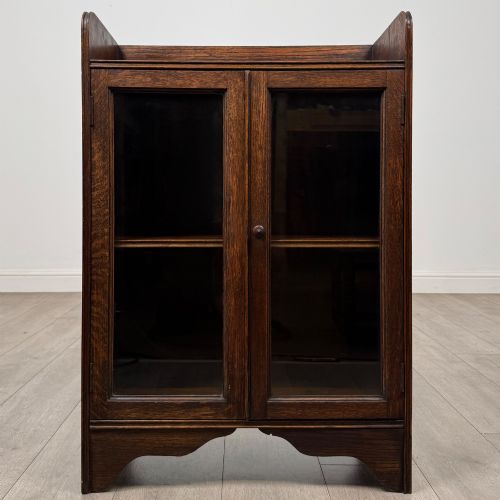
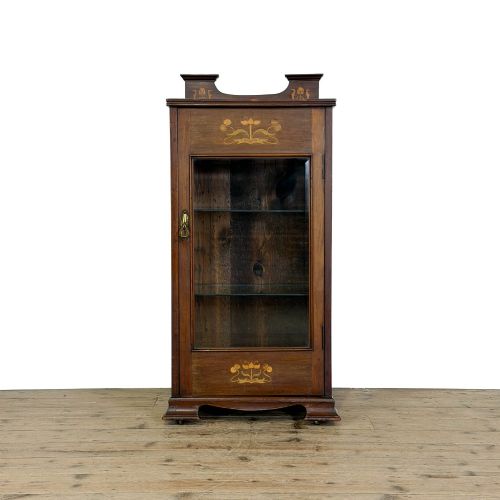
An arts and crafts vitrine is a glazed display cabinet or side cabinet designed to exhibit ceramics and curiosities while displaying the hand of the maker. These pieces emerge predominantly from the Edwardian period, sitting alongside examples dated around eighteen-ninety, nineteen-hundred, and nineteen-twenty.
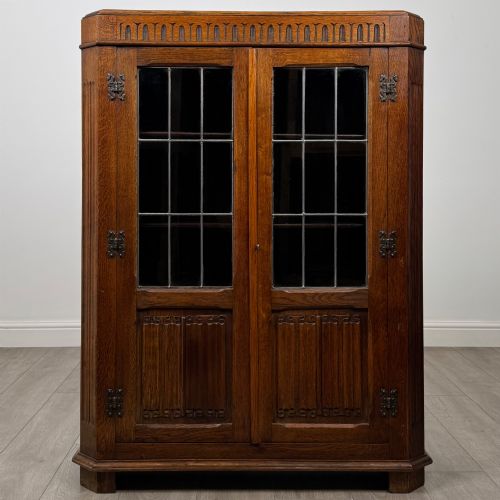
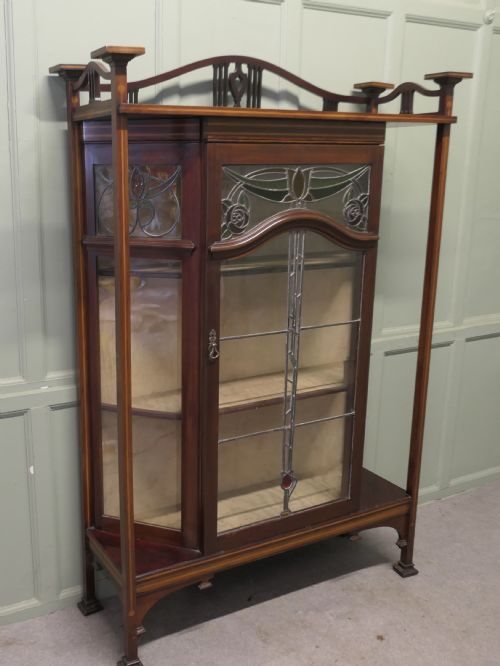
The forms span upright display cabinets with leaded or glass doors and lower side cabinets intended for domestic living spaces. Makers of the time drew upon the Arts and Crafts philosophy, incorporating Art Nouveau influences and occasional Jacobean Revival motifs.
Buyers encountering this selection will find an emphasis on functional timber carcases, whether configured as tall china cabinets or low bijouterie furniture. Each format showcases the distinctive aesthetic values of the late nineteenth and early twentieth centuries.
How they were made
Cabinetmakers constructed these pieces primarily in oak and mahogany, often enhanced with delicate fruitwood inlay and wood inlay to decorate door panels and friezes. Brass fittings and iron hardware secure the doors and drawers, maintaining structural integrity with functional metalwork.
Glazing forms a central element of the construction, utilising clear glass panes sometimes framed by lead cames to create geometric or organic motifs. Joinery relies on traditional carpentry methods suited to timber frames, ensuring durability across decades of domestic use.
Listings feature pieces spanning the Edwardian period, nineteen-hundred, eighteen-ninety, and nineteen-twenty, constructed in oak, mahogany, and fruitwood inlay.
What varies in quality
The distinction between standard production and exceptional work rests on the finesse of the timber selection and the precision of the inlay. Cabinets attributed to established workshops exhibit superior grain matching and more intricate botanical marquetry.
Hardware choice and glazing execution further separate the tiers, with hand-beaten brass hinges and leaded glass detailing marking out finer examples. The integration of structural joinery with artistic design dictates the standing of each piece.
Shapland and Petter
The Arts and Crafts Vitrine Glossary
- Vitrine
- A glass-fronted cabinet designed for displaying fine ceramics, glass, or curiosities. These pieces protect delicate items from dust while making them visible from multiple angles.
- Bijouterie cabinet
- A specialised glass-topped or glazed table-like cabinet intended for small precious objects and jewellery. They frequently feature lift-up lids or shallow display drawers.
- Inlay
- A decorative technique where contrasting woods or materials are fitted into recessions flush with the surrounding surface. Fruitwoods are commonly utilised for this detail.
- Lead cames
- Flexible lead strips used to join individual pieces of glass together in a window or cabinet door. They form structural grids that support the design.
- Side cabinet
- A versatile low storage and display furniture item positioned against a wall in dining or living rooms. They combine enclosed cupboards with upper display surfaces.
Arts and Crafts Vitrine: Frequently Asked Questions
What is an arts and crafts vitrine?
An arts and crafts vitrine is a glazed display cabinet rooted in the design movements of the late nineteenth and early twentieth centuries. These cabinets prioritize honest construction, visible timber grain, and artistic hardware.
They serve as functional storage while providing a dedicated space to exhibit decorative ceramics and personal collections within the home.
How do I date these cabinets?
Dating relies on examining the timber species, construction techniques, and stylistic markers present in the cabinet design. Pieces from this tradition typically date from the Edwardian era through to the nineteen-twenties.
Art Nouveau flourishes, specific inlay patterns, and original brass or iron hardware provide reliable clues to the exact period of manufacture.
Where were these cabinets used?
These cabinets found their place in the principal reception rooms, drawing rooms, and studies of Edwardian homes. They were positioned to catch natural light and showcase the owner's refined taste.
Today, they function equally well in modern interiors for displaying books, ceramics, and small sculptures while adding historic character to a space.
What woods were used?
Makers predominantly selected oak and mahogany as the primary structural timbers for these display cabinets. These woods offered both strength and attractive grain patterns suited to polished finishes.
Fruitwood and varied wood inlay were frequently incorporated to create decorative botanical motifs across the cabinet doors and friezes.