



Art Nouveau Glass Bowl
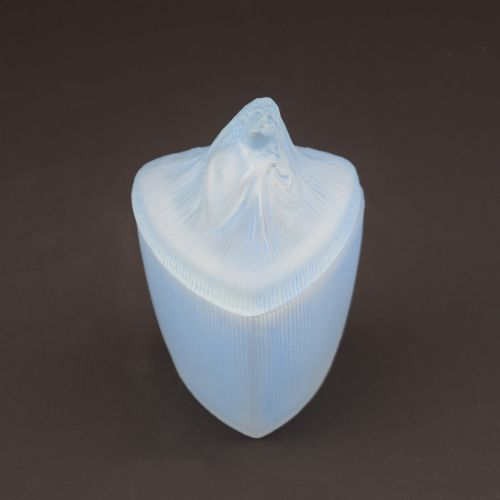
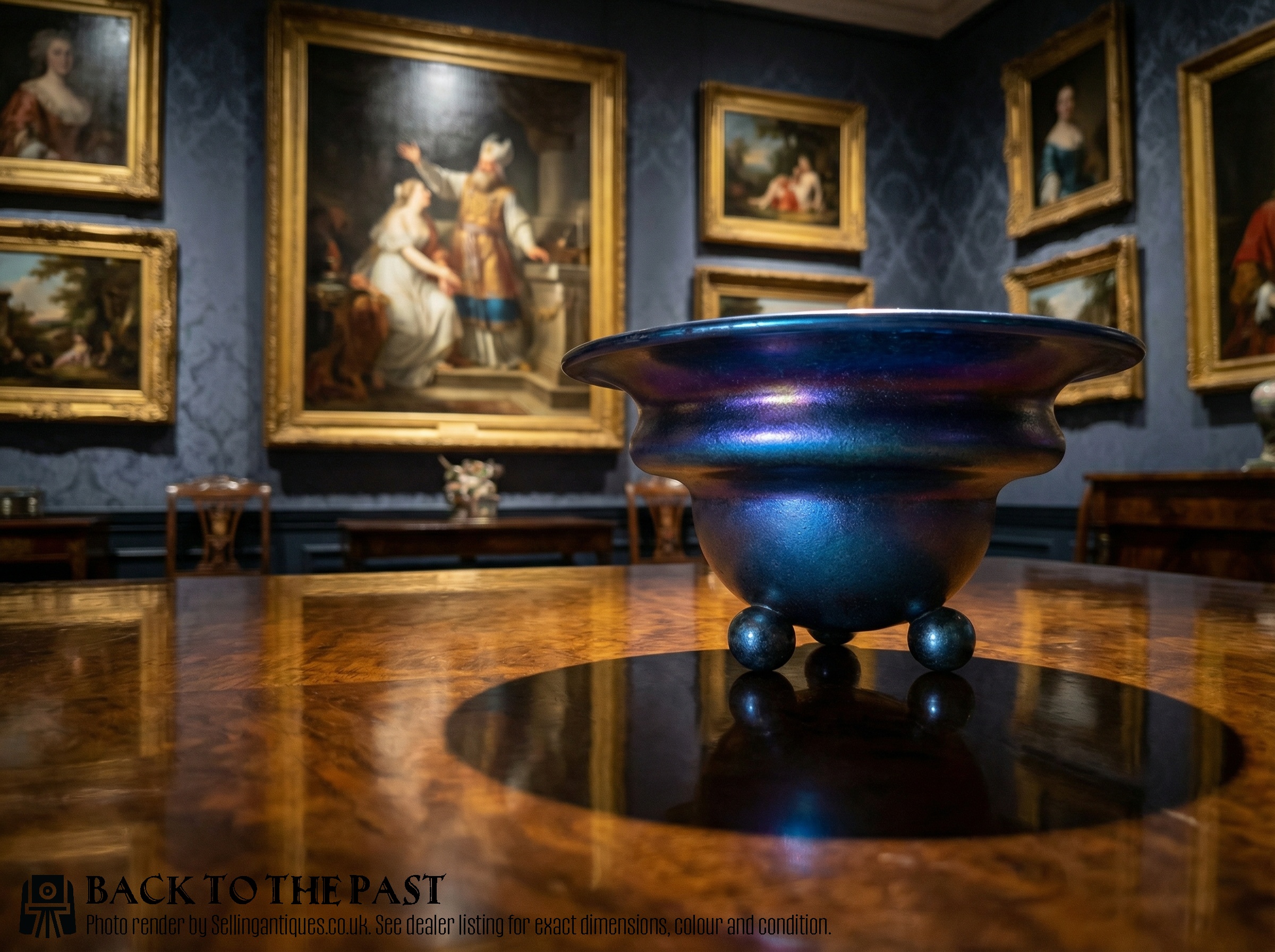
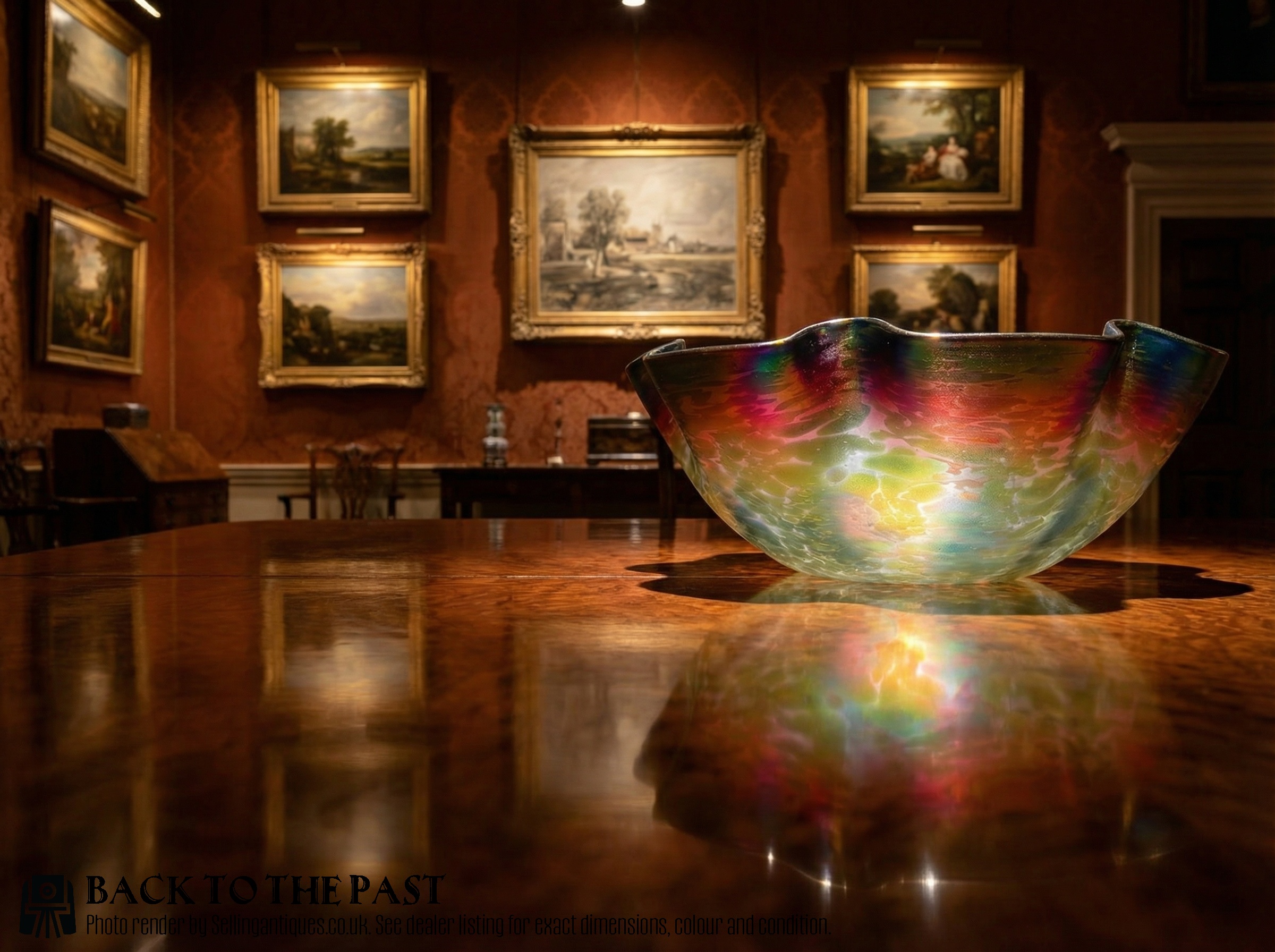
An art nouveau glass bowl brings organic fluid curves and luminous iridescence into a room, capturing the defining aesthetic of the turn of the twentieth century.
Art Nouveau Glass Bowl
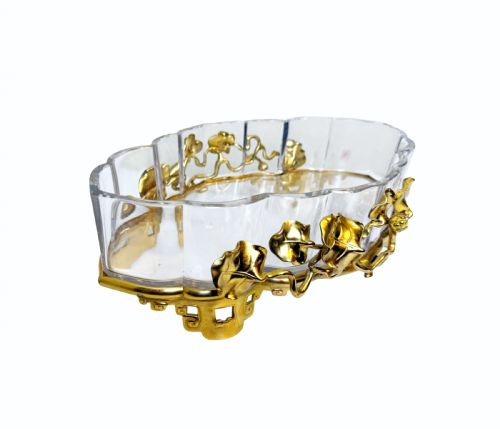
An art nouveau glass bowl embodies the botanical motifs and sinuous lines popular across Europe from the late nineteenth century into the early decades of the twentieth century. These objects function primarily as decorative bowls, centrepieces, and fruit vessels designed to showcase both the glassware and the metal mounts that often accompany them.
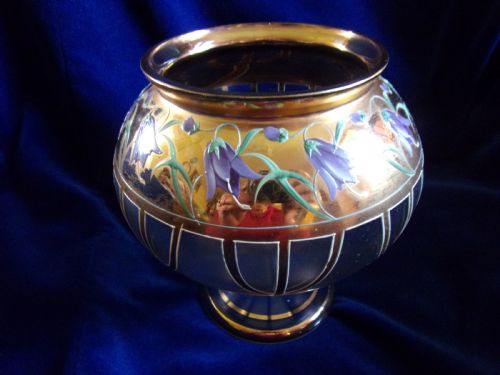
The pieces appearing most frequently on this page date from around nineteen hundred, during the height of the French Belle Epoque and Edwardian periods. They frequently incorporate green vaseline glass, iridescent finishes, or crystal forms shaped into baskets, tazzas, and pedestal stands.
Makers and manufacturers from this era utilised diverse regional styles, spanning French cameo glass, Bohemian iridescent vessels, and German metalwork frames. Buyers encounter both standalone glass vessels and complex compositions featuring silver plated, pewter, or gilt bronze mounts.
How they were made
Makers combined blown or moulded glass with metalwork frames in silver plate, pewter, brass, and gilt bronze. Techniques such as acid etching, cameo carving, and internal cracking created textured surfaces mimicking natural plant forms.
Decoration relied heavily on applied enamels, gilding, and paste work to render floral motifs like poppy flowers, rose hips, and fruiting vines. Iridescent effects were achieved through metallic vapour treatments applied to the hot glass during the blowing process.
Art Nouveau Glass Bowl Retail Price Guide 2026
Typical asking prices for art nouveau glass bowl among the pieces listed under this phrase on Sellingantiques today, from the lower quarter to the upper quarter. They describe what is for sale here now, not the wider market.
Listings feature items spanning the nineteenth century through the 1920s, incorporating materials such as crystal, pewter, and frosted glass.
What varies in quality
Quality rests upon the harmony between the glass vessel and its metal mount, where integrated design by major workshops commands greater attention than standard commercial production. The crispness of the enamel work, the depth of the cameo carving, and the complexity of the iridescent sheen separate standard decorative wares from exceptional studio output.
The weight and clarity of the crystal or glass body, alongside the preservation of original gilding and silver plating on mounts, define the standing of an individual piece.
Rene Lalique·WMF·St Louis glassworks·Loetz·Hannah Walton·Verrerie Des Vosge·Paul Nicolas·Daum Nancy·Moser·Orivit·Christofle et Cie
The Art Nouveau Glass Bowl Glossary
- Iridescent glass
- Glass treated with metallic salts to produce a shimmering, rainbow-like surface effect. This finish mimics natural pearl and was widely favoured by makers seeking organic lustre.
- Cameo glass
- Glass formed with multiple layers of different colours that are carved or acid-etched away to reveal a contrasting design. This demanding technique produced high-relief botanical patterns.
- Vaseline glass
- Glass containing uranium dioxide which produces a distinct transparent yellow or yellowish-green colour. It often glows brightly under ultraviolet light.
- Plique-a-jour
- An enamelling technique where enamel is applied within a wire framework without a backing, resembling miniature stained glass. This lets light pass directly through the translucent colour.
- Tazza
- A shallow ornamental bowl raised on a pedestal stem and foot. These pieces served as centrepieces or fruit dishes on dining tables.
Art Nouveau Glass Bowl: Frequently Asked Questions
How were these bowls used?
These vessels served primarily as decorative centrepieces, fruit bowls, or flower dishes on dining tables and sideboards during the early twentieth century. Many featured fitted metal frames, handles, or pedestals designed to elevate the glass and display floral arrangements.
Smaller examples functioned as finger bowls or powder boxes for dressing tables. Their artistic designs meant they were displayed as standalone ornaments even when empty.
How do I identify the maker?
Makers and factories often signed their pieces with etched signatures, acid stamps, or metal hallmarks stamped into the base or mounts. French workshops like those of Lalique or Daum typically etched their names directly into the glass surface.
German and Austrian manufacturers such as WMF or Loetz placed factory ciphers or stamped initials onto the pewter or silver-plated metal frames. Unsigned pieces are frequently attributed through distinctive decorative motifs, glass colours, and mounting styles.
How do I care for antique glass bowls?
Wash these pieces gently by hand using lukewarm water and a mild detergent, avoiding harsh scrubbing or chemical cleaners that might damage delicate enamels or gilding. Dry them immediately with a soft, lint-free cloth to prevent water spots.
Take care with pieces featuring metal mounts or silver plating to ensure moisture does not become trapped between the glass liner and the metal frame.