


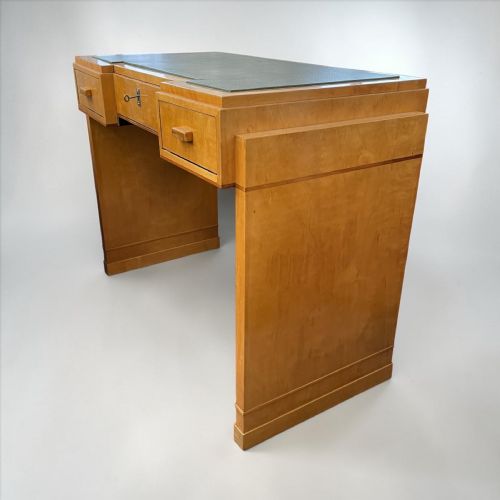
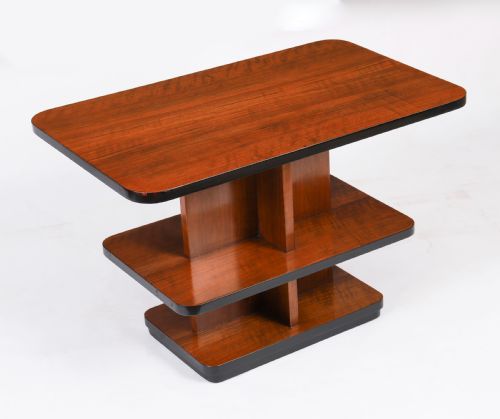
Art Deco Wooden Table
An art deco wooden table brings geometric warmth and clean horizontal lines to a room, offering both practical surface space and distinct period character.
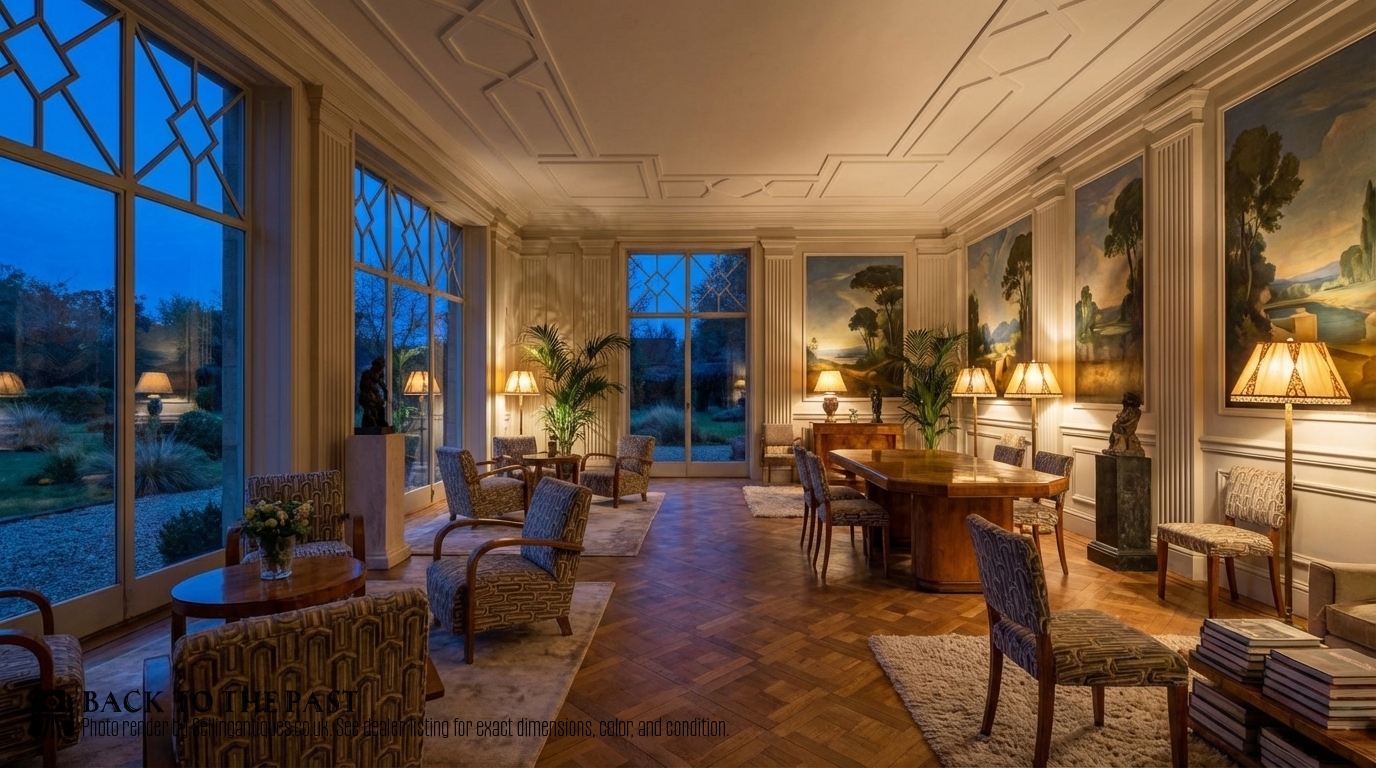
Art Deco Wooden Table
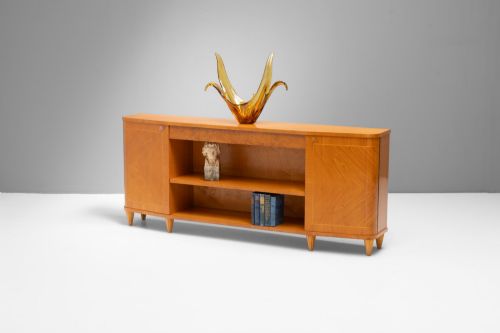
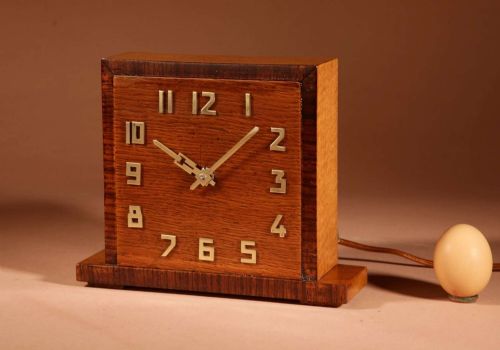
An art deco wooden table combines the streamlined geometry of the interwar years with the natural grain of timber, functioning as a desk, coffee table, or small side support. These pieces emerge primarily from the 1920s, 1930s, and 1940s, reflecting international modernist tastes as well as traditional English and French cabinetmaking.
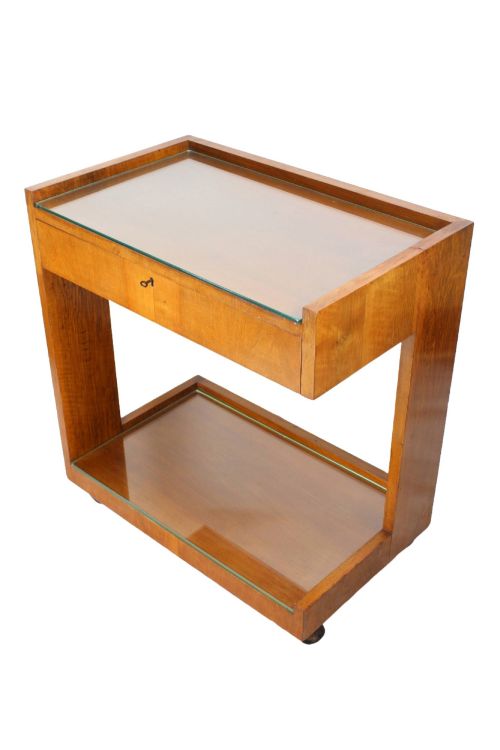
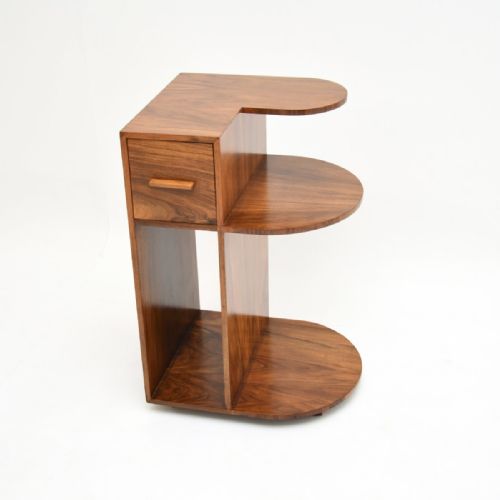
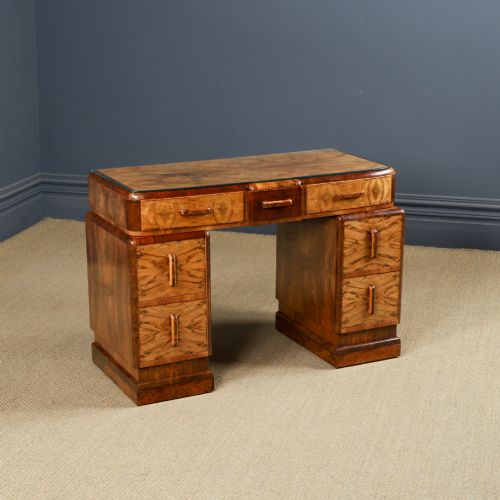
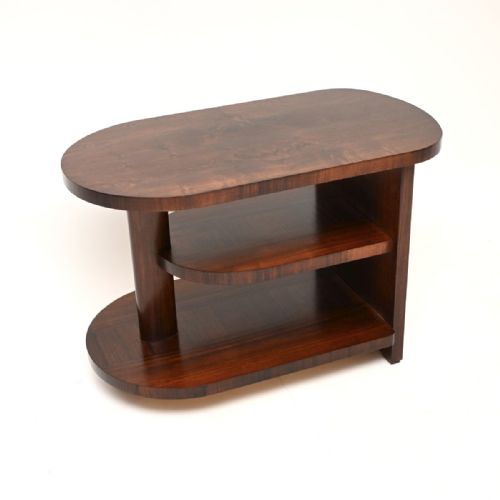
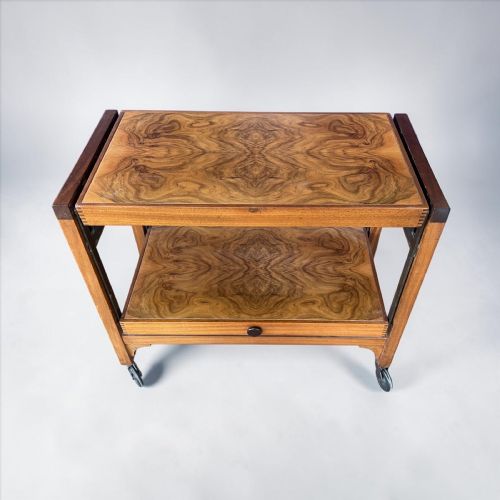
Side tables and coffee tables appear most frequently in this selection, often featuring tiered designs, octagonal tops, or metamorphic elements such as built-in drinks chests and serving trolleys. Desks and bedside tables also feature prominently, utilising pedestals and clean architectural silhouettes rather than ornate carving.
Makers and designers from England, France, and the Netherlands contributed to this aesthetic, ranging from commercial firms to named designers working in walnut, oak, and exotic veneers.
Materials and construction
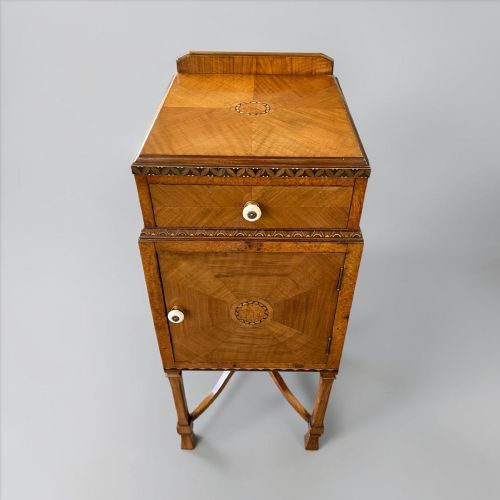
Cabinetmakers utilised a rich palette of woods, pairing structural timbers like oak and mahogany with decorative veneers such as walnut, burr walnut, rosewood, macassar ebony, and fruitwood. These figured grains were often arranged in symmetrical patterns across tabletops and cabinet doors to catch the light.
Metal and glass frequently accompanied the timber framework, incorporating brass handles, chrome trim, and mirrored glass panels to accentuate the industrial yet polished mood of the era.
The listings span pieces dated across the nineteen-tens, nineteen-twenties, nineteen-thirties, and nineteen-forties.
Judging quality in period furniture
Quality rests in the choice and matching of veneer timbers, where book-matched burr walnut or rosewood demonstrates deliberate planning by the cabinetmaker. The integration of functional hardware, such as smooth metamorphic mechanisms for serving trolleys or original brass fittings, distinguishes standard production from finer workshop output.
Structural integrity reveals itself in the joinery of pedestal bases and tiered levels, ensuring that geometric overhangs and stepped plinths remain stable and true to their original lines.
Gomme·Heal's·Betty Joel·Étienne Kohlmann·Maurice Adams·Gilbert Rohde·Haller·Incorporall
The Art Deco Wooden Table Glossary
- Veneer
- A thin slice of figured wood applied over a stable secondary timber to create decorative surface patterns without warping. This technique allowed makers to showcase expensive grains like burr walnut and macassar ebony.
- Amsterdam School
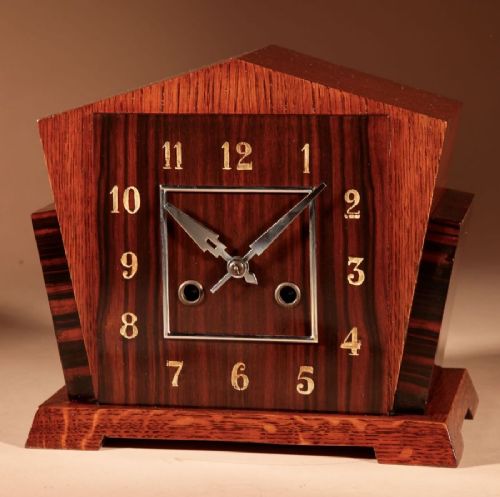
- A style of architecture and design originating in the Netherlands, characterised by rounded brickwork, expressive timber use, and traditional craftsmanship combined with modern forms. Pieces in this style often incorporate contrasting dark woods like coromandel.
- Metamorphic
- A descriptive term for furniture that transforms its shape or function, such as a side table concealing a drinks compartment or a serving trolley with folding leaves. These clever designs catered to compact modern living spaces.
- Tiered
- A multi-level construction style where tabletops or shelves step upward in graduated stages. This layout emphasises horizontal planes and vertical height typical of skyscraper architecture.
- Skyscraper
- An architectural influence applied to furniture design, featuring stepped pedestals, vertical pilasters, and vertical emphasis reminiscent of early twentieth-century urban towers.
Art Deco Wooden Table: Frequently Asked Questions
How do I clean an art deco wooden table?
Dust surfaces regularly with a soft, dry cloth to prevent microscopic particles from settling into the grain or delicate veneer.
Apply a quality beeswax periodically to nourish the timber and maintain a soft sheen, avoiding modern silicone sprays that build up over time.
Can I use a side table as a desk?
Most side tables and occasional tables lack the knee clearance and ergonomic height required for prolonged writing or computer work.
Look specifically for designated office desks or pedestal writing tables within this selection if you require a comfortable workspace.
How do I identify French pieces?
French examples often employ fruitwood, mahogany, or exotic veneers combined with sweeping curves and high-gloss polished finishes.
Cabinetwork from this region frequently leans toward luxurious boudoir or dining forms, reflecting Parisian stylistic preferences of the nineteen-twenties.
Where should I place a tiered table?
Tiered coffee tables and side tables work best in open spaces where their geometric stepped profiles can be viewed from multiple angles.
Keep them away from direct heat sources and strong sunlight to protect delicate rosewood and walnut veneers from fading or drying out.