
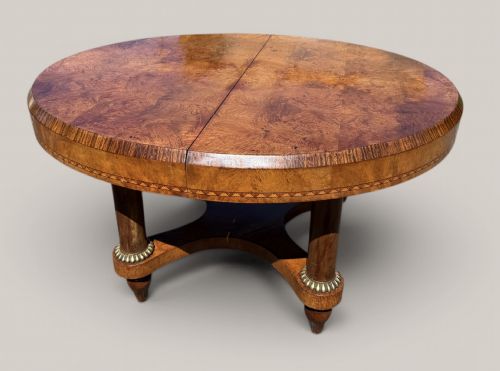


Large Walnut Dining Table
A large walnut dining table provides a rich timber surface for gathering, ranging from rustic refectory forms to formal extending designs.
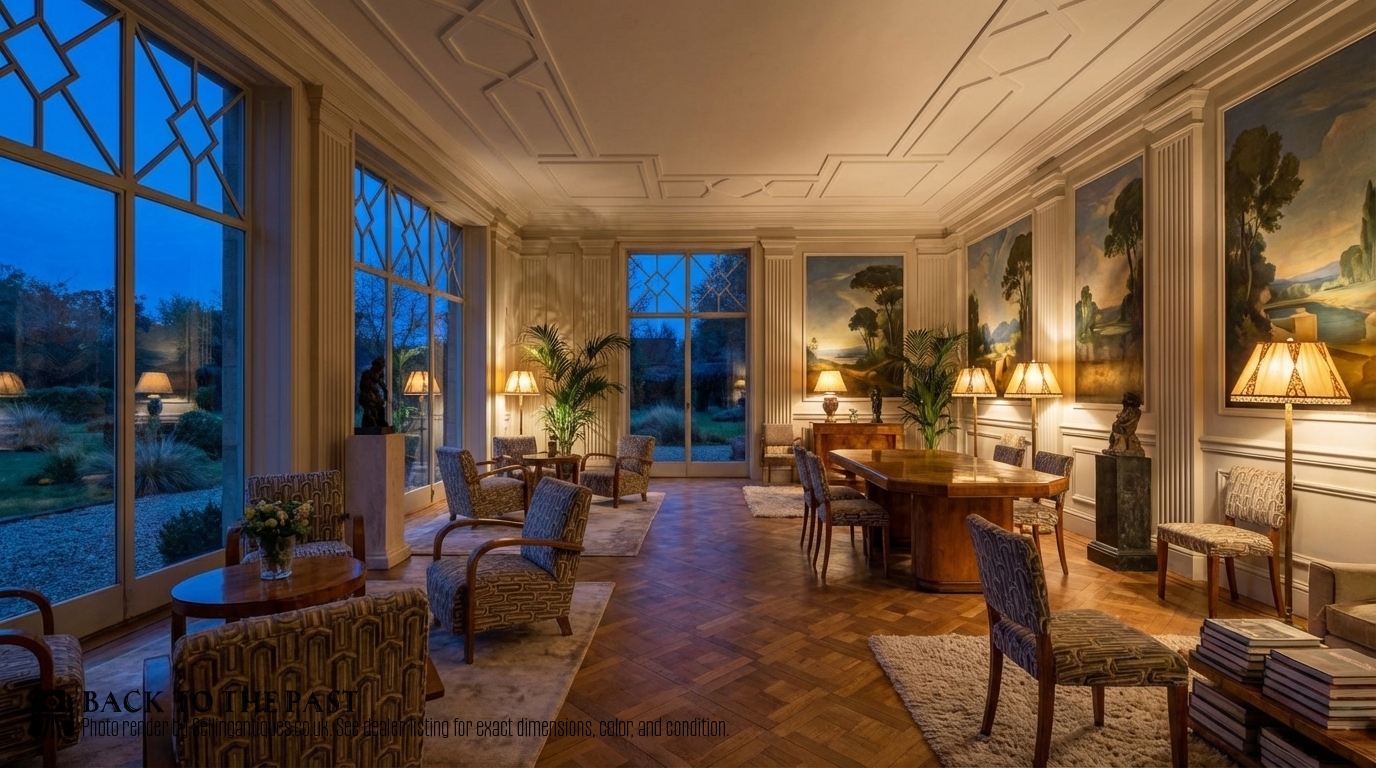
Large Walnut Dining Table
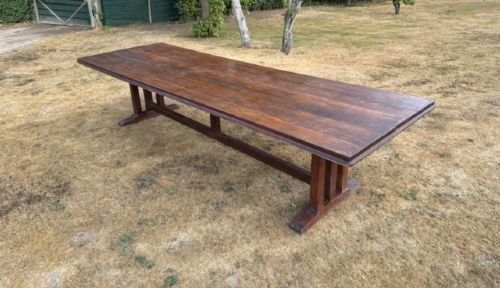
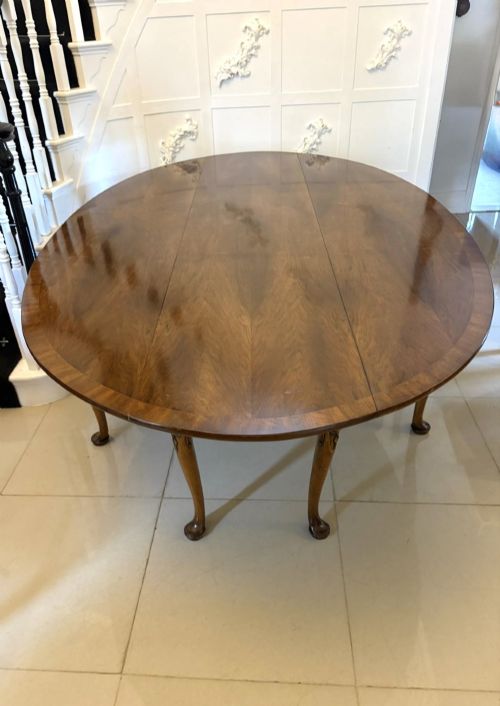
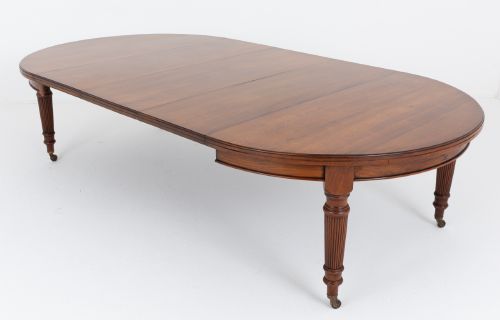
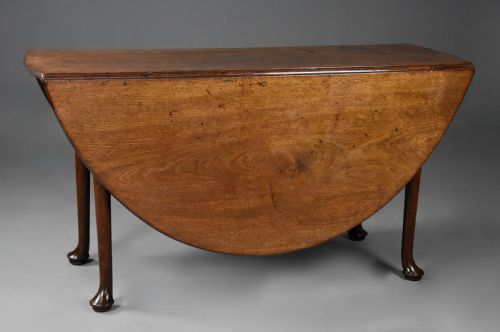
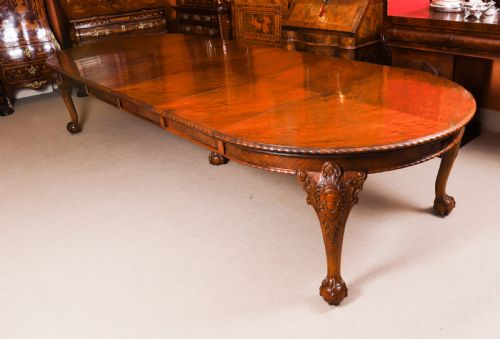
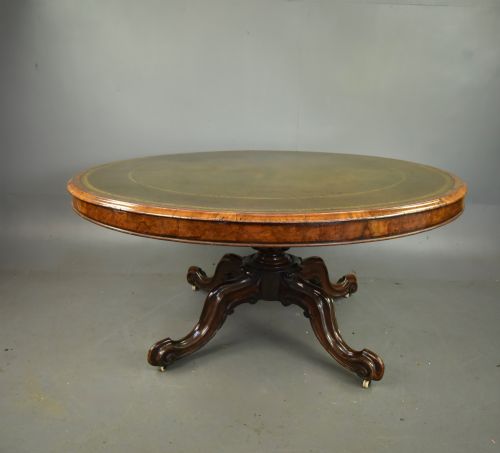
A large walnut dining table appears in forms such as extending wind-out tables, refectory boards, and circular centre pieces spanning the eighteenth century to the art deco period.
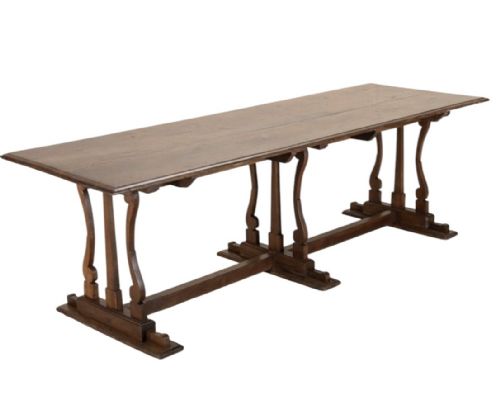
Buyers meet diverse regional styles here, including French farmhouse boards, Italian trestle tables, and British Victorian extending tables designed to seat ten or more guests.
Makers and workshops construct these large surfaces using varied walnut timbers, incorporating drop-leaves, draw-leaves, or multiple leaves to accommodate large dining rooms.
How they were made
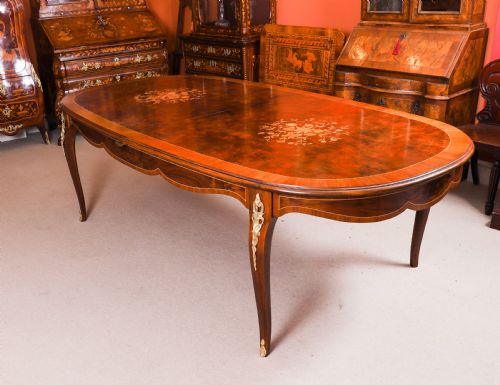
Cabinet makers utilised solid walnut, figured walnut, and burr walnut veneers applied over secondary timbers like mahogany or oak to achieve decorative grain patterns.
Craftsmen embellished surfaces with marquetry inlay, carved bases, or ormolu mounts, while supporting heavy tops with pedestals, trestles, refectory stretchers, and mechanical wind-out extending systems.
Materials recorded across the archive include solid walnut, burr walnut veneers, brass fittings, marble inserts, and ormolu mounts.
What varies in quality
The choice of timber creates a distinct visual hierarchy, where highly figured burr walnut and intricate marquetry inlay distinguish formal reception pieces from simpler rustic farmhouse boards.
Construction methods determine durability, separating tables with sophisticated internal extending mechanisms and solid carved bases from simpler drop-leaf or refectory frames.
Maple & Co·Whytock & Reid·Gordon Russell
The Large Walnut Dining Table Glossary
- Burr walnut
- A wood harvested from the abnormal growth of a walnut tree, yielding intricate, swirling grain patterns highly prized for cabinet veneers.
- Marquetry inlay
- Decorative patterns formed by fitting contrasting veneers into a prepared wood surface, often depicting floral or musical themes.
- Refectory table
- A long, narrow dining table historically used in communal dining halls, supported by heavy legs joined by floor-level stretchers.
- Wind-out table
- An extending dining table operated by a detachable metal crank handle that turns an internal screw mechanism to separate the leaves.
Large Walnut Dining Table: Frequently Asked Questions
How do extending mechanisms work on old tables?
Wind-out tables use a concealed internal screw mechanism operated by a removable handle to pull the framework apart evenly.
Additional wooden leaves drop into the resulting gap to expand the surface area for seating more people.
What is the difference between burr and figured walnut?
Figured walnut displays natural grain patterns and ripples that occur normally within the timber during growth.
Burr walnut comes from knotty tree growths that produce dense, chaotic swirls and circular eye formations.
How do I care for a walnut surface?
Walnut timber benefits from regular dusting with a soft dry cloth and occasional feeding with traditional beeswax.
Direct sunlight and excessive heat sources should be avoided to prevent the timber or fine veneers from drying out.
Are refectory tables suitable for modern dining?
Refectory tables offer substantial length and sturdy H-stretcher bases that accommodate modern seating configurations easily.
Their fixed tops do not extend, so measuring the available dining room space carefully is essential before purchase.