

Art Deco Seating
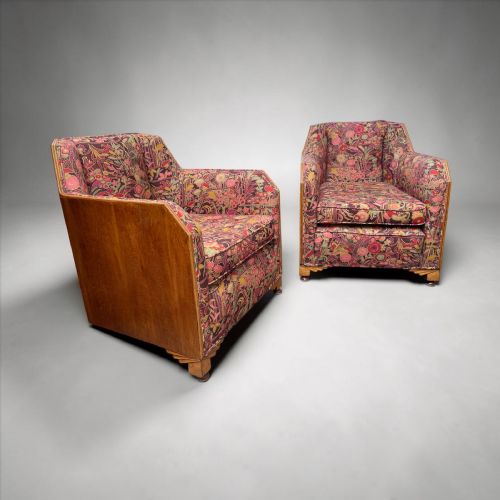
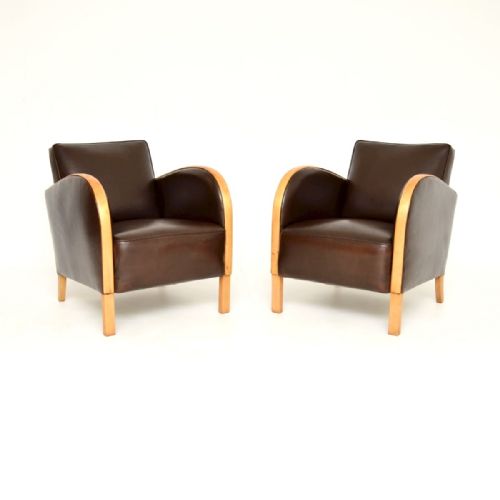
Art deco seating brings geometric grace and club comfort into a room, spanning leather armchairs, oak dining chairs, and walnut stools.
Art Deco Seating
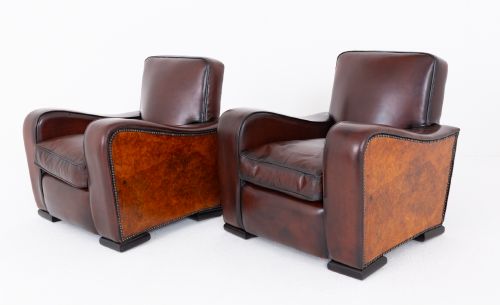
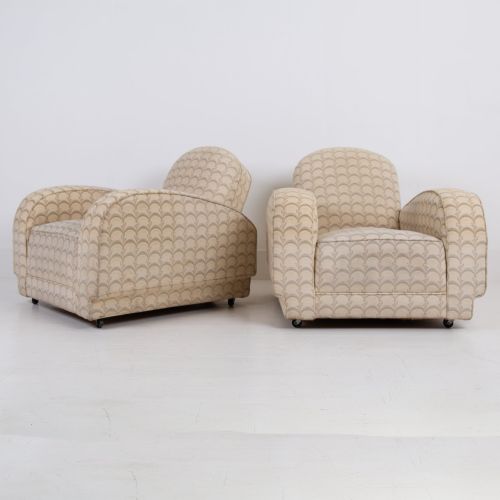
Art deco seating encompasses armchairs, club chairs, dining chairs, sofas, and stools originating primarily from the 1920s and 1930s. Buyers searching for art deco seating typically encounter robust club chairs and occasional chairs, alongside matching lounge suites and dressing table stools.
The selection ranges from Swedish and French interpretations to English productions from the 1930s. Forms prioritise bold silhouettes, clean lines, and comfort, whether in a pair of occasional chairs or a three seater sofa.
Materials and construction
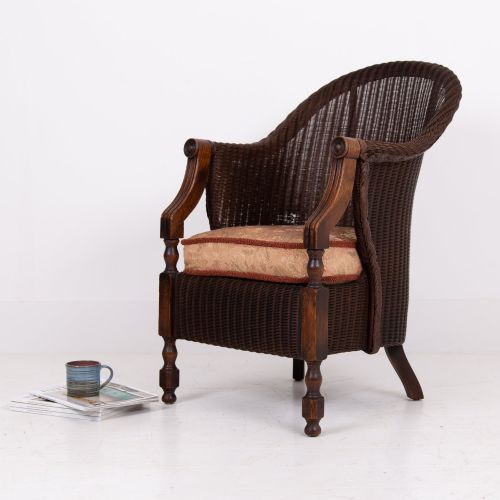
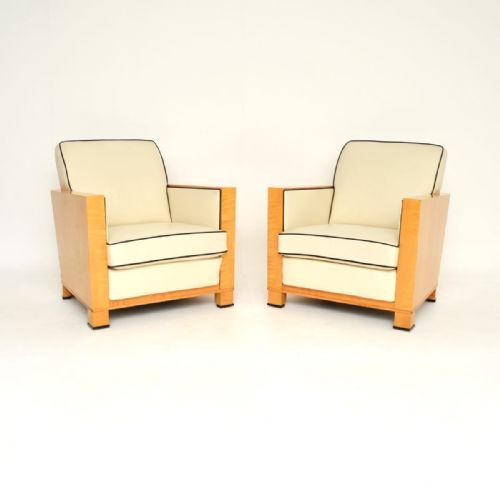
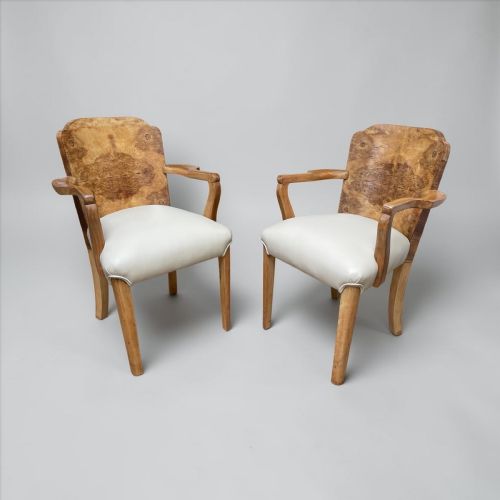
Frames utilise solid timbers such as oak, walnut, burr walnut, sycamore, and satin birch, alongside bentwood and brass elements. Upholstery relies heavily on leather and fabric, including velvet and rattan.
Joinery and structural integrity reflect the period traditions of English, French, and Scandinavian workshops. Wood surfaces often display polished grain patterns like birds eye maple, while leather upholstery frequently employs button-back detailing.
Among the seating rests a lone stoneware figure of a sitting baby, reminding us that art deco porcelain occasionally sneaks into furniture searches.
Assessing the pieces
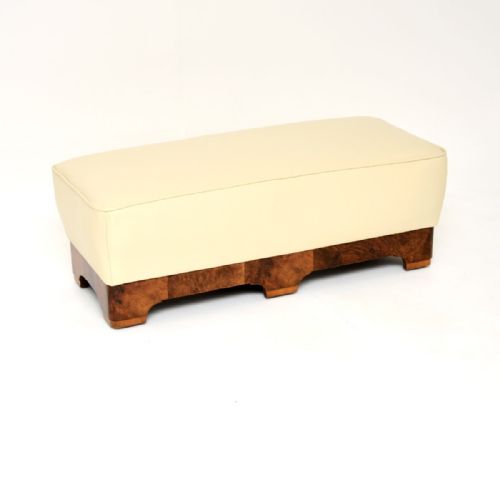
The distinction between standard examples and superior pieces rests upon the choice of timber veneer and the precision of the frame's geometric form. Highly figured burr walnut, satin birch, and birds eye maple elevate the visual presence of a stool or armchair.
Another factor is the attribution to notable makers and the preservation of original upholstery materials versus later recovering. Cohesion in matched pairs and suites also dictates the standing of the furniture within the category.
Hille·Harry and Lou Epstein·Bath Cabinet Makers·Heals
The Art Deco Seating Glossary
- Club chair
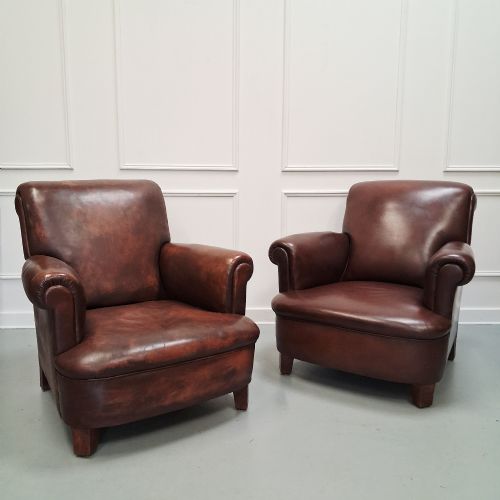
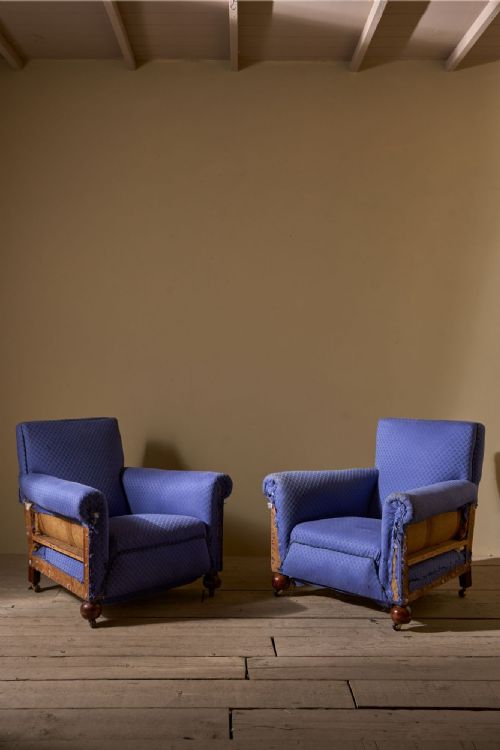
- A deep, upholstered armchair designed for relaxation, frequently found in leather during the 1930s.
- Club fender
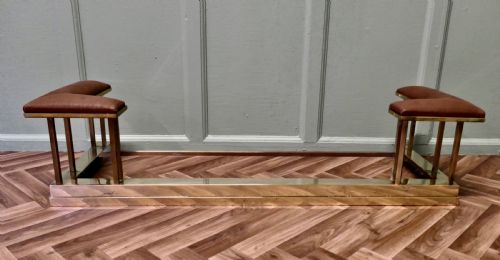
- A low, padded seat surrounding a fireplace hearth, often constructed from brass and leather.
- Cloud chair
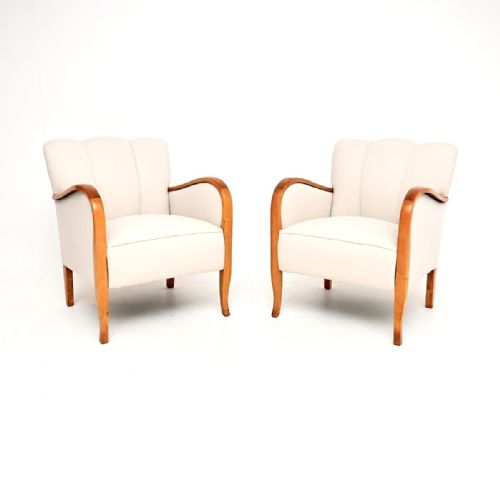
- An armchair style featuring rounded, bulbous upholstered forms reminiscent of clouds, popular in the 1930s.
- Bentwood
- Wood steamed and bent into curved structural shapes, utilised in specific armchair designs of the period.
- Veneer
- A thin layer of decorative wood, such as burr walnut or satin birch, applied to a primary timber base.
Art Deco Seating: Frequently Asked Questions
How do I identify French art deco chairs?
French art deco chairs often showcase luxurious leather upholstery and dynamic club chair proportions dating from around 1930. They tend to emphasise smooth, rounded contours designed for deep seating comfort.
Makers across France focused on substantial club silhouettes that differentiate them from lighter Scandinavian satin birch designs or English oak dining chairs.
Where were club fenders used?
Club fenders were traditionally placed around domestic fireplaces to provide integrated seating within the hearth area. The combination of brass framework and leather pads allowed people to sit close to the fire.
They function today as both low occasional seating and architectural metalwork within living spaces.
What is a cloud chair?
A cloud chair is an upholstered armchair characterised by exaggerated, rounded padded sections that mimic the shape of cumulus clouds. This style emerged during the 1930s and gained association with makers like Harry and Lou Epstein.
The design prioritises soft visual bulk and deep cushioning over exposed wooden frames.
Are dining chairs from the 1930s sturdy?
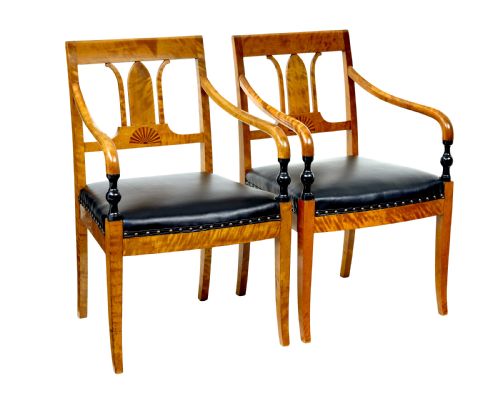
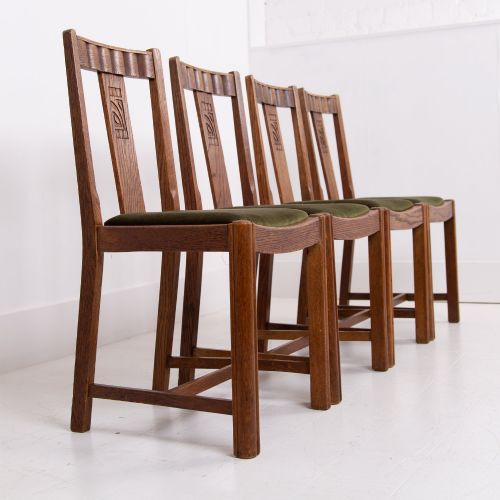
Dining chairs from the 1930s generally utilise solid oak or timber frames built to withstand daily domestic use. Sets of four or eight chairs maintain structural rigidity through traditional period joinery.
Their durability depends on the condition of the wooden frames and whether the upholstery webbing has been recently renewed.