




Art Deco Opalescent Bowl
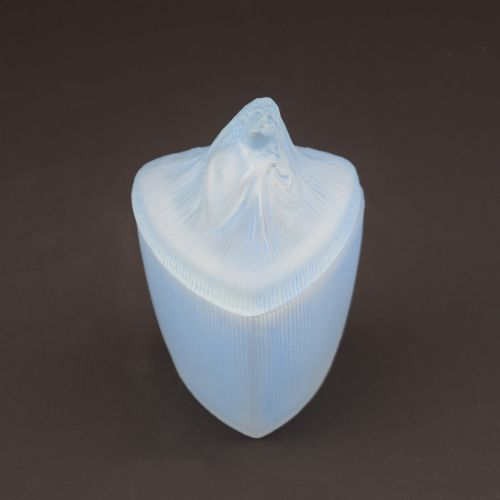
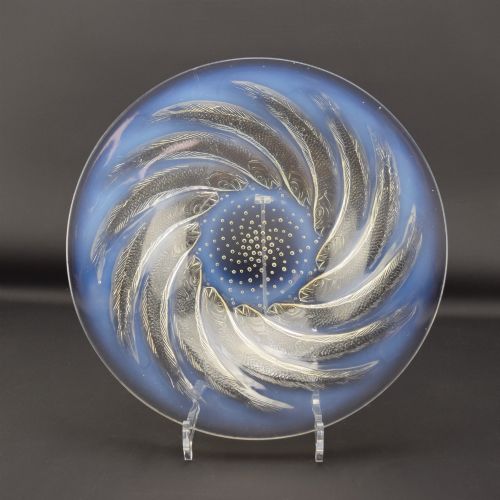
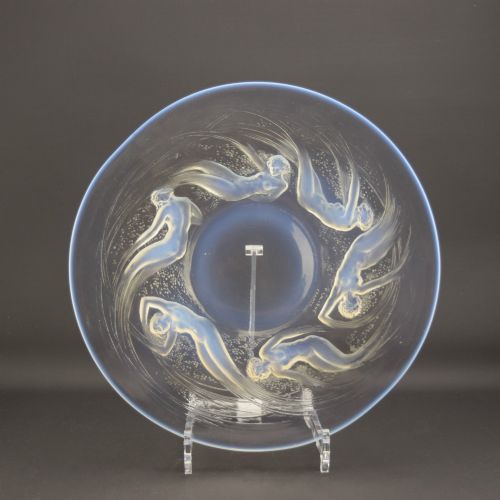
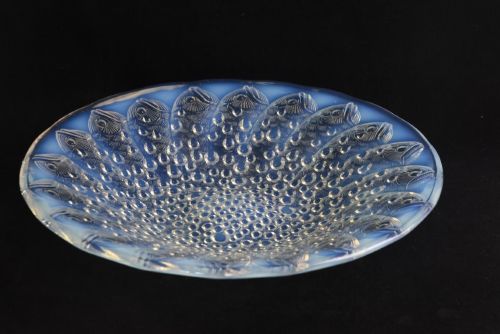
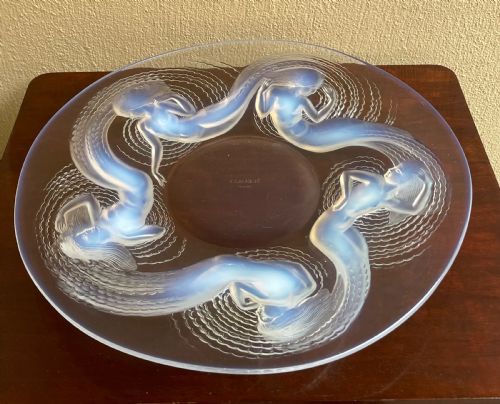
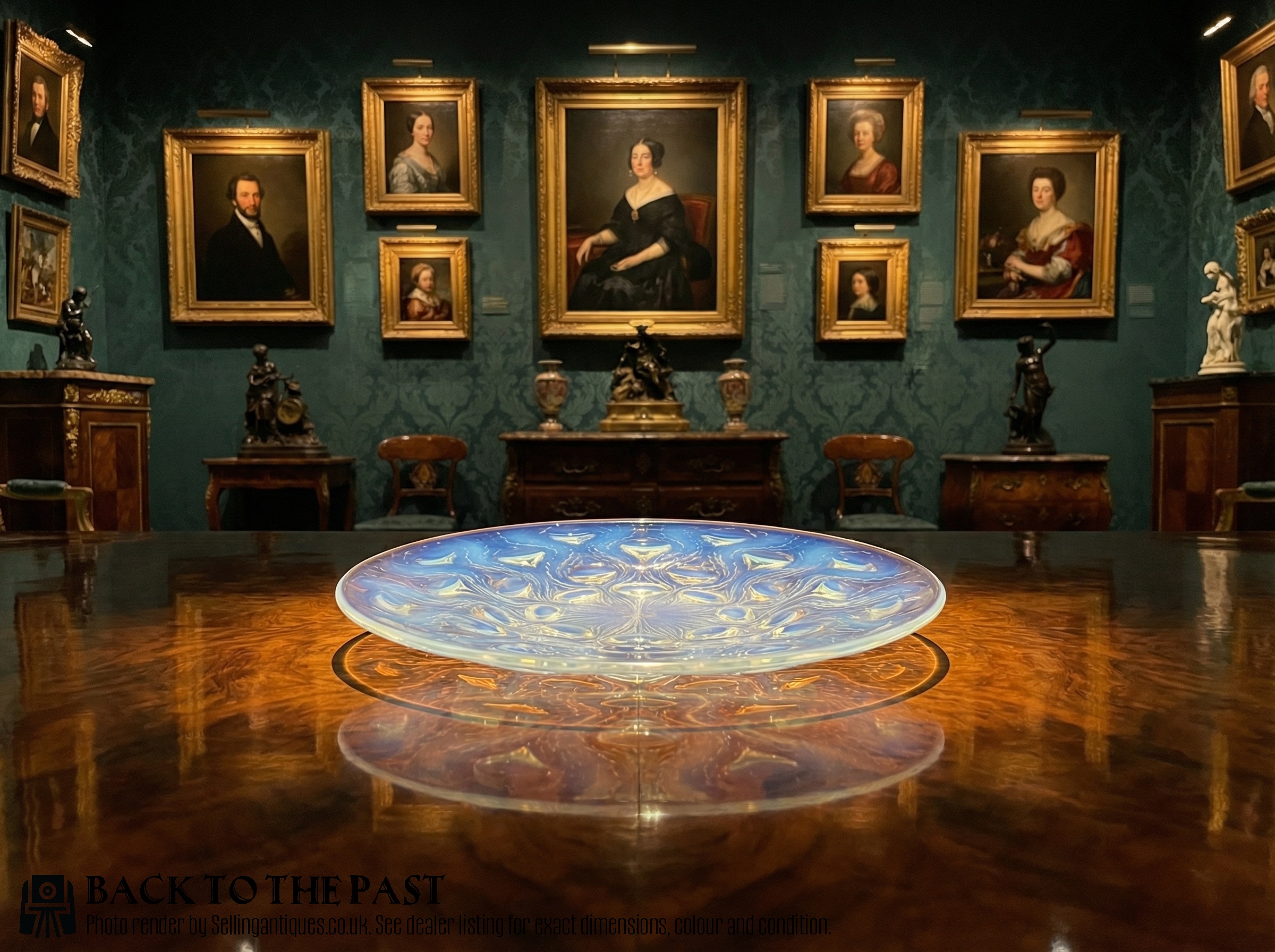
An art deco opalescent bowl catches the light with milky blues and amber highlights, offering the finest decorative glass of the twentieth century.
Art Deco Opalescent Bowl
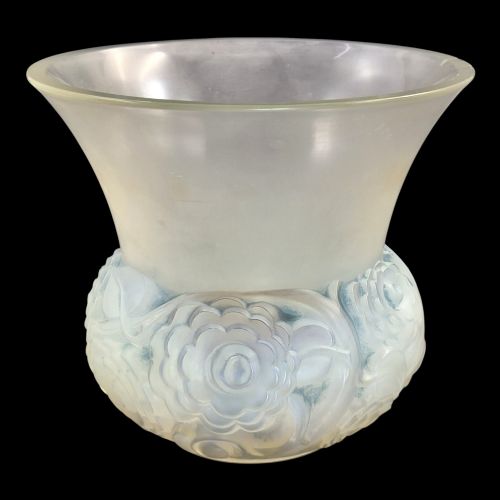
When you search for an art deco opalescent bowl, you encounter heavy moulded or pressed vessels designed for display as centrepieces, shallow dishes, or deep coupes. These pieces date principally from the nineteen-twenties and nineteen-thirties, spanning Art Nouveau and Art Deco aesthetics with occasional Edwardian precursors.
The selection ranges from large chargers and shallow bowls featuring aquatic motifs like fish and shells to botanical designs of flowers and foliage. French glassworks dominate the forms, alongside English makers producing distinct pressed glass variants during the same interwar decades.
Materials and Technique
These objects rely on specialist glass formulations that incorporate bone ash or arsenic to achieve a semi-translucent milky body which scatters light into blue tones when viewed from the side and warm amber when lit from behind. Makers utilised pressed or moulded techniques, pouring molten glass into heavy metal matrices to shape intricate relief decoration.
Post-moulding processes often involved acid-etching, enamelling, or patination in chrome and brass mounts to accentuate the surface texture. The interplay between frosted relief details and clear or tinted glass defines the physical character of each vessel.
Listings feature moulded glass, frosted glass, and crystal combined with patinated brass and chrome across the nineteen-twenties and thirties.
Distinctions in Quality
Quality rests upon the crispness of the moulded relief and the depth of the opalescent effect within the glass body. Superior examples display sharp definition in complex motifs such as fish scales, feathers, or flower petals without blurring in the recesses.
The intensity of the optical shift between blue and amber tones marks the distinction between standard production and exceptional work. Heavier weight, balanced proportions, and careful finishing of the base distinguish the output of premier glasshouses from contemporary alternatives.
Rene Lalique·Jobling·Sabino·Etling·G Vallon·Julien·Ezan
The Art Deco Opalescent Bowl Glossary
- Opalescent Glass
- Glass that diffuses light to display a milky blue appearance from the surface and a warm amber glow when backlit. This optical phenomenon results from specific chemical agents added during the melting process.
- Coupe Ouverte
- A French term denoting an open bowl or shallow dish form commonly utilised for decorative table centerpieces. These pieces showcase horizontal relief patterns across the interior base.
- Pressed Glass
- A manufacturing method where molten metal is forced into a metal mould using a plunger. This technique allows for high-relief floral and animal designs to be replicated consistently.
- Patinated Brass
- Metal alloy treated with chemical solutions to produce an aged surface colour. Mounts of this material frequently support glass bowls and pendant lights.
Art Deco Opalescent Bowl: Frequently Asked Questions
How do I clean my opalescent bowl?
Wash the glass gently in lukewarm water using mild soap and a soft cloth to protect the delicate surface texture. Avoid harsh chemical cleaners or abrasive scourers that can damage the frosted finish.
Dry the vessel thoroughly with a lint-free towel to prevent water spots from obscuring the optical light diffusion effects within the material.
Are these bowls safe for food use?
Most antique decorative bowls function primarily as display objects or centrepieces rather than tableware for serving food. The historic glass formulations and textured surfaces are generally unsuited to daily culinary use.
Retain these vessels for decorative placement where natural light can activate the distinctive opalescent and frosted qualities of the material.
How can I identify a reproduction?
Examine the sharpness of the relief moulding and the weight of the glass body. Modern reproductions often lack the deep optical opalescence and crisp detailing found in period pieces from the interwar decades.
Look for period signatures, registry numbers, or characteristic foundry marks inscribed or moulded into the base of the glass.
Where should I display my bowl?
Position the vessel near a window or on a glass shelf where daylight can pass through the body. Backlighting reveals the warm amber tones hidden within the milky blue surface.
Keep the piece away from direct heat sources and high-traffic edges where accidental knocks might damage the heavy pressed glass.