



Blue Glass Charger
A blue glass charger brings striking colour and French artistry to a room, offering the bold geometry and tactile surfaces characteristic of the period.
Blue Glass Charger
A blue glass charger stands as a statement display piece, taking the form of large plates, shallow bowls, and salvers. These items emerge primarily from the Art Deco era, dating across the 1920s and 1930s.
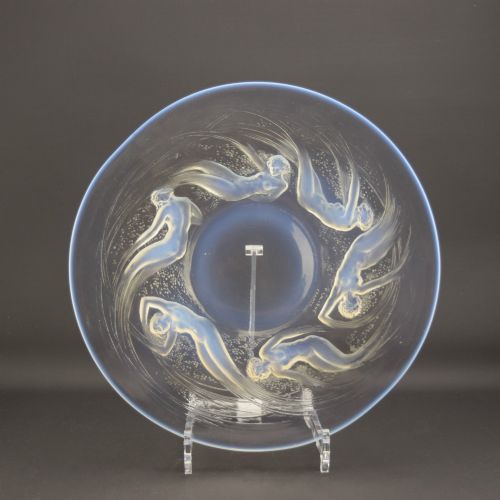
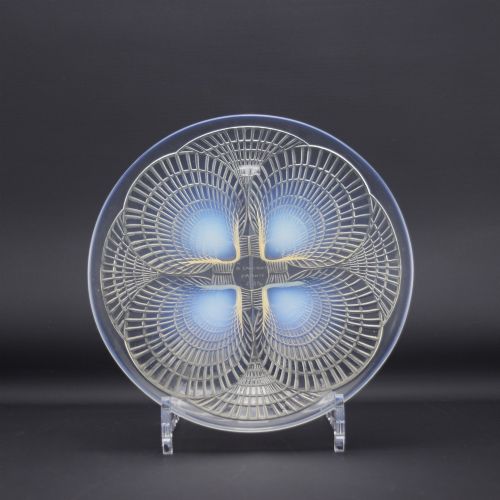
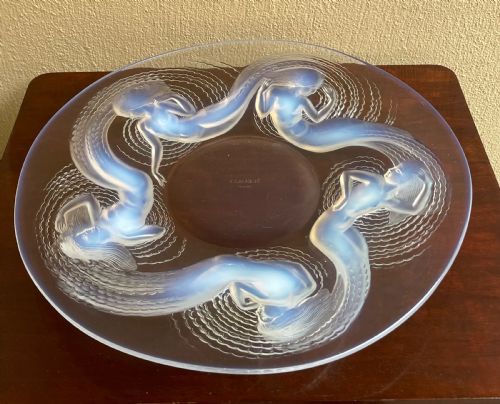
Buyers encounter striking moulded designs featuring aquatic themes, flora, and geometric motifs. The pieces range from expansive flat plates to deep coupe forms intended for visual impact.
Every blue glass charger on this page reflects the specific output of French studio glass production from the interwar decades. The forms serve strictly decorative roles rather than functional dining use.
How they were made
Makers utilised heavy pressed and moulded glass to achieve thick, substantial forms with deep relief. This technique allowed intricate surface patterns to be cast directly into the material.
Opalescent glass dominates the medium, creating a milky blue translucency that shifts in tone according to the light. Artisans manipulated cooling rates and chemical compositions within the glass to produce this characteristic optical effect.
Every listing on this page originates from the Art Deco period, spanning the years between 1920 and 1935.
What varies in quality
Quality rests in the crispness of the moulded relief and the depth of the opalescent effect within the glass. Superior examples display sharp definition across intricate motifs like fish, foliage, or figures.
The resonance of the material and the subtlety of the colour transition distinguish finer pieces from standard production. Masterful manipulation of the glass creates a distinct play of light across the surface.
Rene Lalique
The Blue Glass Charger Glossary
- Opalescent glass
- Glass that diffuses light and appears milky or blue from certain angles while showing warm tones against direct light. This effect defines the appearance of many Art Deco decorative objects.
- Charger
- A large decorative plate or salver used for display rather than for serving food. These pieces anchor a tablescape or sideboard arrangement.
- Coupe
- A wide, shallow bowl form with a sloping rim rather than a distinct vertical wall. This shape showcases surface moulding across a broad plane.
- Salver
- A flat serving tray or decorative plate raised on a small base or resting flat. The form provides an expansive canvas for detailed glasswork.
- Moulded glass
- Glass formed by pressing molten material into a metal or wooden matrix to impart a pattern. This process enables consistent production of complex relief designs.
Blue Glass Charger: Frequently Asked Questions
What is a blue glass charger used for?
A blue glass charger serves as a decorative display object for sideboards, walls, or tables. The substantial size and rich colour draw the eye across a room.
These items were designed for visual appreciation rather than daily dining use. Collectors typically mount them on stands or place them flat on surfaces to catch the light.
How do I date a blue glass charger?
Dating relies on stylistic markers from the Art Deco period and the specific manufacturing techniques recorded for the maker. Pieces on this page date from the nineteen-twenties and nineteen-thirties.
Examination of the signature style and motif variations helps narrow the production era. The integration of opalescent glass points firmly to interwar French manufacturing.
What makes opalescent glass blue?
The blue appearance results from specific chemical agents added to the molten batch during production. As the glass cools, these agents create microscopic particles that scatter light.
This optical phenomenon causes the glass to shift between milky blue and warm amber tones depending on the angle of illumination. It remains a hallmark of high-grade decorative glass from the era.
How should I clean a glass charger?
Gentle dusting with a soft, dry cloth is usually sufficient for regular maintenance. Avoid harsh chemical cleaners that might affect the surface finish.
If washing is necessary, use lukewarm water with mild soap and dry immediately with a lint-free cloth. Care must be taken with heavy pieces to prevent accidental impact.