




Art Deco Lalique Dish
An art deco lalique dish brings tactile French modernist elegance to a room through sculptural glass and luminous milky tones.
Art Deco Lalique Dish
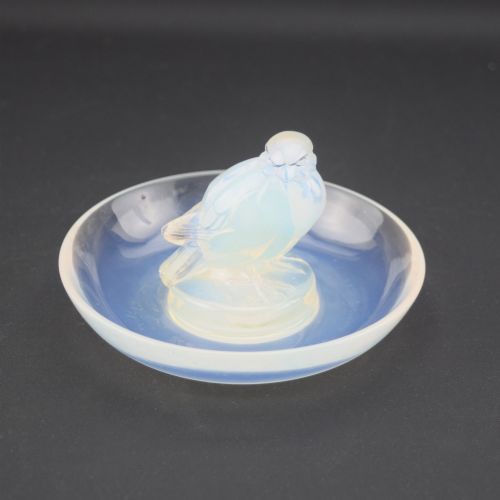
When searching for an art deco lalique dish, buyers encounter decorative bowls, chargers, and pin dishes originating primarily from the nineteen twenties and thirties. These pieces take the form of shallow vessels, footed bowls, and flat plates carrying specific model names.
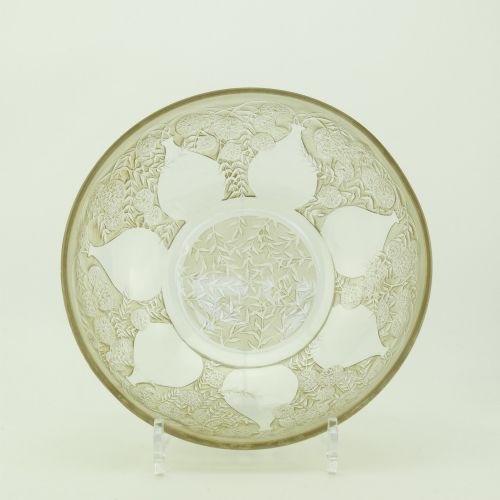
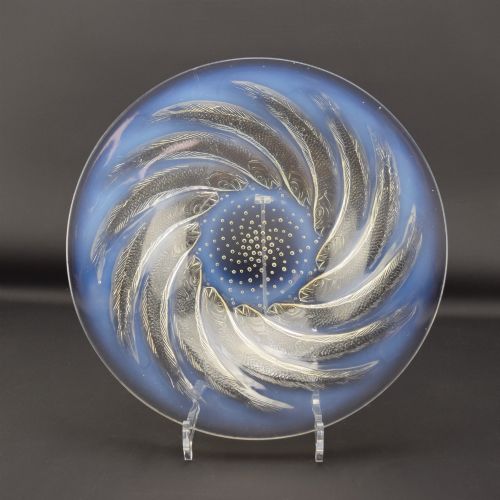
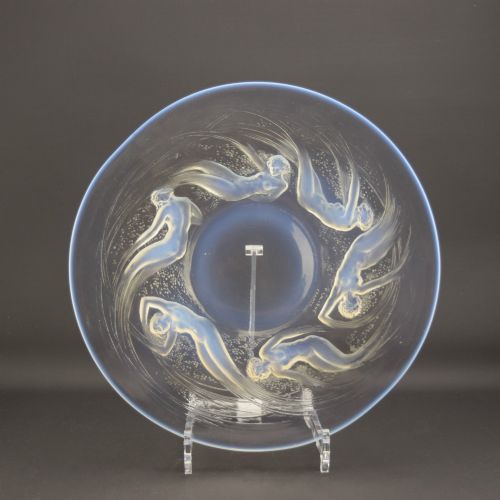
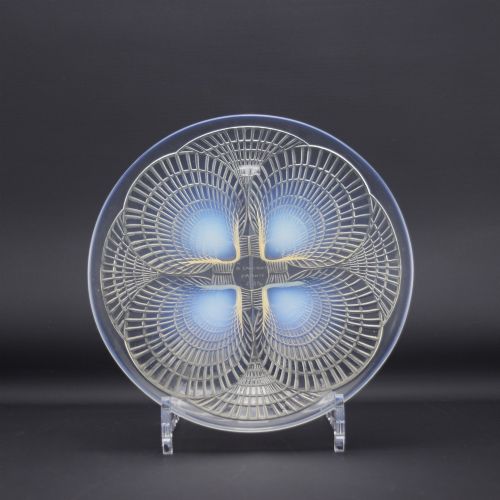
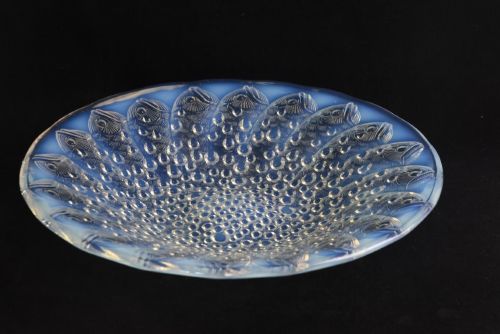
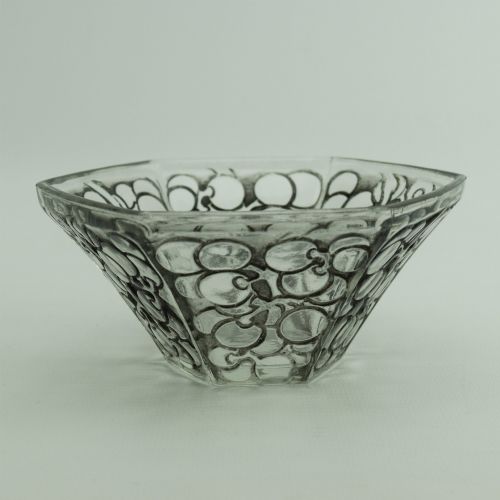
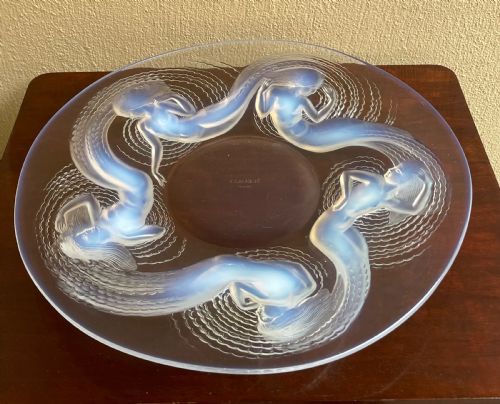
The most frequent examples on this page are opalescent glass pieces bearing specific floral or aquatic titles like Coquilles, Ondines, and Poissons. Collectors also find amber glass items and sepia stained plates representing the earlier edge of the period.
Moulded glass forms dominate the selection, functioning historically as tableware, ashtrays, or decorative salvers. Each design displays the characteristic modernist geometry or naturalistic flora associated with the atelier.
Materials and production methods
Makers utilised pressed and moulded glass techniques to shape heavy decorative bowls and plates with high relief detailing. Molten glass entered complex metal moulds to produce sharp contours and thick vessel walls.
Opalescent glass creates an internal milky blue fire that shifts tone depending on the light source and background. Artisans sometimes added sepia stain or amber colouration to accentuate the moulded motifs across the surface.
Some vessels double as ashtrays, proving that past owners were quite relaxed about ash falling directly onto naked nymphs.
Judging the work
The distinction between tiers rests upon the crispness of the relief moulding and the depth of the opalescent glow within the glass. Superior examples exhibit sharp botanical or figurative details where every petal or scale remains distinct.
The strength and evenness of the internal fire dictate visual success, alongside the precision of any applied sepia staining. Weight and balance in the hand further separate standard production pieces from masterworks.
Rene Lalique·Verlys
The Art Deco Lalique Dish Glossary
- Opalescent Glass
- Glass that appears milky blue in transmitted light and warm amber in reflected light. This optical property results from chemical agents added during the melting process.
- Coupe Ouverte
- An open bowl shape with a wide, shallow profile. These pieces were often utilised as centrepieces or decorative dishes.
- Sepia Stain
- A brownish pigment applied to the recessed areas of moulded glass to create contrast. The stain highlights the fine lines of figures and flora.
- Charger
- A large decorative plate or platter. In glassware, these items function primarily as display pieces rather than tableware.
Art Deco Lalique Dish: Frequently Asked Questions
What are these glass dishes used for?
These pieces function primarily as decorative bowls, chargers, and catchalls for tabletops and sideboards. Historically, versions served as ashtrays, powder boxes, or sweetmeat dishes.
Modern owners generally display them empty to showcase the play of light through the opalescent material. Their shallow profiles suit placement on coffee tables or within display cabinets.
How do I identify opalescent glass?
Opalescent glass displays a characteristic milky blue or pearlescent quality when viewed under normal room lighting. When held up to a direct light source, the same glass appears warm amber or orange.
This dual colour effect is an optical property of the specific chemical composition used by the maker. It distinguishes these pieces from standard clear or coloured glassware.
What is a coupe ouverte?
A coupe ouverte is a French term translating to open bowl, describing a wide and shallow vessel form. These items provide a broad surface area that displays the moulded design across the interior base.
They appear frequently in nineteen twenties and thirties glassware catalogues. The open form allowed makers to feature elaborate floral or animal motifs clearly.