



1930s Lalique Plate
A 1930s lalique plate brings master glasswork into daily interiors through mould-pressed opalescent designs.
1930s Lalique Plate
A 1930s lalique plate embodies the sculptural glasswork produced during the height of the Art Deco period. These circular forms range from shallow bowls and open coupes to flat chargers and decorative dishes, each designed to catch ambient light.
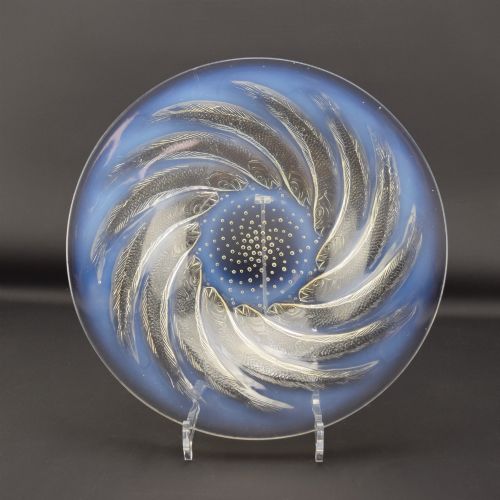
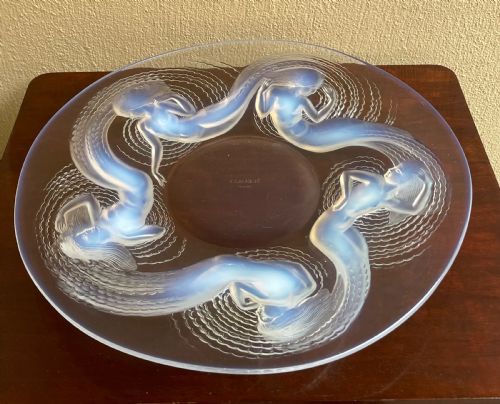
The pieces appearing on this page stem exclusively from the 1930 era, showcasing named motifs like Poissons, Oeillets, Calypso, Actinia, Campanules, Plume de Paon, Volutes and Bulbes. Collectors frequently encounter these variations across both shallow bowl and flat plate profiles.
How they were made
Makers fashioned these pieces using moulded glass, frequently applying an opalescent finish that shifts between milky white and pale blue depending on the light. The technique relies on precise thermal control during cooling to achieve the characteristic translucent glow.
Relief motifs such as fish, flowers and geometric scrolls are integrated directly into the glass structure. This moulding process creates deep textural contrast between the clear ground and the frosted, raised design elements.
Listings feature opalescent glass and standard glass across Art Deco decorative plates, bowls and chargers exclusively from 1930.
What varies in quality
The distinction in quality rests upon the crispness of the moulded relief and the depth of the opalescent effect within the glass. Superior examples exhibit sharp botanical or animal details that remain distinct across the entire surface.
Intensity of the opalescence dictates visual strength, with finer pieces displaying vibrant colour play across the translucent body. The overall weight and balance of the glass vessel further signal the standard of the initial pressing.
Rene Lalique
The 1930s Lalique Plate Glossary
- Opalescent Glass
- Glass that diffuses light to display milky or bluish tones, typical of decorative vessels from this era. This optical property creates a shimmering transition across raised motifs.
- Coupe Ouverte
- An open bowl form with wide sides, often utilised for table display during the Art Deco period. The open shape showcases interior moulded patterns.
- Charger
- A large decorative plate traditionally placed beneath other tableware or displayed on its own. These expansive surfaces carry larger relief designs.
- Art Deco
- The dominant design style of the interwar period characterised by stylised natural motifs and geometric symmetry. This aesthetic defines the ornamentation of the era.
1930s Lalique Plate: Frequently Asked Questions
How do I display a glass plate safely?
Place the piece on a stable, flat surface away from direct edge traffic where it can catch natural light. Utilising a dedicated stand allows flat plates and chargers to be viewed vertically.
Avoid enclosed spaces with high humidity or extreme temperature shifts. Proper placement ensures the opalescent qualities remain fully visible.
Were these plates used for food?
Most pieces function primarily as decorative dishes or display chargers rather than everyday tableware. The delicate opalescent surfaces suit decorative placement in living spaces.
Using them for dry presentation is possible, but collectors generally treat them as standalone glass art.
What motifs appear on these plates?
Common ornamentation includes aquatic subjects like fish alongside botanical themes such as carnations, bellflowers and sea anemones. Geometric scrolls and feather patterns also feature prominently.
Each named pattern dictates the specific relief style pressed into the glass.
How do I identify a 1930s piece?
Examine the specific stylistic markers of the Art Deco period alongside the characteristic opalescent glass medium. The listed items from this era feature distinct named models from the workshop.
Checking the profile type against known forms helps confirm the production decade.