



Blue Opalescent Glass Dish
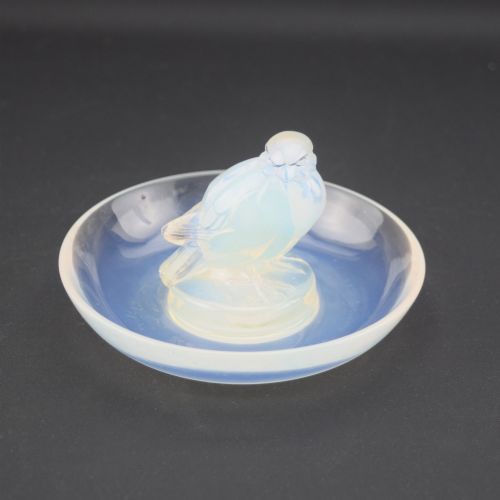
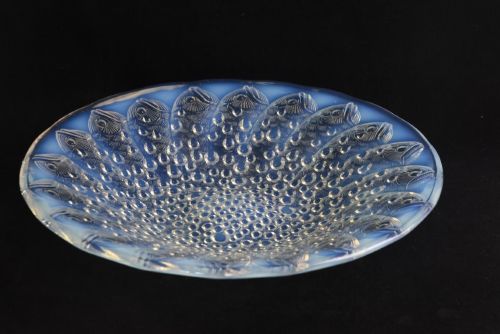
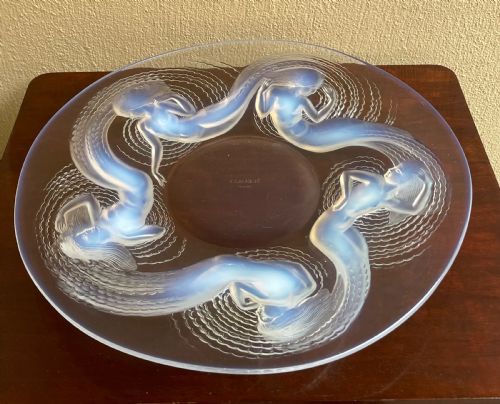
A blue opalescent glass dish catches the light with milky blue fires, offering the sought-after shift from pale translucence to fiery opalescence.
Blue Opalescent Glass Dish
A blue opalescent glass dish encompasses decorative bowls, plates, chargers, and cake stands from the Victorian and Art Deco periods. Buyers search for this phrase to acquire pieces that display the characteristic milk-blue glow along raised reliefs and rims.
The selection here draws heavily on the 1920s and 1930s alongside Victorian examples. Forms range from shallow footed bowls to wide chargers and matched sets of plates.
How they were made
Makers utilised press-moulded and frosted glass techniques to achieve the distinctive opalescence. Molten glass was forced into metal moulds, incorporating bone ash or other agents that scatter light to produce the milky blue effect.
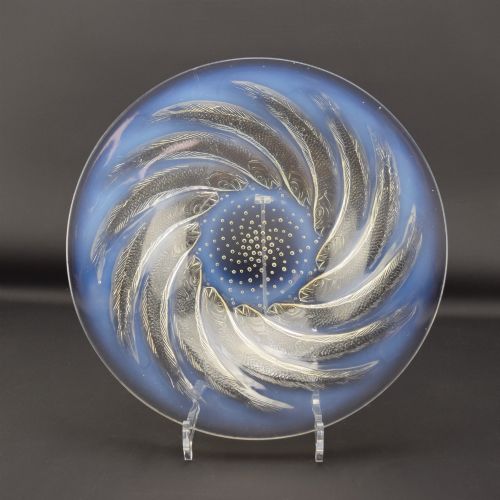
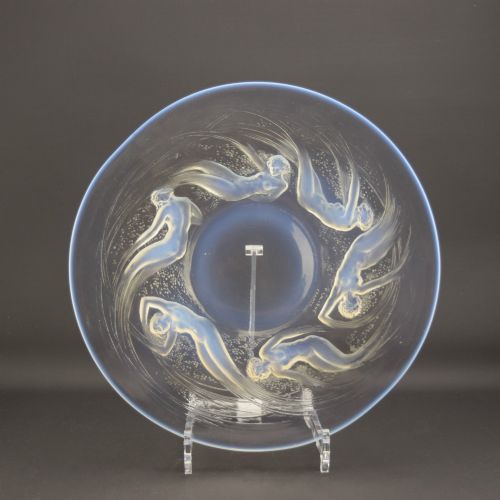
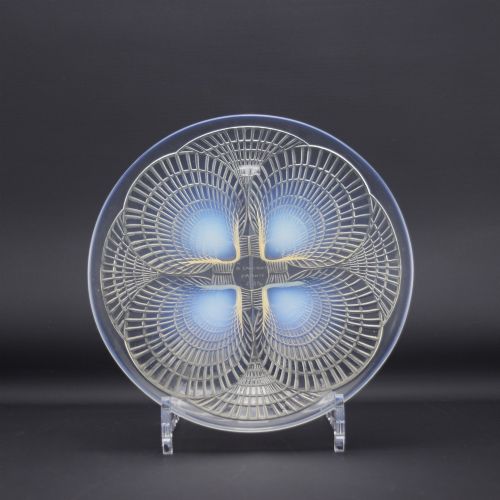
Moulding allowed for intricate relief decoration such as fish, flora, and geometric motifs across the surface of each bowl or plate. Frosted finishes were often applied to contrast with the polished translucent areas.
Fish and flowers dominate the motifs, turning everyday bowls into miniature aquatic scenes when the light catches the blue opalescence.
What varies in quality
Quality rests in the crispness of the moulded relief and the strength of the opalescent fire within the glass. Superior examples show sharp detail in complex patterns and a pronounced milky blue shift under direct light.
Depth of colour and uniformity across the piece distinguish finer productions from simpler utilitarian items. The interaction between clear and frosted zones dictates the visual balance of the dish.
Rene Lalique·Jobling·Davidson·Sabino·Verlys
The Blue Opalescent Glass Dish Glossary
- Opalescent Glass
- Glass that diffuses light to display a milky blue or fire-like shimmer across raised surfaces. This optical effect is achieved through chemical agents added to the molten batch.
- Press-Moulded
- A manufacturing method where hot glass is pressed into a metal mould using a plunger. This technique creates sharp patterns and consistent shapes for bowls and plates.
- Frosted Glass
- Glass treated to achieve a matte, non-reflective surface texture. It provides contrast against the clear or opalescent parts of a design.
- Charger
- A large decorative plate or shallow dish placed beneath other dinnerware or displayed on its own. These pieces offer a wide canvas for moulded artistic motifs.
- Coupe Ouverte
- An open bowl form commonly utilised in French decorative glassware of the early twentieth century. These open vessels display the opalescent effect across a wide interior.
Blue Opalescent Glass Dish: Frequently Asked Questions
How do I display a blue opalescent glass dish?
Place the piece where direct daylight or interior spotlighting strikes the surface from the side. This directional illumination activates the milky blue fire characteristic of opalescent glass.
Avoid stacking bowls or plates to prevent surface scratching. Stand them on open shelves or in cabinets with glass backs to let light pass through the material.
Are these dishes meant for food use?
Most decorative bowls and plates from the Art Deco and Victorian eras function primarily as display objects or sweetmeat dishes. Their surfaces and historical nature make them unsuited for heavy daily dining.
Gentle hand washing in lukewarm water preserves the frosted finishes and delicate moulded details. Harsh detergents and modern dishwashers damage the surface texture.
What is pearline glass?
Pearline is a trade name used by Victorian manufacturers like Davidson for pressed glass that shades from white to blue opalescence. It represents an early British application of light-responsive glass technology.
Victorian cake stands and dishes in pearline exhibit distinct nineteenth-century mould patterns. They predate the French Art Deco productions found in the later listings.
How do Art Deco designs differ from Victorian ones?
Art Deco pieces from the 1920s and 1930s favour stylised flora, fauna, and geometric symmetry. French workshops utilised deep press-moulding to create heavy bowls and plates with strong sculptural relief.
Victorian items rely on ornate, traditional patterns with distinct colour shading like pearline. The manufacturing techniques shifted from 19th-century domestic pressed ware to sophisticated modernist studio output.