



Art Deco Glass Vessel
An art deco glass vessel brings geometric precision and sculptural depth into a room, capturing the modernist spirit of the interwar years.
Art Deco Glass Vessel
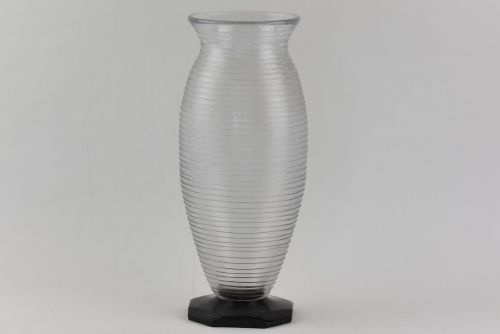
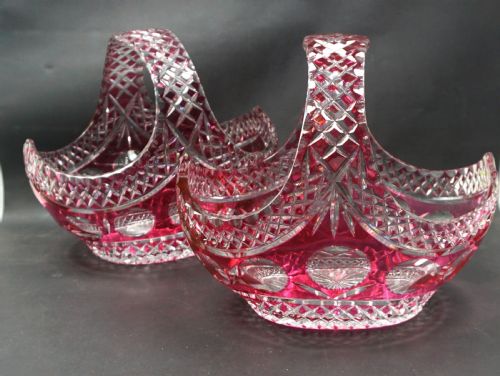
When you search for an art deco glass vessel, you encounter a focused selection of vases, decanters, decorative bowls, and decorative baskets created during the early twentieth century. These objects embody the distinct aesthetic of the 1920s and 1930s, shifting from floral motifs to bold, structural geometry.
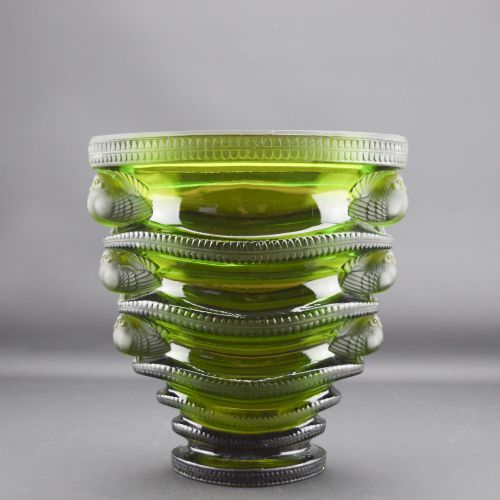
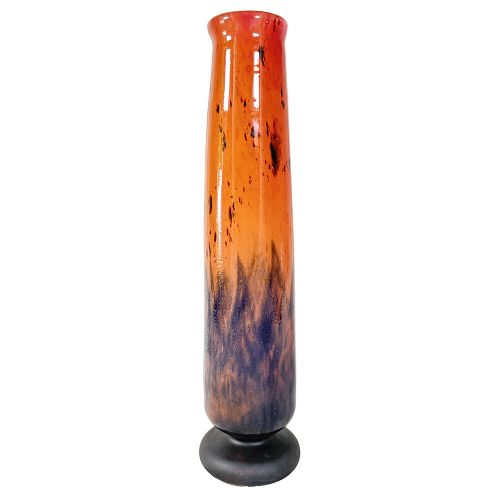
The versions you meet most frequently on this page originate from prominent French and Belgian glassworks, alongside notable English and Scottish studios. Vases dominate the selection, appearing in forms ranging from tall cylindrical profiles to heavy pedestal bowls.
Makers utilised innovative moulding techniques and distinct colour palettes, producing pieces that function equally as sculptural art and utilitarian containers. Each vessel reflects the stylistic ambitions of a period defined by industrial progress and artistic experimentation.
How they were made
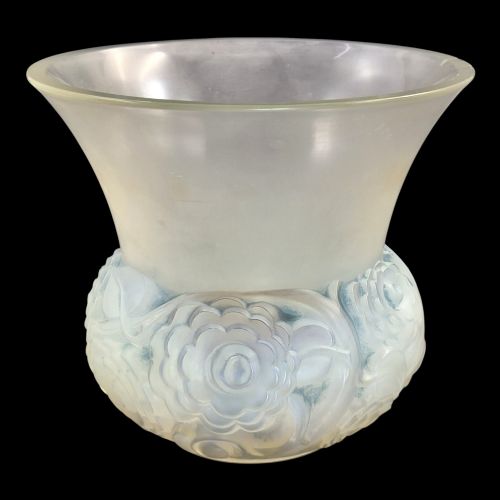
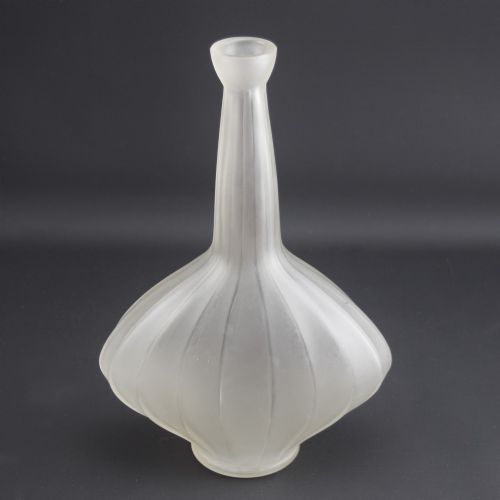
Makers shaped these pieces using diverse techniques including blowing, moulding, and pressing molten metal into complex forms. Opalescent, frosted, and crystal glass formed the foundation for many designs, allowing artists to manipulate light across the surface.
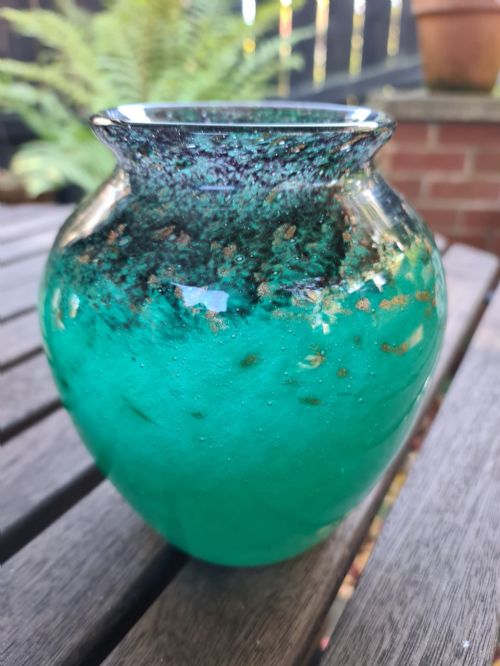
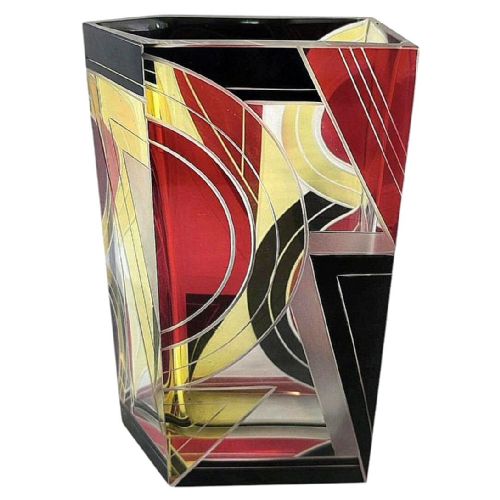
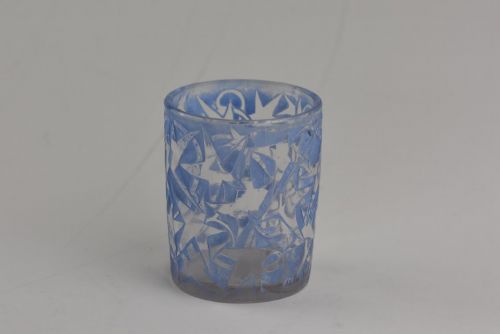
Surface ornamentation often involved deep acid-etching, cameo layering, or hand-painted enamel decoration in geometric or naturalistic patterns. Studios also incorporated aventurine inclusions or overlaid contrasting coloured glass to achieve rich tonal depth.
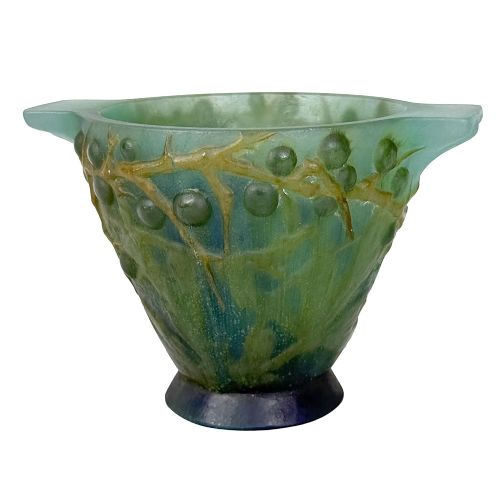
Techniques such as pate de verre involved packing powdered glass into moulds and firing them until fused, resulting in a dense, tactile finish. These labour-intensive methods required precise temperature control to achieve the characteristic weight and clarity of the period.
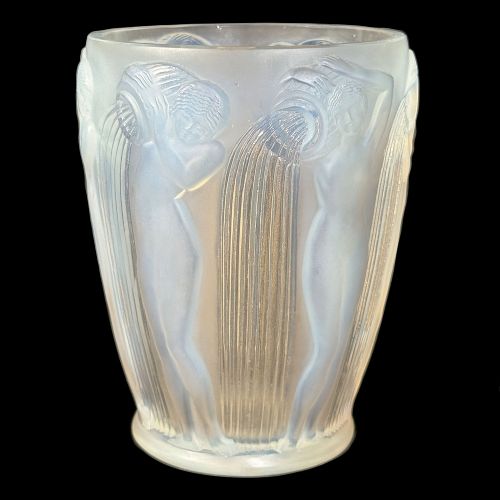
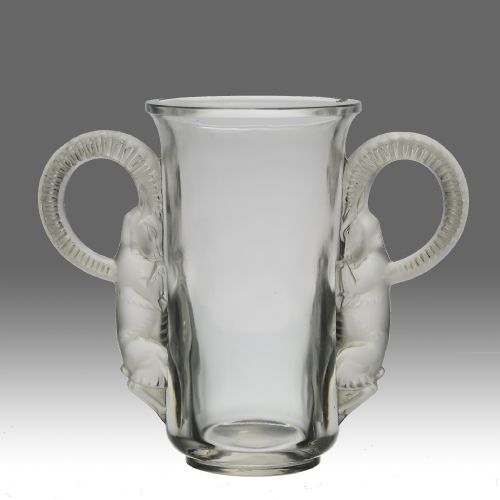
Several vessels feature stylised depictions of water carriers, rams, and garden herbs frozen permanently in frosted relief.
What varies in quality
The distinction between tiers of production lies in the ambition of the design and the mastery of the glassmaking process. Superior examples demonstrate crisp definition in moulded or etched reliefs, where details remain sharp rather than softened by worn production tools.
Material composition also dictates standing, with heavier lead crystal and complex layered colourways demanding greater technical skill from the blower. The integration of surface staining or enamel work must show deliberate placement and secure adherence to the glass body.
Provenance and signature clarity elevate certain pieces, particularly those bearing etched or moulded marks from established designers and workshops. The overall balance of the vessel, the weight in the hand, and the handling of light through frosted or opalescent surfaces determine its ultimate distinction.
Rene Lalique·Daum·Amalric Walter·Val St Lambert·Schneider·Monart Glass·Karl Palda·Jean Luce·Graystan
The Art Deco Glass Vessel Glossary
- Opalescent glass
- Glass that diffuses light with a milky, translucent quality, often shifting in tone between blue and amber depending on the angle of illumination. This effect was achieved by adding specific chemical agents to the molten batch before moulding.
- Pate de verre
- A kiln-casting method where finely crushed glass is mixed with a binder and fused within a mould. The resulting vessels possess a distinctive granular texture and saturated colour.
- Cameo glass
- A technique involving multiple layers of coloured glass fused together, with outer layers carved or acid-etched away to reveal a contrasting design beneath. This method creates pronounced relief ornamentation.
- Aventurine
- Metallic mineral inclusions suspended within the glass body, creating a glittering, spangled appearance. Copper or other metallic oxides form these reflective flecks during cooling.
- Latticinio
- Fine opaque white or coloured glass threads embedded within clear blown glass in swirling or net-like patterns. This traditional Venetian technique adds linear complexity to the vessel wall.
Art Deco Glass Vessel: Frequently Asked Questions
How were these vessels used originally?
These vessels served primarily as decorative ornaments, display centerpieces, or functional containers for cut flowers and spirits during the interwar period. Many were created as standalone works of art for domestic display rather than for daily utility.
Larger bowls and baskets held fruit or floral arrangements, while decanters and cocktail shakers were designed for formal entertaining. Their placement in domestic interiors reflected modern tastes in interior decoration.
How do I care for art deco glass?
Clean these pieces gently using lukewarm water and a mild detergent, avoiding harsh abrasives or ultrasonic cleaners that can damage delicate surfaces. Hand drying with a soft, lint-free cloth prevents water spots on clear and frosted areas.
Protect the vessels from sudden temperature changes to prevent thermal shock, particularly with heavier crystal and layered pieces. Display them away from direct, prolonged sunlight to preserve the integrity of enamel decoration and coloured glass.
What defines the art deco style?
The style is characterised by streamlined geometry, stylised natural motifs, and an embrace of modern industrial materials. Symmetry and clean lines replaced the fluid, organic curves of the preceding art nouveau period.
In glass design, this translated to angular silhouettes, stylised floral reliefs, and a focus on how light interacts with frosted, clear, or coloured surfaces. The aesthetic celebrated machine-age precision alongside traditional craftsmanship.
How do I identify the period of a piece?
Dating relies on examining stylistic motifs, manufacturing techniques, and maker signatures or registration marks stamped into the glass. Pieces from the 1920s often feature experimental acid-etching and organic yet structured forms, while 1930s designs lean towards heavier, more architectural profiles.
Comparing the base wear, signature style, and material weight against documented examples from specific factories helps establish an accurate timeframe of production.