





Art Deco Dry Bar
An art deco dry bar is a dedicated entertaining piece designed for hosting, bringing sophisticated geometry and dramatic wood grains into the modern sitting room.
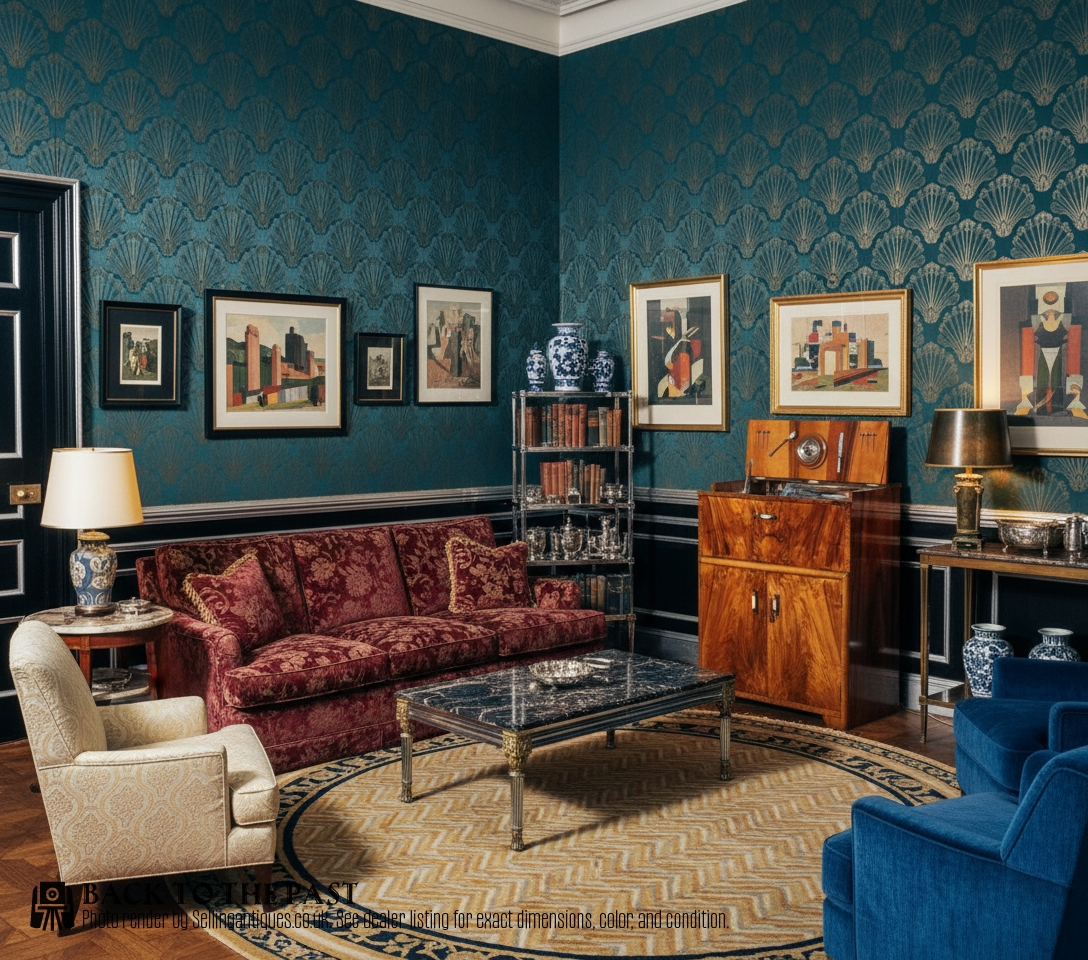
Art Deco Dry Bar
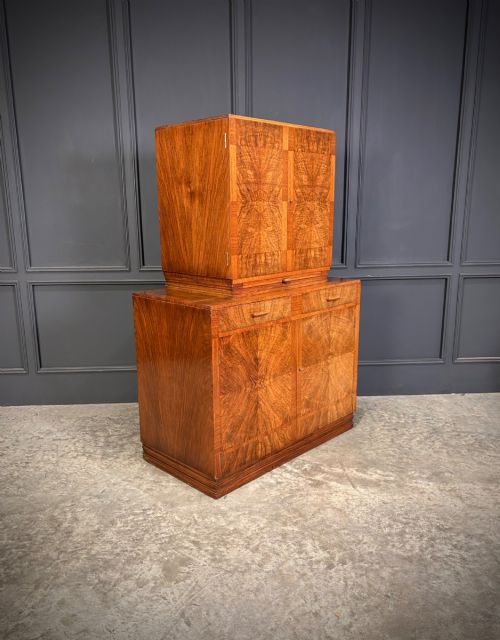
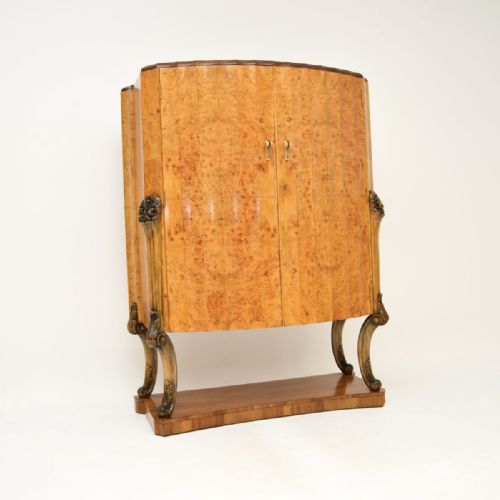
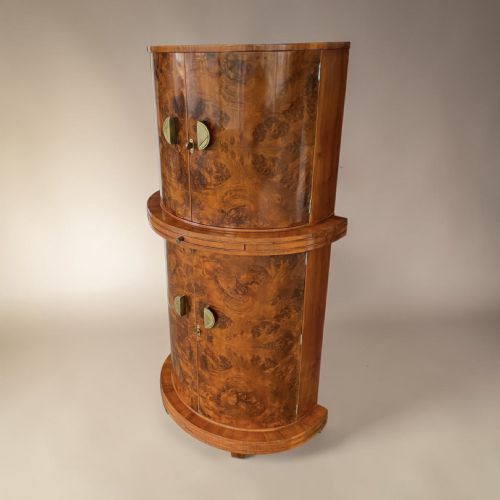
An art deco dry bar is primarily encountered as a cocktail cabinet, drinks cabinet, or specialised side cabinet designed for home entertainment during the interwar years. These pieces typically date from the 1920s, 1930s, and 1940s, embodying the distinct stylistic shifts of the period.
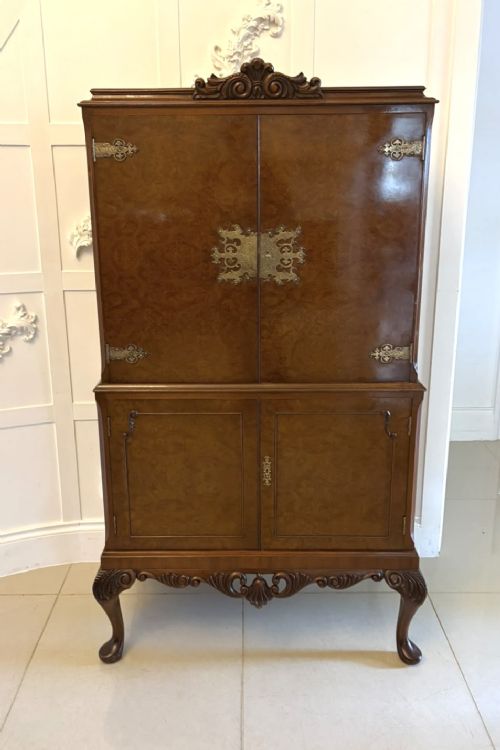
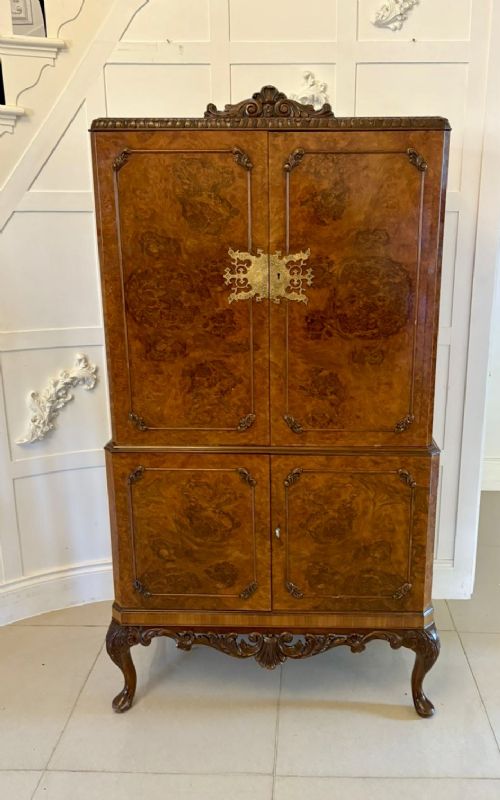
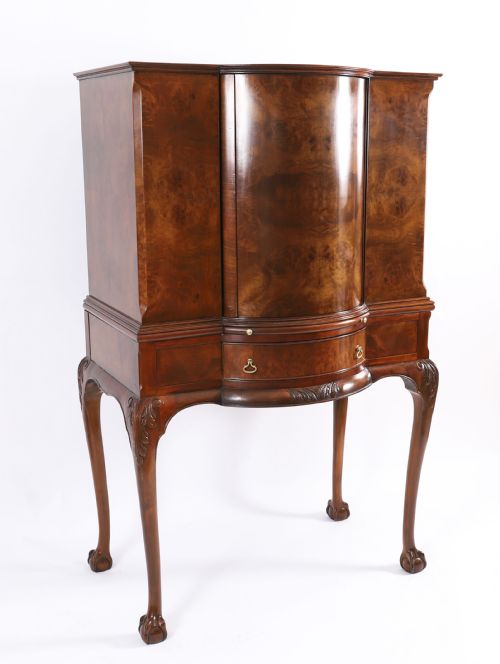
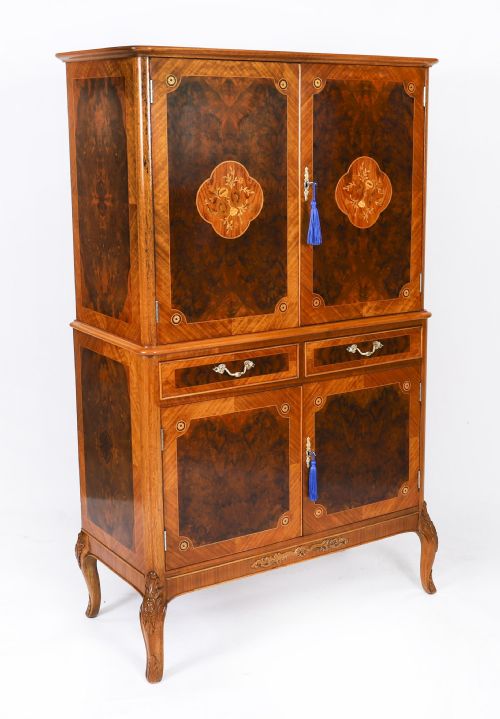
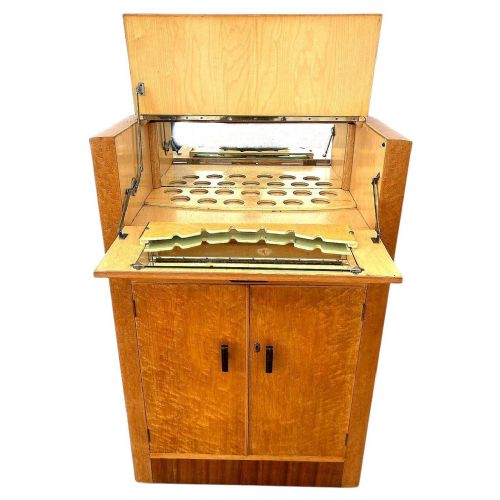
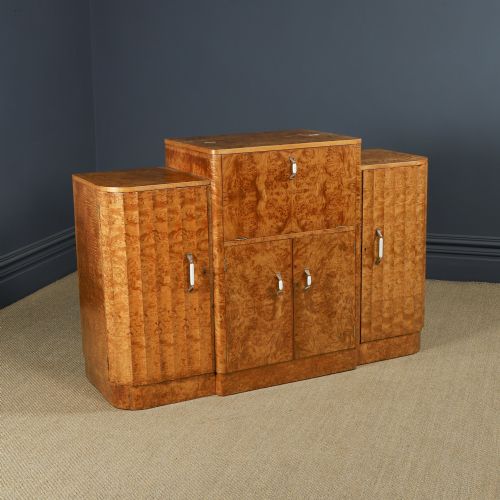
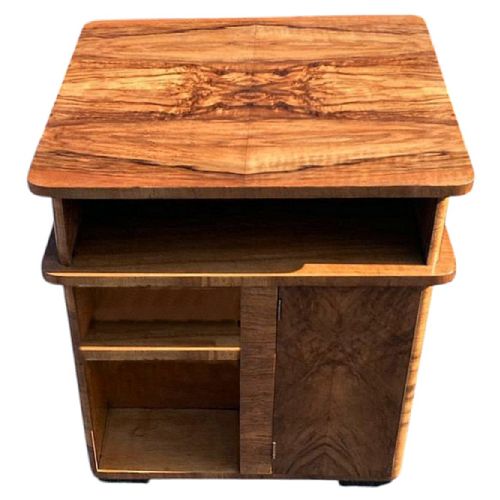
The most common form on this page is the freestanding bureau-style or double-door drinks cabinet, often housing fitted interiors for glassware and bottles. Alongside these upright cabinets, buyers will also find occasional cocktail tables and corner units suited to compact spaces.
Originating largely from English workshops of the era, the design vocabulary ranges from streamlined geometric fronts to occasional revival details like Queen Anne elements, though the core aesthetic remains rooted in modernist lines.
Materials and construction
Makers utilised a foundation of solid woods overlaid with highly figured veneers, predominantly burr walnut, alongside bird's-eye maple, mahogany, satinwood, and macassar ebony. These decorative wood surfaces were selected for their intricate grain patterns and polished to a high sheen.
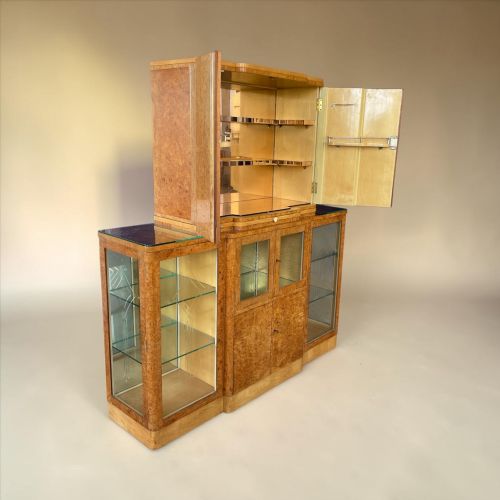
Metal and glass components played a functional and decorative role, incorporating chrome, brass, and mirrored glass panels inside the serving compartments. Some advanced examples even integrated electric lighting to illuminate the interior upon opening.
Art Deco Dry Bar Retail Price Guide 2026
Typical asking prices for art deco dry bar among the pieces listed under this phrase on Sellingantiques today, from the lower quarter to the upper quarter. They describe what is for sale here now, not the wider market.
Listings feature woods spanning burr walnut, mahogany, satinwood, birch wood, and macassar ebony.
Judging construction and finish
The distinction between tiers rests heavily on the selection and matching of wood veneers, particularly how symmetrically the burr walnut or maple grain flows across the doors. Superior examples display meticulous book-matching that turns the timber itself into the primary ornament.
Internal complexity and original fittings dictate the upper echelon of these pieces. Cabinets featuring fully intact mirrored backs, original glass shelves, pull-out mixing slides, and specialised bottle racks demonstrate higher grade workshop production.
Epstein·Harry and Lou Epstein·Maurice Adams·Hille·Waring and Gillow·Harrods
The Art Deco Dry Bar Glossary
- Burr Walnut
- A figured wood grain harvested from the wart-like growths on walnut trees, prized for its swirling patterns. It forms the predominant surface material across most cabinets on this page.
- Cocktail Cabinet
- An upright furniture piece fitted specifically for storing bottles, shakers, and glassware. These units typically feature a drop-down flap that serves as a mixing surface.
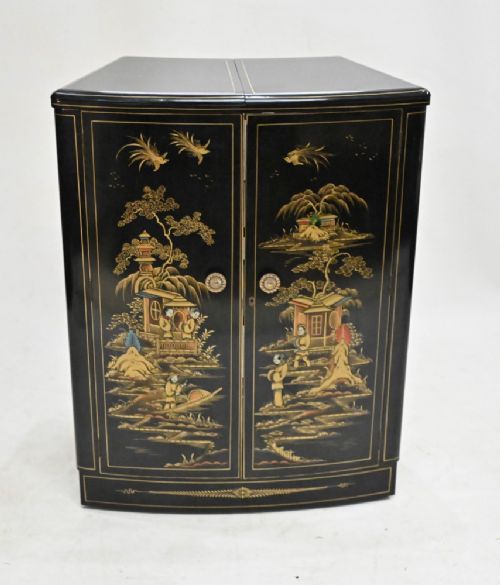
- Chinoiserie
- A decorative style employing hand-painted or lacquered oriental motifs. In this context, it appears on cabinets finished with elaborate oriental scenes over a lacquered base.
- Veneer
- A thin slice of decorative timber applied to a sturdier secondary wood foundation. This technique allowed cabinetmakers to display costly grain patterns economically.
Art Deco Dry Bar: Frequently Asked Questions
What is an art deco dry bar?
An art deco dry bar is a specialised cabinet designed during the 1920s and 1930s to store and serve alcoholic drinks. These pieces range from upright cocktail chests to low serving tables.
They generally feature high-gloss wood veneers like burr walnut or maple, often combined with mirrored interiors and chrome hardware to suit modern entertaining spaces.
How were these cabinets used originally?
These cabinets served as the social centrepiece for hosting guests at home during the cocktail revival of the interwar period. The drop-down doors functioned as immediate mixing ledges for preparing drinks.
Interior compartments kept decanters, cocktail shakers, and specialised glassware neatly organised behind lockable doors until it was time to serve.
Where should I place a dry bar?
A dry bar suits principal living areas, dining rooms, or home libraries where guests gather for pre-dinner drinks. Upright cabinets function well against flat walls, while corner units make efficient use of difficult architectural spaces.
Keep these polished wood and mirrored surfaces away from direct sunlight to preserve the finish and prevent the veneers from fading over time.
How do I distinguish 1920s pieces from 1930s pieces?
Cabinets from the 1920s often combine exuberant wood grains with traditional structural silhouettes or subtle hints of earlier revivals. They frequently showcase heavier proportions and ornate hardware.
By contrast, pieces from the 1930s lean towards cleaner, more streamlined geometries, utilising blonde maples and stark contrasts like black lacquer alongside modern electrical fittings.