


Art Deco Cutlery
Art deco cutlery brings geometric rhythm and sleek metal to the table, offering practical service pieces shaped by the bold aesthetics of the interwar decades.
Art Deco Cutlery
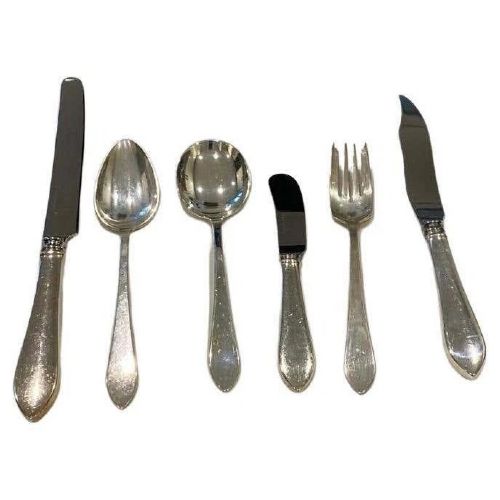
Art deco cutlery encompasses individual spoons, forks, knife rests, and large fitted canteens spanning the 1920s to the 1940s. Buyers look for these items to complete period dining settings or to acquire functional silverware with distinct architectural lines.
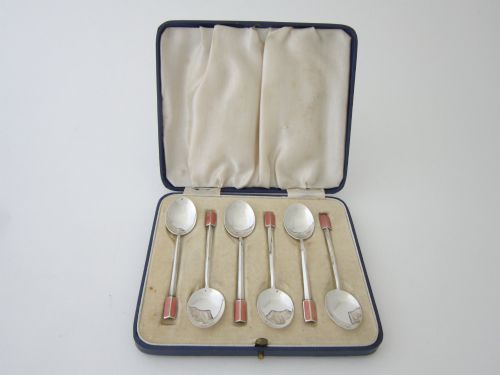
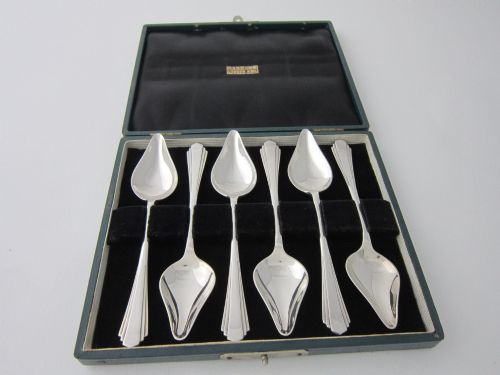
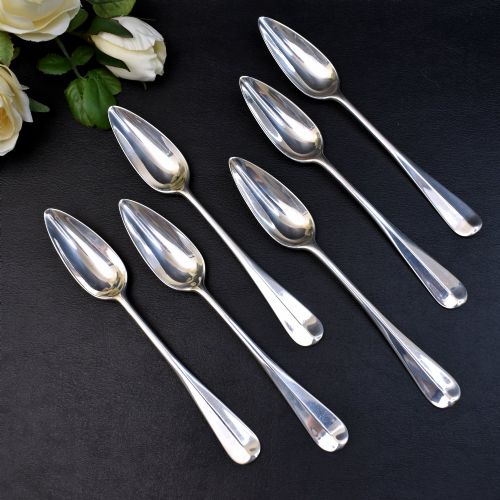
The version most commonly encountered on this page is the cased set of teaspoons or coffee spoons, frequently finished with coloured enamel or housed in original fitted boxes lined with velvet and silk.
Materials and Construction
Items in this category rely primarily on sterling silver and silver plate, shaped into solid services or plated over a base metal. Enamel provides vibrant colour accents on spoon handles, while Bakelite appears on specialist knife rests and bridge spoons.
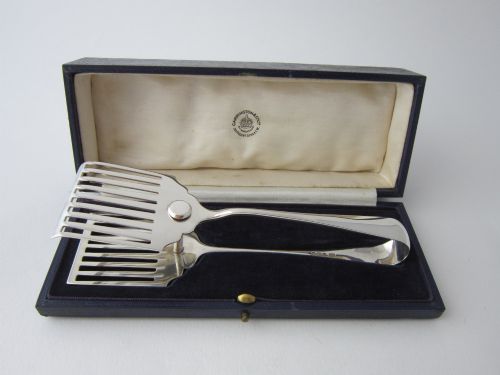
Presentation boxes utilise wooden cabinetry paired with interior linings of velvet, satin, leatherette, and silk to protect the metalwork during storage.
Bridge spoons bring specialised design to the card table, ensuring players keep chalk dust off the cards.
Assessing Craftsmanship and Distinction
The standard of a set rests upon the crispness of the geometric stamping, the weight of the silver, and the intact condition of applied enamel work. Hand-finished detailing by recognised makers commands greater interest than mass-produced plating.
Complete original housing, including fitted velvet and satin boxes with functioning clasps, elevates the preservation standard of larger canteens and smaller tea services alike.
Hamilton and Inches·Suckling Ltd·Georg Jensen·Waring and Gillow·Mappin and Webb·Alexander Clark
The Art Deco Cutlery Glossary
- Canteen
- A fitted box, cabinet, or table designed specifically to store a complete set of cutlery. These containers often feature multiple trays lined with baize or velvet.
- EPNS
- Electroplated nickel silver, a common base material used for silver plated cutlery services. It provides the appearance of solid silver at a different production scale.
- Knife rest
- A small horizontal support placed on the table to keep carving or dining knives elevated between courses. Pairs of these rests appear frequently in silver and Bakelite.
- Hallmark
- An official stamp applied to precious metals indicating the standard of purity, the assay office, and the year of manufacture. Sterling silver pieces carry these marks for verification.
Art Deco Cutlery: Frequently Asked Questions
How do I clean enamelled spoons?
Enamelled spoons require gentle cleaning with warm soapy water and a soft cloth to protect the vitreous glass surface. Avoid abrasive dips and ultrasonic cleaners that can chip or dull the coloured finish.
Dry the pieces thoroughly immediately after washing to prevent moisture from lodging around the joins where the enamel meets the silver.
What is a canteen of cutlery?
A canteen is a dedicated wooden box, cabinet, or table fitted with slots and straps to hold a matched service of forks, spoons, and knives. These cases keep larger sets organised and protected from tarnish.
Many examples from the period utilise walnut or oak construction with hinged lids and multiple internal drawers.
Are silver plated sets durable?
Silver plated sets offer robust daily utility when the underlying nickel silver base remains protected by a sufficient layer of deposited silver. Normal handling over decades creates minor surface wear rather than structural failure.
Careful hand washing preserves the remaining plate much longer than automated dishwashing cycles.
How can I date these items?
Dating relies primarily on official hallmarks stamped into sterling silver items, which record specific assay office symbols and date letters. Stylistic cues such as stepped geometric motifs and chevron patterns also point towards the interwar decades.
Original fitted presentation boxes and paper maker labels further help anchor pieces to the 1920s, 1930s, or 1940s.