

Art Deco Blue Glass
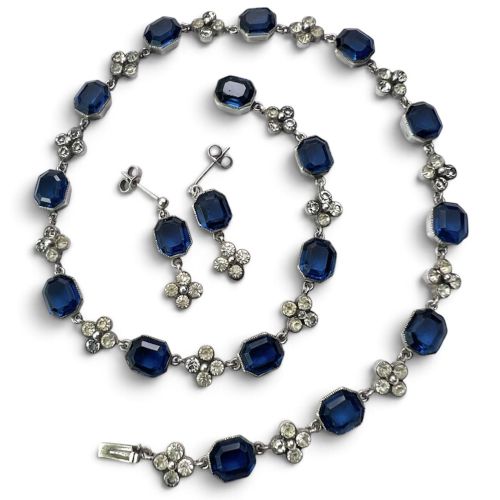
Art deco blue glass brings striking geometric form and intense colour to domestic interiors through vessels, lighting, and dressing table accessories.
Art Deco Blue Glass
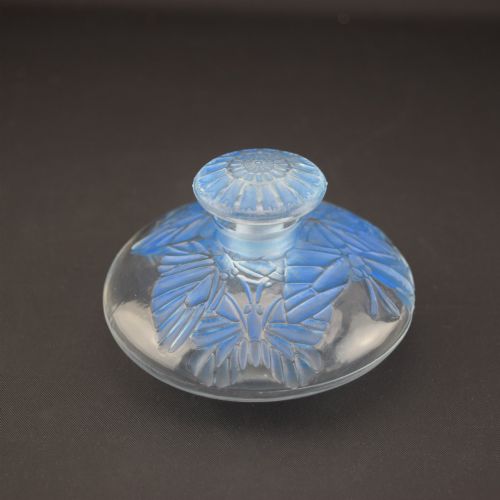
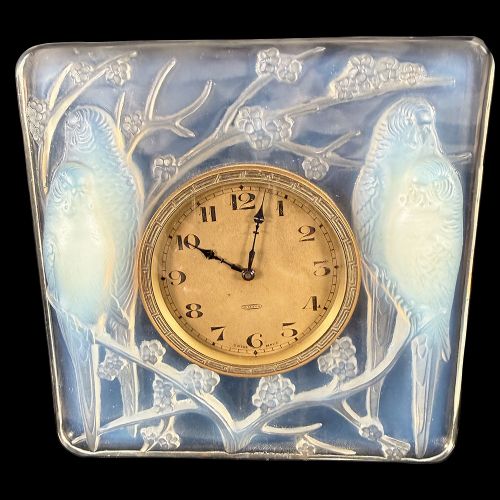
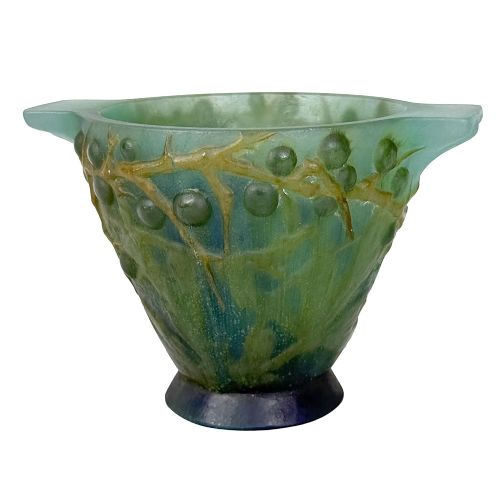
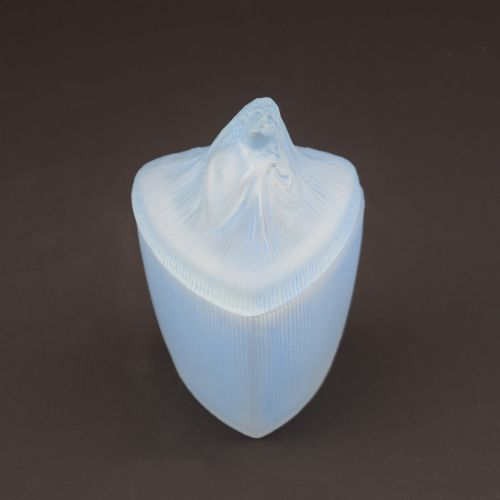
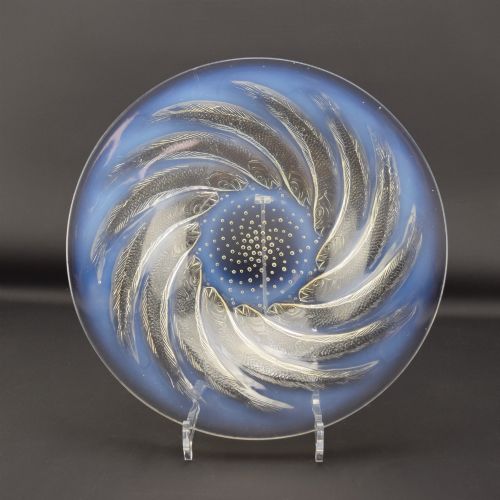
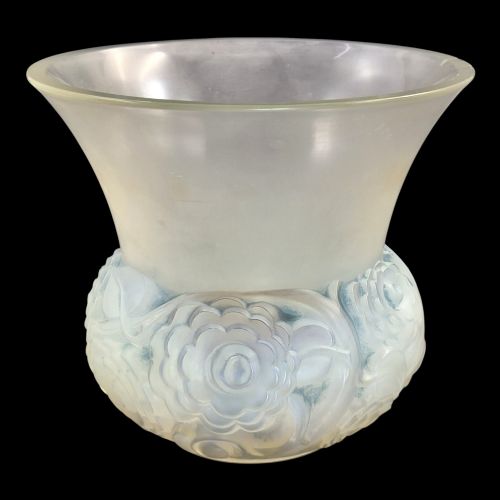
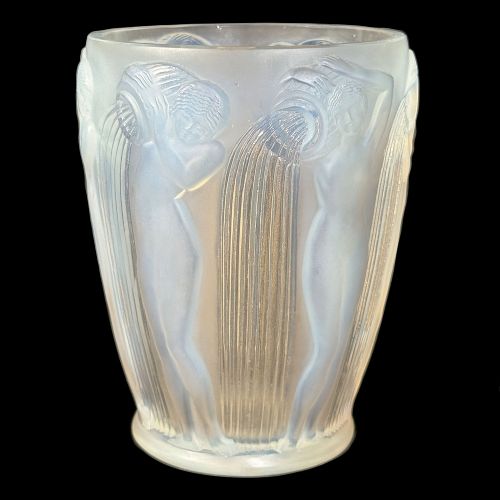
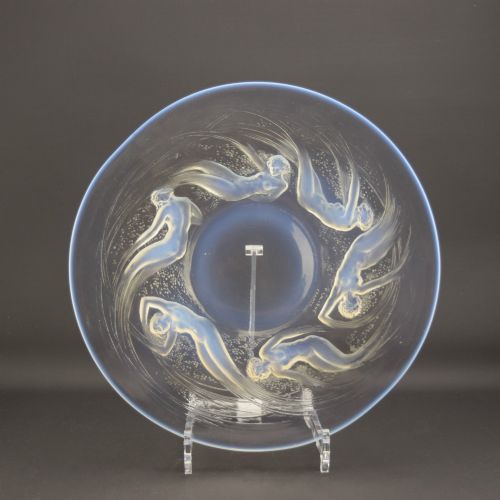
Art deco blue glass encompasses a diverse range of decorative and functional objects produced during the early twentieth century, spanning utilitarian vessels and ornamental desk pieces. The items seen most frequently on this page include vases, decorative bowls, scent bottles, and vanity jars.
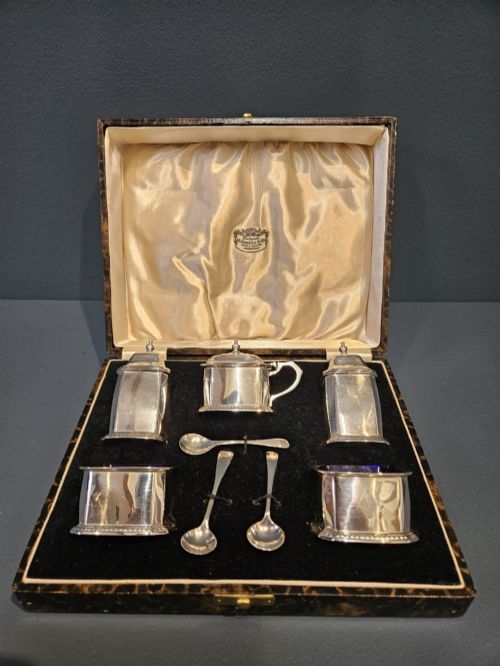
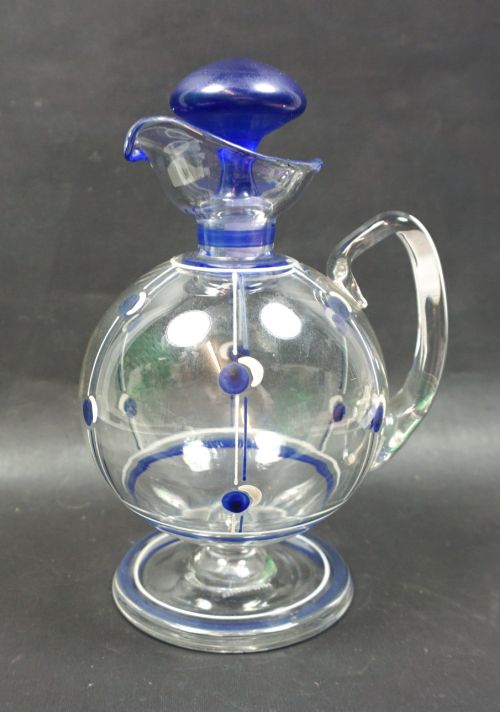
Vessels and tableware items often incorporate contrasting metallic mounts, sterling silver, or chrome elements that ground the vivid vitreous bodies. Vanity items and clocks demonstrate the integration of coloured glass into daily domestic routines, utilising opalescent or frosted finishes to catch ambient light.
How they were made
Makers utilised moulded, pressed, and cut glass techniques, frequently combining frosted or opalescent treatments with rich cobalt and turquoise hues. Molten material was manipulated into geometric moulds or hand-finished to achieve the characteristic textures seen in pate de verre and layered crystal pieces.
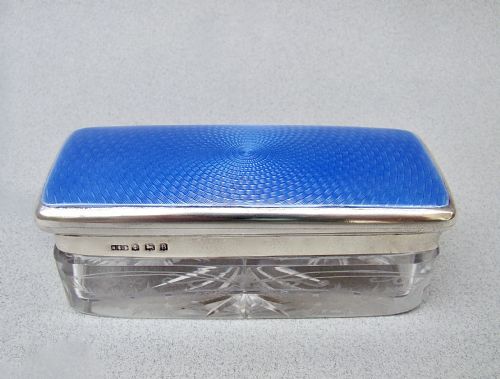
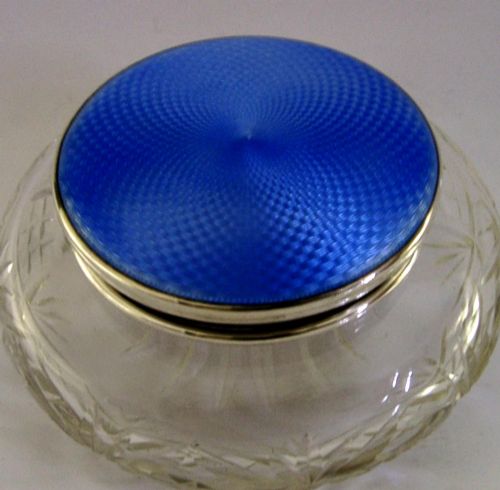
Metalwork integration relied on sterling silver, silver plate, and enamel details applied directly to the glass rims, stoppers, and mounts. Guilloche enamel and cut glass facets added linear precision that complemented the curvilinear and angular motifs of the period.
Art Deco Blue Glass Retail Price Guide 2026
Typical asking prices for art deco blue glass among the pieces listed under this phrase on Sellingantiques today, from the lower quarter to the upper quarter. They describe what is for sale here now, not the wider market.
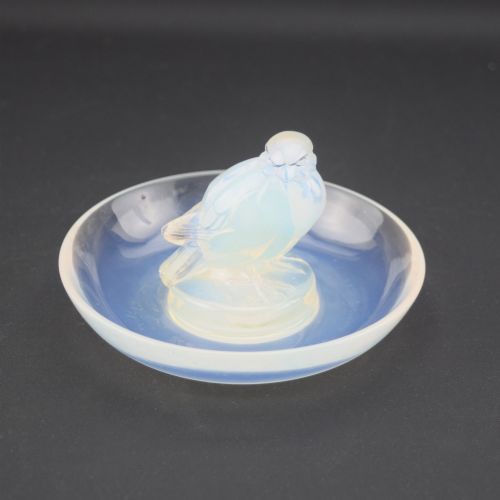
Several glass animals, including tiny blue sparrows and stoic ibexes, stand ready to guard your desk.
What varies in quality
Depth of colour and optical clarity distinguish superior examples from standard production pieces, particularly in translucent and opalescent vessels where light diffusion creates internal glow. The crispness of moulded relief work and the precision of surface polishing reveal the maker's technical capability.
The integration of precious metal mounts and enamel work indicates higher workshop standards, where silver hallmarks and secure structural fittings remain intact. Well-executed pieces display harmonious proportions between the vitreous body and any auxiliary chrome, brass, or silver elements.
Rene Lalique·Karl Palda·Henry Clifford Davis·Joseph Simon·Henry Bergé
The Art Deco Blue Glass Glossary
- Opalescent Glass
- Glass that diffuses light to display a milky or pearlescent glow, often shifting in tone between blue and amber depending on illumination. This effect was heavily utilised by French makers for decorative bowls and vases.
- Guilloche Enamel
- Decorative metalwork technique involving precise mechanical engraving beneath a translucent layer of coloured enamel. It frequently appears on vanity jars, compacts, and scent bottle lids from the period.
- Pate de Verre
- Form of kiln-cast glass created by packing finely crushed glass into a mould with a binding agent before firing. The resulting pieces possess a dense, frosted texture with variegated colour.
- Cut Glass
- Glass decorated by grinding facets or linear patterns into the surface using rotating wheels. This technique adds brilliant reflection and texture to decanters, bowls, and cruet sets.
Art Deco Blue Glass: Frequently Asked Questions
How can I tell Czech pieces apart from French ones?
French production often emphasises sculptural opalescence and intricate moulding techniques seen in vases and figurines. These items frequently display signatures or moulded factory marks.
Czech pieces tend to focus on vibrant colour combinations, geometric cutting, and chrome or enamel highlights on decanter sets and vanity items. They are generally characterised by bold modern profiles rather than delicate figural reliefs.
Are these pieces suitable for daily use?
Many items, such as decanters, cruet sets, and vanity jars, were designed for practical domestic application and handle regular interaction well. Care should be taken with delicate opalescent vases and perfume bottles.
Protect surfaces by placing items away from high-traffic edges where accidental knocks might occur. Avoid exposing antique glass to sudden thermal shocks, such as very hot liquids or rapid temperature shifts.
What period do most of these items date from?
The vast majority of listings originate from the interwar period of the 1920s and 1930s, capturing the height of the Art Deco movement. A smaller selection extends into Edwardian production or slightly later mid-century examples.
Stylistic markers such as streamlined silhouettes, bold geometric cutting, and chrome mountings help confirm this chronological window. Hallmarks on silver components provide precise confirmation of manufacturing years.