




Architectural Leaded Glass
Architectural leaded glass panels and windows bring daylight through hand-painted scenes and traditional timber frames.
Architectural Leaded Glass
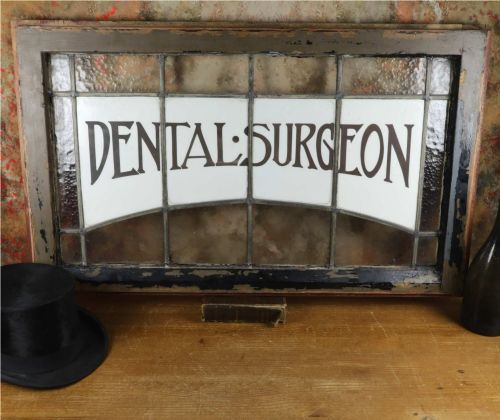
Architectural leaded glass covers salvaged windows, doors, and glazed panels originating from Victorian, Edwardian, and early twentieth-century buildings.
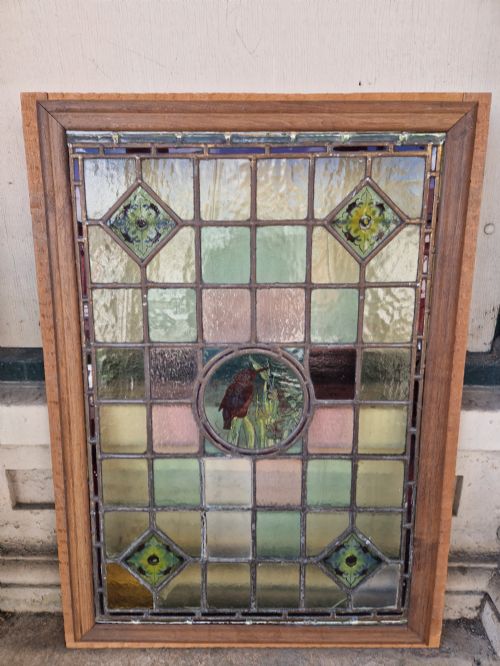
The pieces encountered most frequently on this page are individual stained glass windows and panels featuring hand-painted rural scenes, birds, and floral designs set into lead cames.
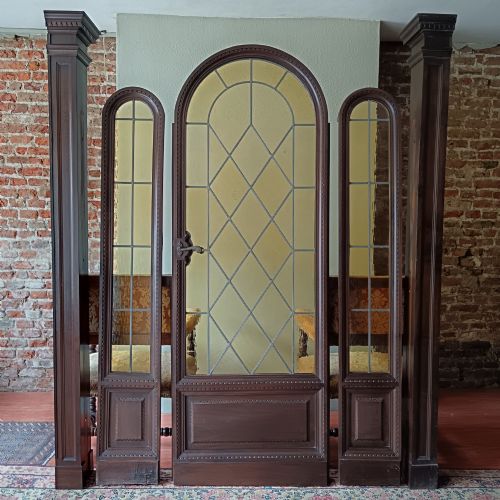
Makers utilised these panels in domestic and public settings, incorporating timber frames, pine surrounds, and occasionally iron or stone supports for church and vestibule installations.
How they were made
Craftsmen built these windows by cutting individual pieces of coloured or clear glass, hand-painting details such as landscapes and figures, and firing the pigment onto the surface.
Pieces of glass were joined together using flexible lead cames, soldered at the joints to form secure geometric or pictorial panels.
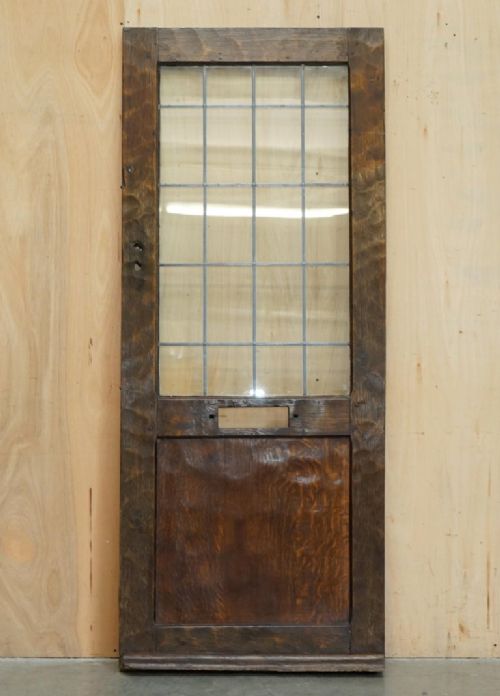
Glazing units were then fitted into wooden frameworks made from timber, pine, or incorporated directly into larger doors and structural openings.
Materials recorded across the inventory include lead, stained glass, timber, pine wood, and iron components.
What varies in quality
Quality in these panels rests upon the complexity and execution of the hand-painted artwork, particularly in pictorial scenes depicting countryside views, animals, or human figures.
The structural integrity of the lead network and the preservation of original glass types, such as bullseyes and amber inserts, distinguish finer examples from standard production.
The surrounding joinery, whether original pine framing or reclaimed timber doors, contributes significantly to the integrity and architectural context of the piece.
Robert Mouseman Thompson·Sir Edward Burne-Jones
The Architectural Leaded Glass Glossary
- Came
- A slender channel of lead, copper, or zinc used to hold pieces of glass together in a window.
- Bullseye
- A small, circular centre piece of blown glass showing a concentric pattern and a central pontil mark.
- Stained glass
- Glass that has been coloured during its manufacture or painted with vitreous enamels and fired in a kiln.
- Architectural salvage
- Building materials and fixtures recovered from structures scheduled for demolition or alteration.
- Vestibule
- An inner lobby or entrance hall situated between the outer door and the main interior of a building.
Architectural Leaded Glass: Frequently Asked Questions
How were architectural leaded glass windows installed?
These windows were typically fitted directly into timber window frames, doors, or stone mullions within domestic homes, shops, and ecclesiastical buildings. They served to divide interior spaces while allowing natural light to pass between rooms.
Larger panels often required iron saddle bars attached across the exterior to support the weight of the lead and glass against wind pressure.
How do I clean leaded glass panels?
Cleaning requires mild soapy water and a soft cloth applied gently across the surface of the glass. Harsh chemical cleaners must be avoided because they can damage the delicate hand-painted pigments and weaken the old lead cames.
Care should be taken around soldered joints and painted areas to prevent moisture from seeping behind flaking paintwork.
Can these windows be hung as wall art?
Many panels are suited for interior display by hanging them securely in front of a light source or window opening. Sturdy hanging brackets should be attached to the surrounding timber frame rather than the lead cames themselves to support the weight.
Backlighting using uniform LED panels offers an alternative method for displaying stained glass away from natural windows.
How do I identify Victorian periods from Edwardian ones?
Victorian pieces often display heavier Gothic Revival influences, rich deep colours, and formal religious or heraldic motifs. The framing and glasswork tend to be robust and structured.
Edwardian and later panels frequently introduce lighter Arts and Crafts or Art Nouveau motifs, featuring softer floral designs, birds, and pastoral countryside scenes with amber bullseyes.