



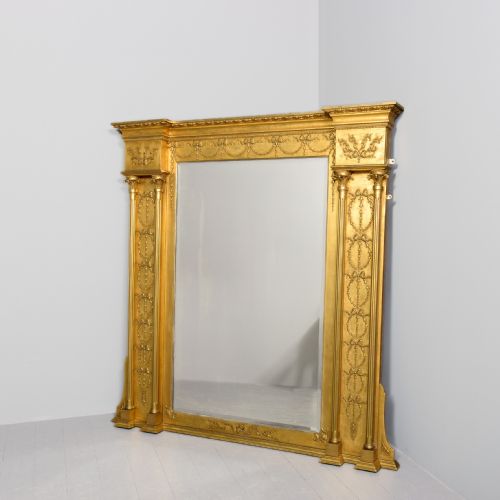


Architectural Gold Frame Mirror
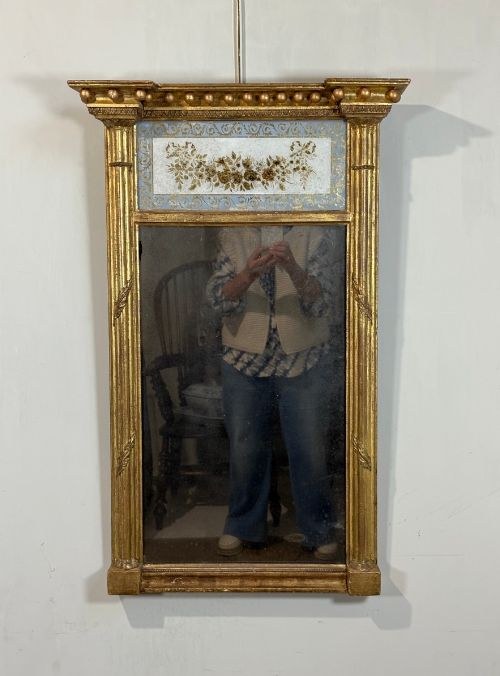
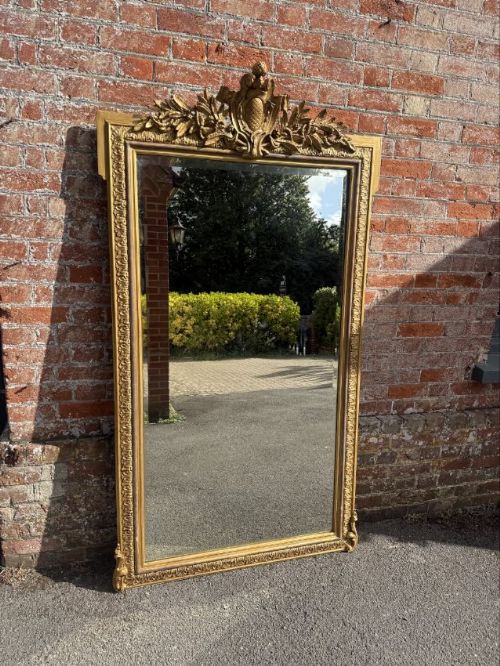
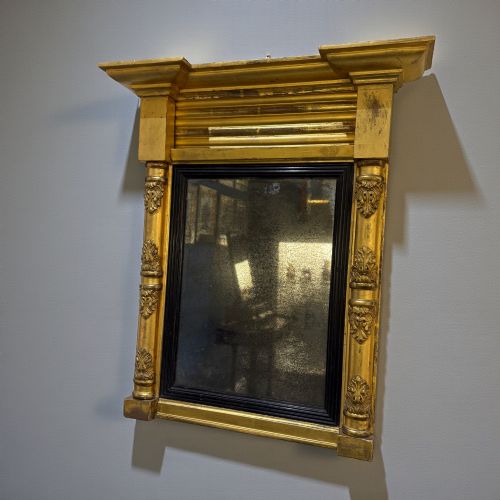
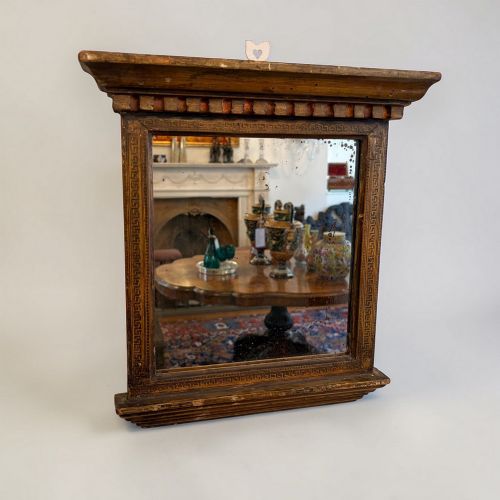
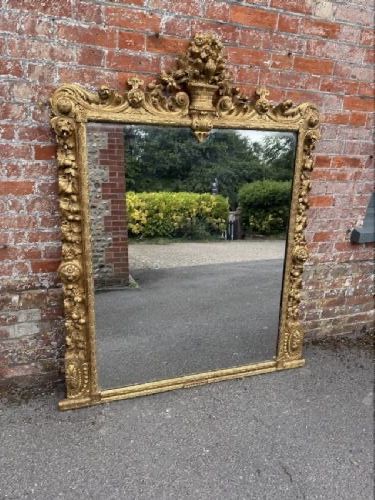
An architectural gold frame mirror brings monumental classical presence and light into a room, framed in gilded wood and gesso.
Architectural Gold Frame Mirror
An architectural gold frame mirror draws directly upon classical building forms, taking shape primarily as large overmantel mirrors designed to sit above a fireplace. These grand pieces span the Georgian, Regency, and Victorian eras, alongside revivals reaching back to the Italian Renaissance.
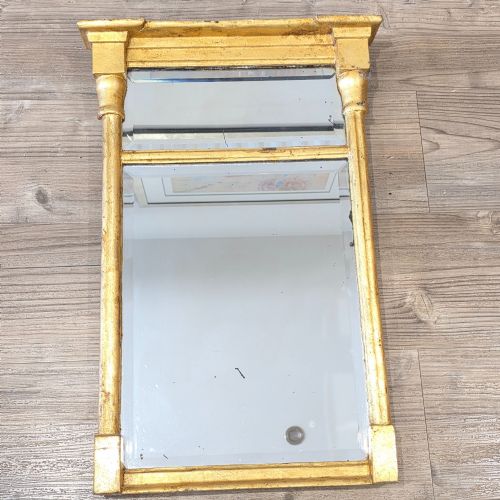
Beyond the massive overmantel formats, buyers encounter smaller pier mirrors intended for the wall space between windows, as well as leaner and wall mirrors. The overarching architectural vocabulary borrows heavily from Neoclassical, Rococo, and Egyptian revival tastes.
Originating predominantly from English and continental workshops, these items utilise substantial proportions. They dominate a wall through sheer scale and defined structural framing.
Materials and construction
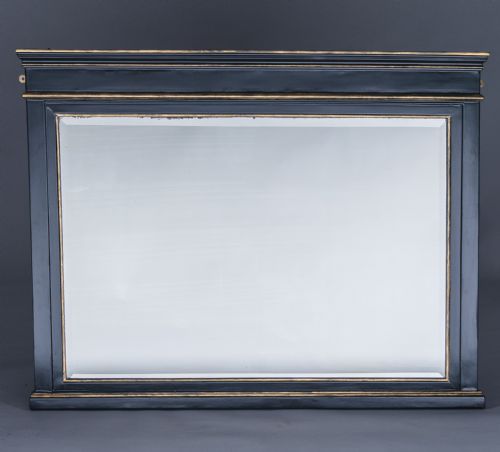
Makers built the foundational framework using carved wood, frequently layering gesso and composition ornaments to create sharp relief mouldings and classical decorations. Gold leaf or gilding was then applied over these surfaces to achieve a luminous finish, sometimes complemented by ebonised wood or walnut elements.
Reflecting plates were set within these heavy wooden structures, with surviving examples often retaining their original glass plates. The construction combined robust carpentry with delicate surface ornamentation like reeding and carved gilding.
Architectural Gold Frame Mirror Retail Price Guide 2026
Typical asking prices for architectural gold frame mirror among the pieces listed under this phrase on Sellingantiques today, from the lower quarter to the upper quarter. They describe what is for sale here now, not the wider market.
Several mirrors carry the invisible weight of centuries, having spent their lives reflecting flickering candlelight and Victorian drawing-room gossip.
Judging quality and craftsmanship
Quality rests in the crispness of the carved wood and gesso ornamentation, where deep, hand-carved detail distinguishes superior pieces from heavier composition mouldings. The depth and integrity of the original gilding dictate the visual impact of the surface.
The preservation of the original mirror plate adds considerable weight to an object, showing age through oxidation rather than modern replacement. Structural joinery and the retention of period-correct classical decorations complete the assessment.
Nosotti's
The Architectural Gold Frame Mirror Glossary
- Overmantel mirror
- A large mirror specifically designed to be positioned on the wall directly above a fireplace mantelpiece. These frames often incorporate classical architectural motifs.
- Pier mirror
- A tall, narrow mirror created to hang on the wall space between two windows, known as the pier. They frequently feature lower consoles or simple rectilinear frames.
- Gesso
- A plaster-like mixture applied to wood frames to provide a smooth base for gilding and low-relief moulding. It allows for intricate ornamentation.
- Giltwood
- Wood that has been coated with gold leaf or a gold-coloured finish. It provides the signature metallic warmth seen on these frames.
- Reeding
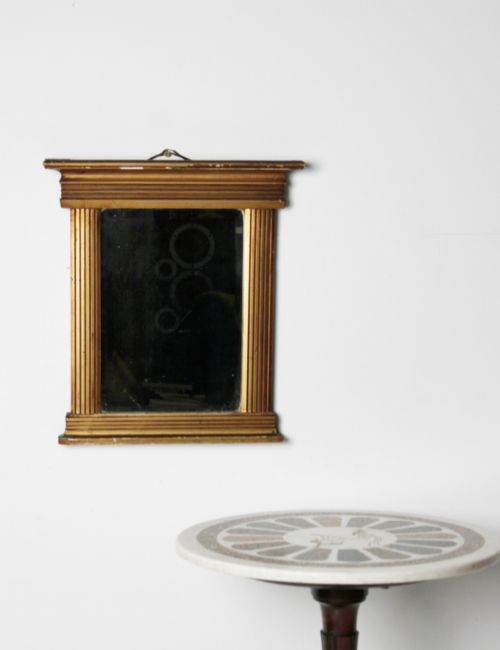
- A decorative parallel pattern of convex mouldings resembling bound reeds. It appears frequently on Regency and nineteenth-century frames.
Architectural Gold Frame Mirror: Frequently Asked Questions
Where should I hang an architectural gold frame mirror?
These large mirrors traditionally anchor a room above a fireplace mantel, where their proportions balance the hearth below.
They also function effectively as wall or leaner mirrors in principal reception rooms to amplify natural light and space.
How do I identify a Regency mirror?
Regency mirrors frequently display classical restraint, incorporating reeded frames, giltwood surfaces, and occasional Egyptian revival motifs.
Look for architectural symmetry and distinct early nineteenth-century proportions that draw on ancient building forms.
What is the difference between an overmantel and a pier mirror?
An overmantel mirror is wide and substantial, built to span the horizontal space across a fireplace mantel.
By contrast, a pier mirror is tall and narrow, proportioned specifically for the vertical wall space between windows.
How do I care for antique giltwood?
Dust the gilded surface gently with a dry, soft brush to protect the delicate gold leaf and gesso layers from abrasion.
Avoid liquid cleaners entirely, as moisture and harsh chemicals will damage the historic metallic finish.