


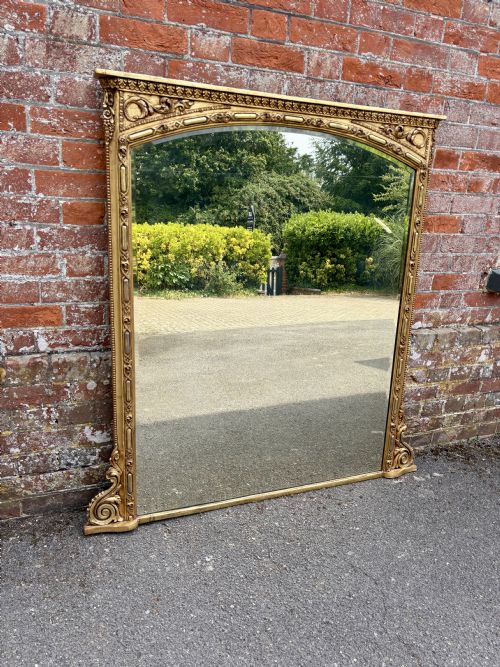
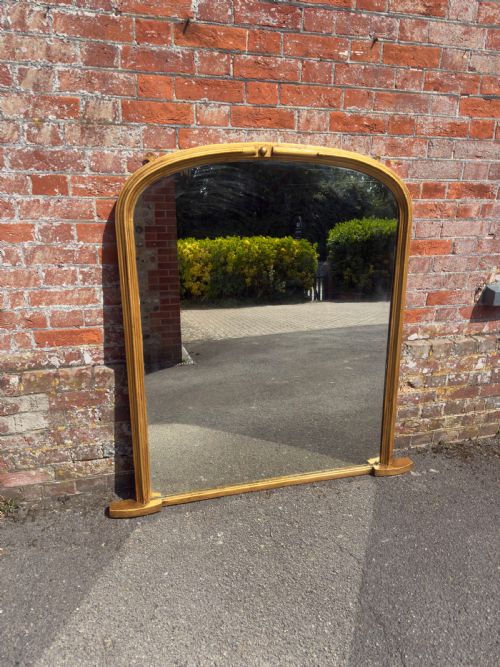
Arched Mantle Mirror
When you search for an arched mantle mirror, you seek a nineteenth-century overmantel glass that anchors a room with height and a curved crest.
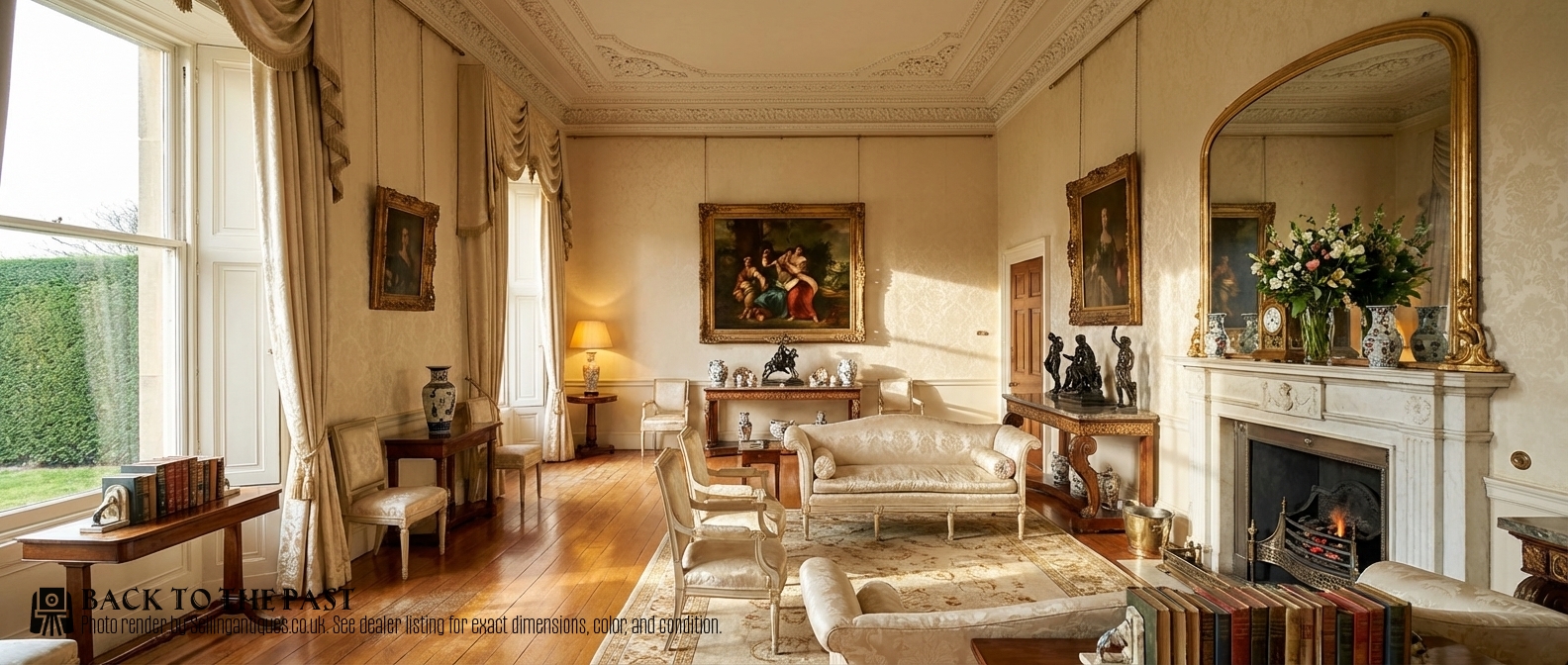
What They Are
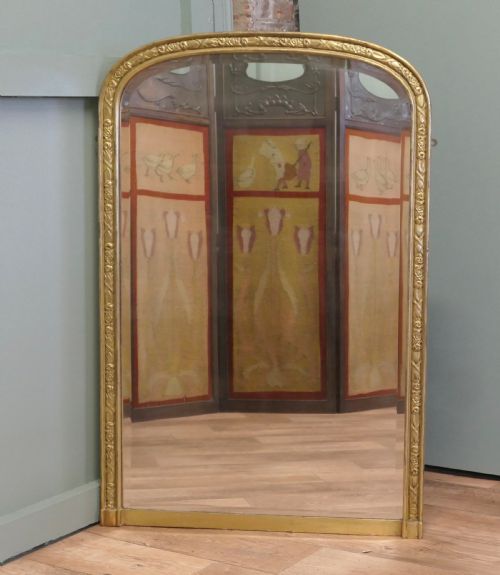
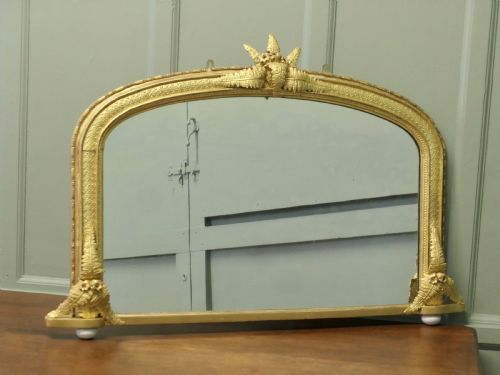
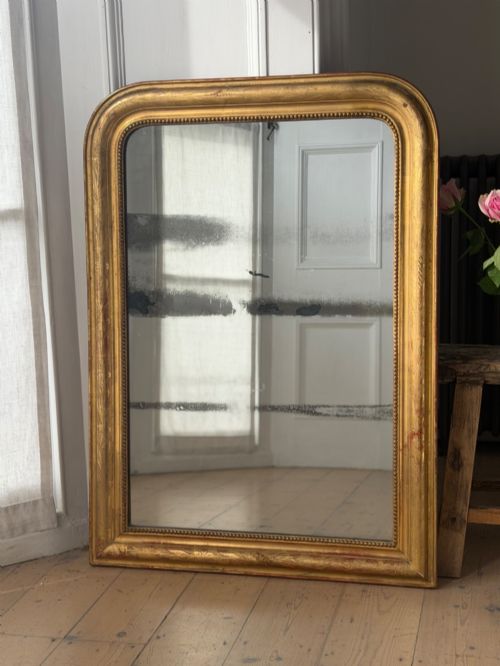
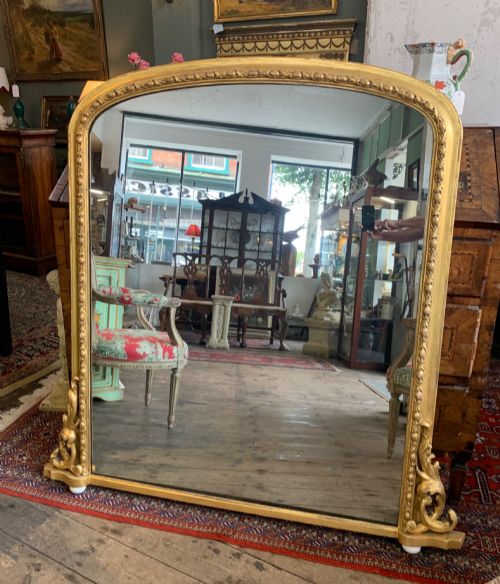
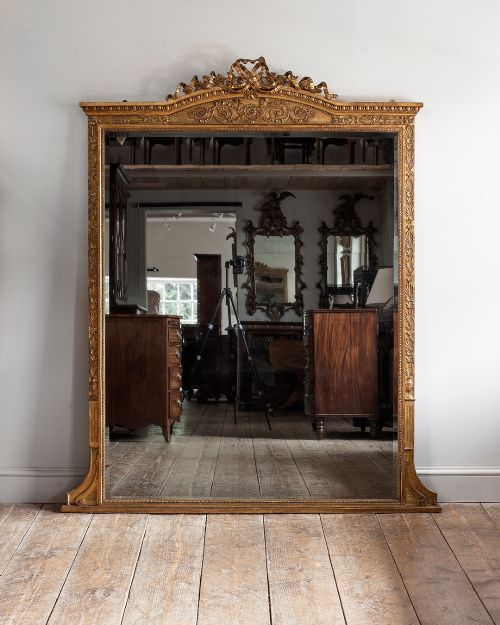
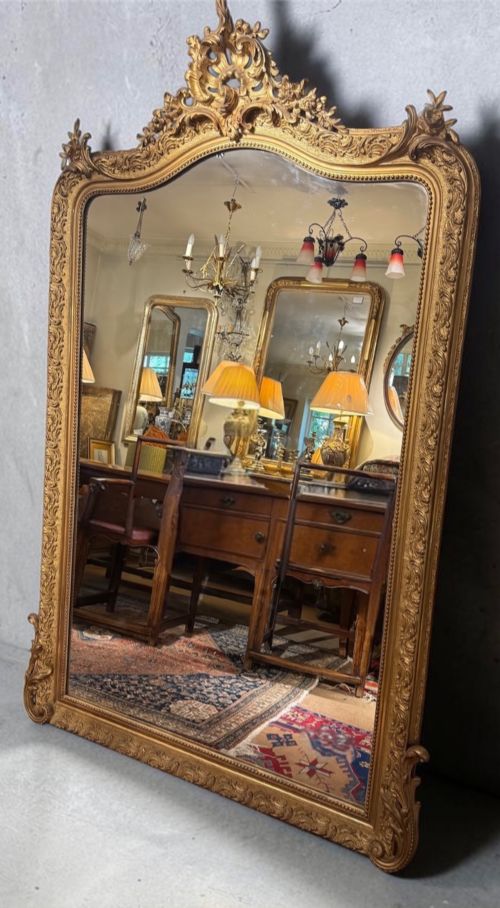
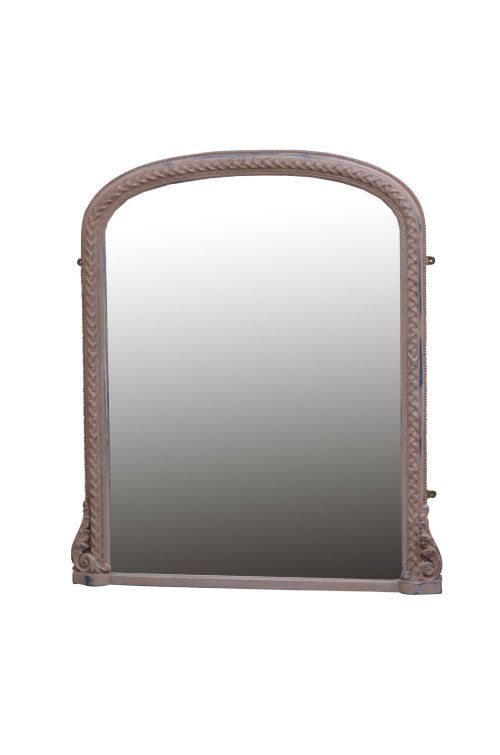
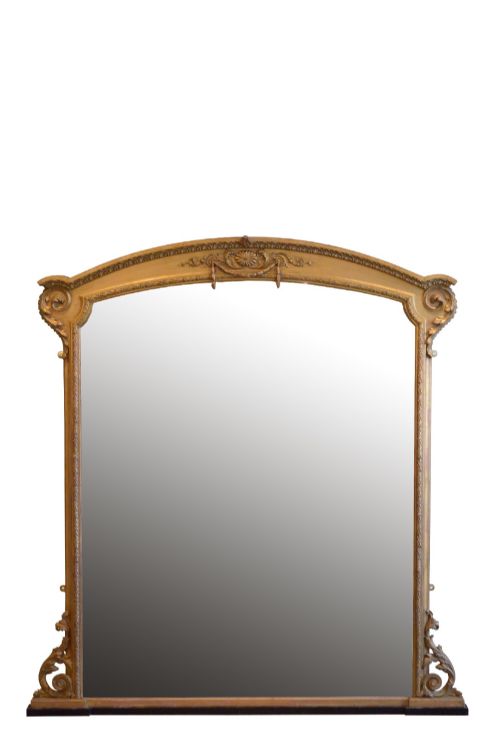
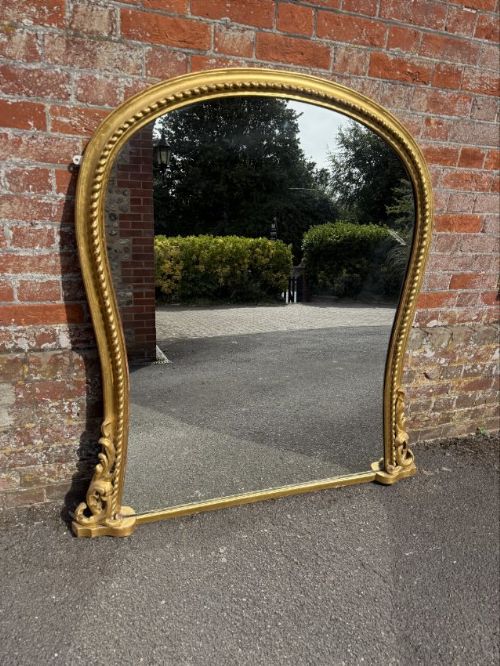
An arched mantle mirror is predominantly represented here by nineteenth-century overmantel mirrors originating from English workshops. These large wall-hanging pieces were designed specifically to sit above a fireplace hearth, drawing the eye upward with an arched or shaped top.
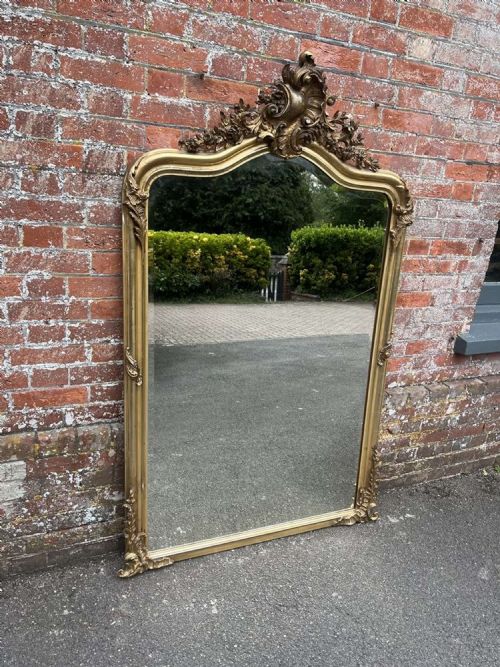
The dominant style encountered on this page is Victorian, alongside examples carrying a French Chateau influence. Most pieces share substantial proportions and were built to dominate a chimney breast.
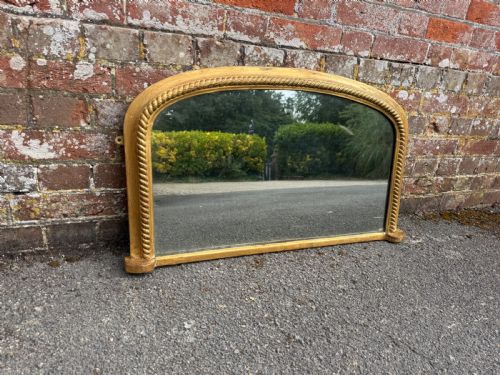
Makers utilised wood as the primary structural carcass, often shaping the crest into a pronounced curve or ribbed arch.
How They Were Made
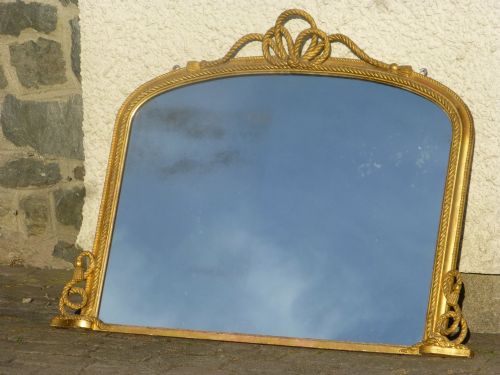
Artisans constructed the foundational frame using carved wood, applying layers of plaster and gesso over the timber to build up relief details and smooth mouldings. Some specific variations incorporate a rope twist motif along the wooden framing.
Surface decoration relied heavily on gold leaf, giltwood, or applied paint to achieve a gilded or painted finish. Glass was then fitted securely into the prepared rebate of the heavy arched frame.
Retail Price Guide 2026
Typical UK retail prices for arched mantle mirror, calculated from the Sellingantiques database of over a million retail prices indexed since 2003. This retail price guide relies exclusively on Sellingantiques data; no external sources or auction records are used, so the figures do not describe the wider market.
Materials recorded across the inventory include glass, gesso, wood, giltwood, gold leaf, gilded wood, plaster, and paint.
What Varies in Quality
The distinction between tiers of quality rests upon the depth and crispness of the carved wood and gesso ornamentation. Deeply modelled gesso ornament and retained original gold leaf separate the finer examples from simpler, flatter frames.
The presence of original gilding versus later overpainting alters the visual weight and historical integrity of the surface. Structural preservation of the heavy wooden carcass also defines the upper echelon of surviving pieces.
The Arched Mantle Mirror Glossary
- Overmantel mirror
- A large mirror designed to hang specifically on the wall directly above a fireplace mantelpiece. These pieces frequently feature horizontal or vertical proportions suited to chimney breasts.
- Gesso
- A plaster-based mixture applied to wood frames to create a smooth surface for subsequent gilding or painting. It allows artisans to carve intricate relief details before finishing.
- Giltwood
- Wood that has been coated with gold leaf or a gold-coloured metallic finish. It provides a reflective, opulent surface common in Victorian interior decoration.
- Rope twist
- A carved wooden moulding resembling the helical strands of a rope. This decorative technique appears on the frames of certain Victorian mirrors.
Frequently Asked Questions
Where should an arched mantle mirror be hung?
These mirrors were historically manufactured to hang directly above a fireplace mantelpiece as an architectural focal point in a reception room.
They also function effectively on large expanse walls where their height and curved top can properly reflect light and space.
How do I identify a Victorian overmantel mirror?
Victorian examples typically date from the nineteenth century and combine substantial wood and gesso construction with heavy glass plates.
Look for characteristic framing styles such as ribbed borders or rope twists finished in giltwood or paint.
What is the difference between giltwood and painted finishes?
Giltwood finishes involve the application of gold leaf or metallic leaf over gesso to create a bright, reflective metallic surface.
Painted finishes utilise flat or distressed pigments directly on the wood and gesso carcass for a more subdued decorative effect.
How do I care for antique gesso frames?
Antique gesso and carved wood frames require gentle dusting with a dry cloth to protect the brittle plaster layers from moisture and impact.
Avoid liquid cleaners entirely, as they can damage the underlying gesso and historical gilding.