

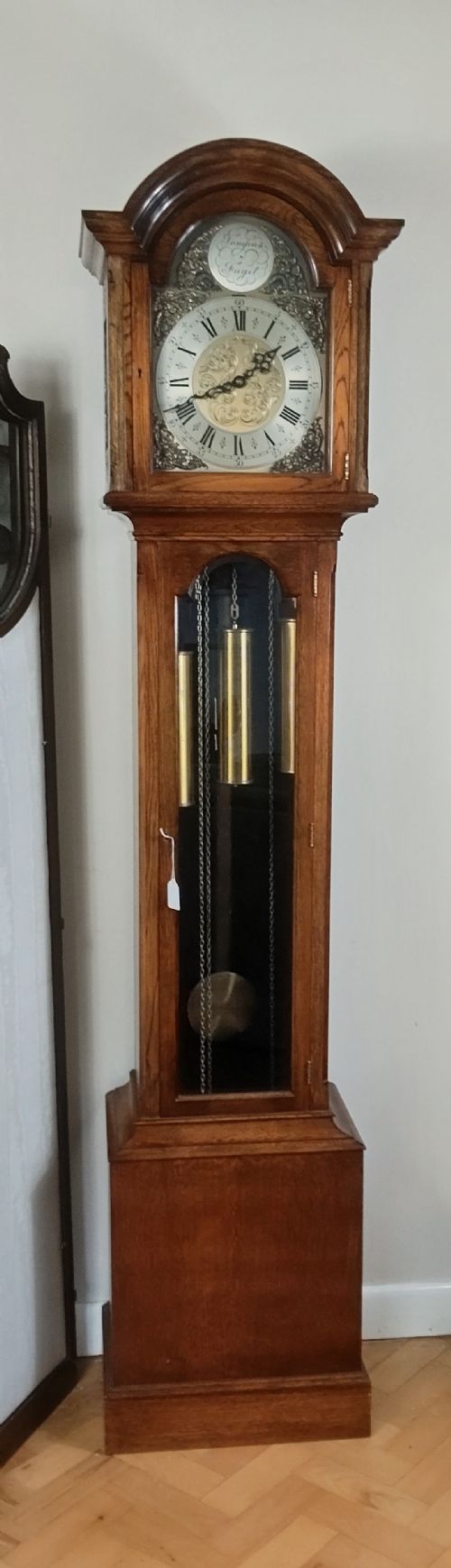
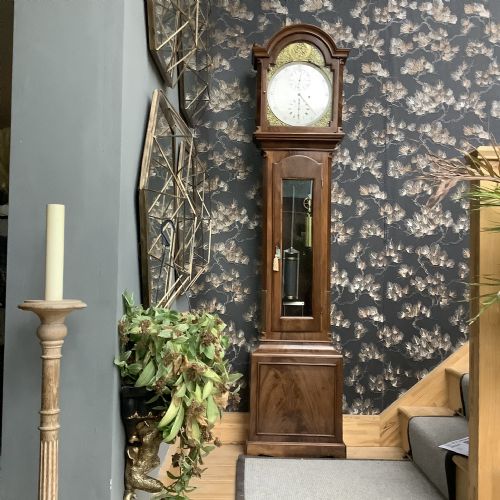


Arched Hood Clock
An arched hood clock is a tall floor-standing timepiece housed in timber with a glazed arched dial door, offering presence and mechanical chime.
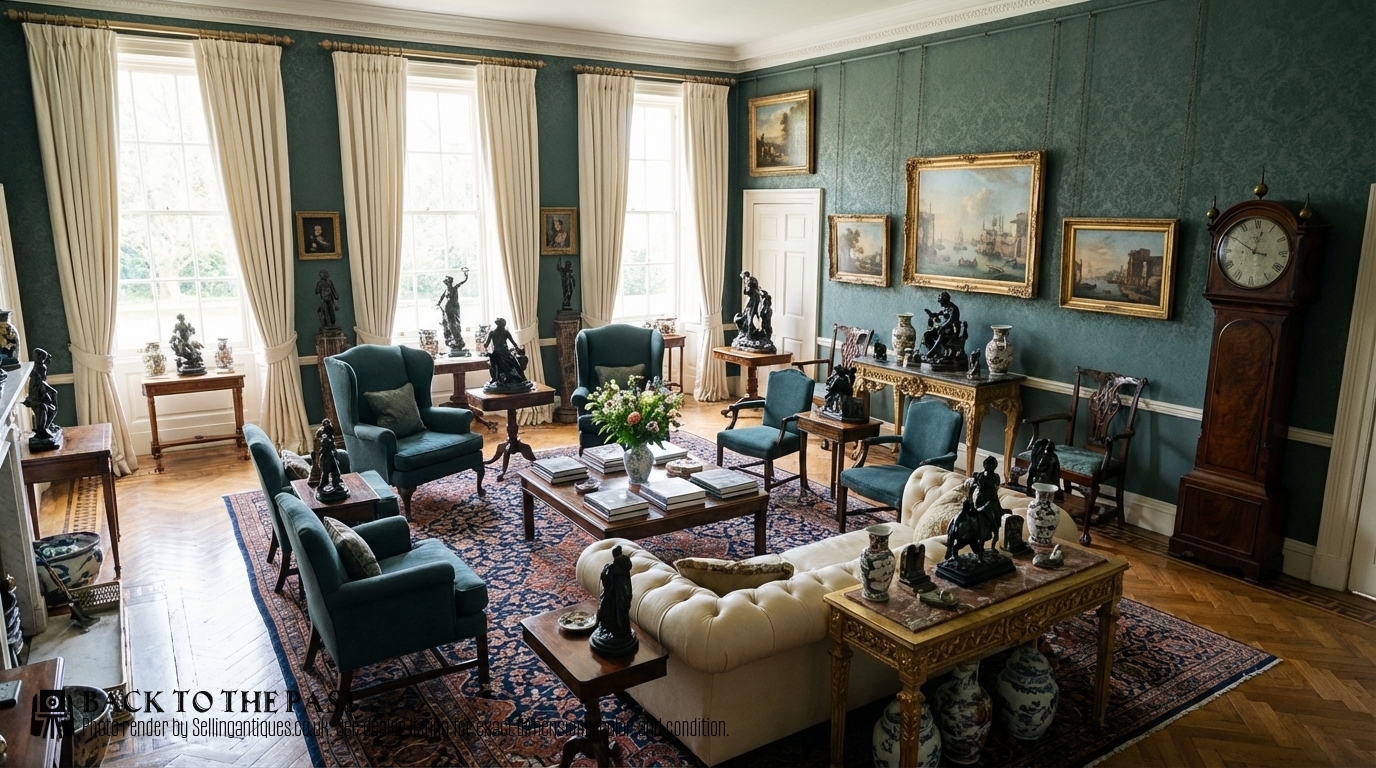
Arched Hood Clock
When you search for an arched hood clock, you are looking at tall case timepieces spanning the Georgian, Victorian, and Regency periods alongside later twentieth-century interpretations. These floor clocks appear in forms ranging from grand proportions to smaller grandmother and grandfather formats.
The pieces on this page include mahogany, oak, and walnut examples, often featuring musical chimes or quarter-chiming movements. Regional makers from London, Scotland, and provincial towns sign many of the surviving cases.
You are most likely to meet mahogany and oak longcase clocks from the nineteenth and eighteenth centuries on this page. These traditional floor clocks combine tall timber trunks with distinctively curved dial hoods.
How they were made
Cabinetmakers constructed the tall cases using solid timbers like oak and mahogany, occasionally applying flame mahogany or quarter-veneered walnut to the main body. Glass protected the dial behind the arched hood door, while brass and enamel frequently formed the clock faces.
The mechanical movements relied on iron and brass components, sometimes incorporating five-pillar designs and complex musical chiming mechanisms. Dial construction ranged from painted enamel to engraved brass plates signed by the maker.
Some models play up to three distinct tunes, proving that Victorian timepieces took their musical intervals rather seriously.
What varies in quality
The refinement of the cabinetwork and the sophistication of the movement separate the standard examples from the exceptional ones. Proportion dictates much of the visual appeal, with smaller or particularly well-balanced cases commanding attention for their elegance.
Makers' signatures add distinction, particularly when associated with established London or provincial workshops known for precision timekeeping. The choice of timber grain, such as flame mahogany or figured walnut, directly influences the visual depth of the case.
Priory of Dundee Scotland·Bravingtons·LISTER & SONS·Dwerrihouse & Carter·Richard Gibbs London·Ganthony Of London·ROWNING OF NEWMARKET·JOHN HARVEY OF WEYMOUTH
The Arched Hood Clock Glossary
- Longcase clock
- A tall pendulum clock enclosed in a wooden case with a weighted movement, commonly known as a grandfather clock. These pieces stand directly on the floor and house the weights and pendulum within the main trunk.
- Grandmother clock
- A smaller, more slender version of the traditional longcase clock, typically produced in the twentieth century. They offer the presence of a floor clock in reduced proportions suitable for lower ceilings.
- Quarter chiming
- A movement mechanism that sounds the quarters of the hour on bells or gongs. This feature adds acoustic complexity to the clock beyond simply striking the full hour.
- Flame mahogany veneer
- A sliced timber finish displaying a characteristic flickering, flame-like grain pattern. Cabinetmakers applied this decorative veneer to prominent surfaces of the clock case for visual impact.
- Pillar
- A vertical brass post supporting the plates of a clock movement. Five-pillar movements indicate a higher level of structural stability and craftsmanship in the gear train.
Arched Hood Clock: Frequently Asked Questions
How do I wind an arched hood clock?
Winding involves using a key or pulling cords to raise the weights inside the trunk, depending on the specific movement. Care must be taken not to over-wind the mechanism.
Most traditional movements require weekly winding to keep the pendulum swinging accurately and the chime operating correctly.
Where should I place a floor clock?
Floor clocks require a stable, dry interior location away from direct sunlight and sudden temperature fluctuations. Placing them against an interior wall protects the timber and helps the case remain plumb.
A level floor ensures the pendulum swings evenly and the escapement ticks with a regular, balanced beat.
What is a silent pull feature?
A silent pull allows the owner to silence the chiming mechanism on demand by pulling a cord attached to the movement. This proves useful during sleeping hours.
The mechanism temporarily prevents the strike train from releasing while allowing the timekeeping train to continue uninterrupted.
How do I distinguish a Georgian clock?
Georgian clocks generally date from the eighteenth or early nineteenth century, displaying classical proportions and traditional timber patination. The dial design and case mouldings typically reflect the prevailing taste of the reign.
Examining the interior movement and the construction of the timber case helps confirm the period of manufacture.