
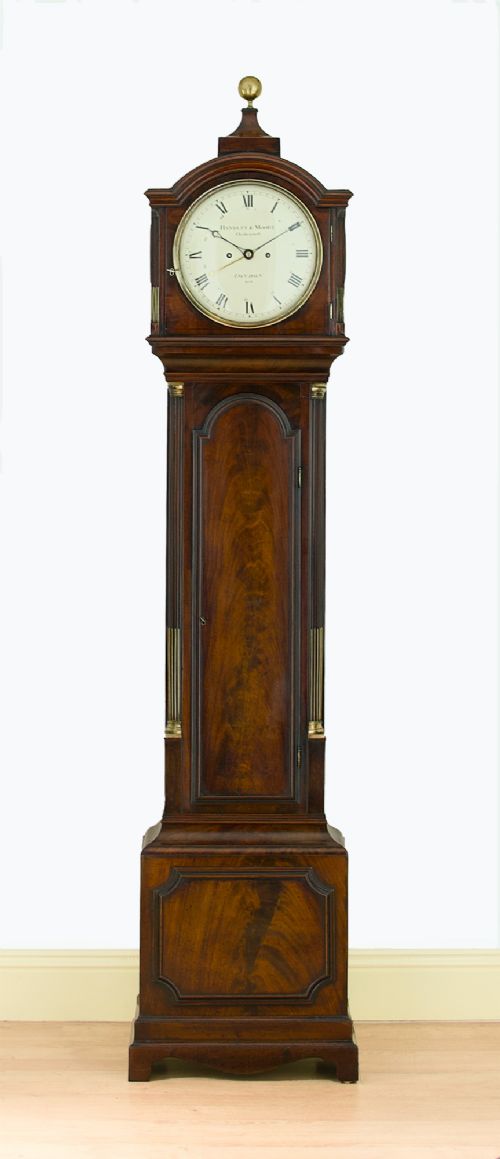
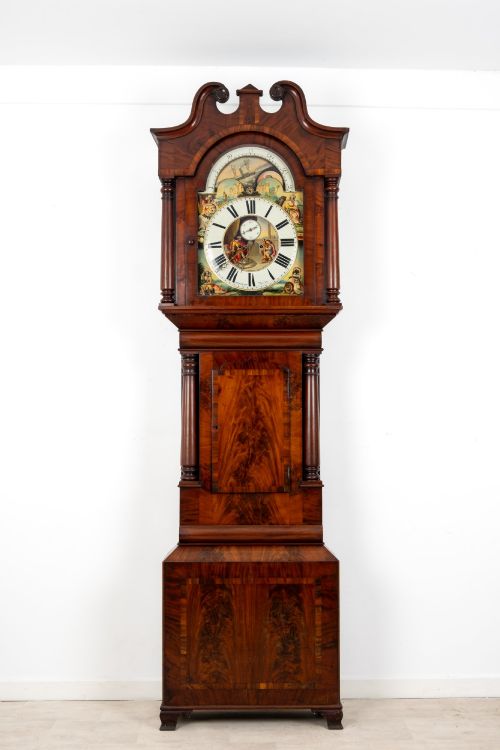
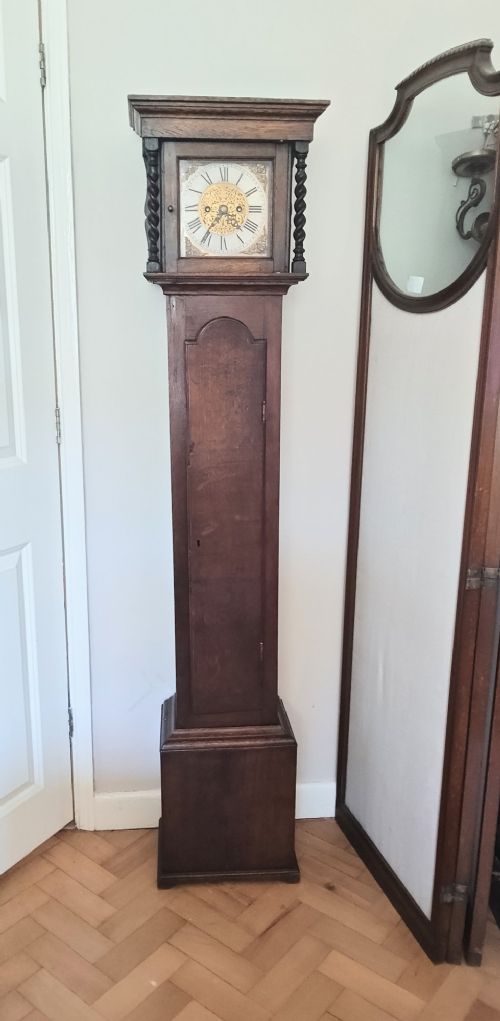
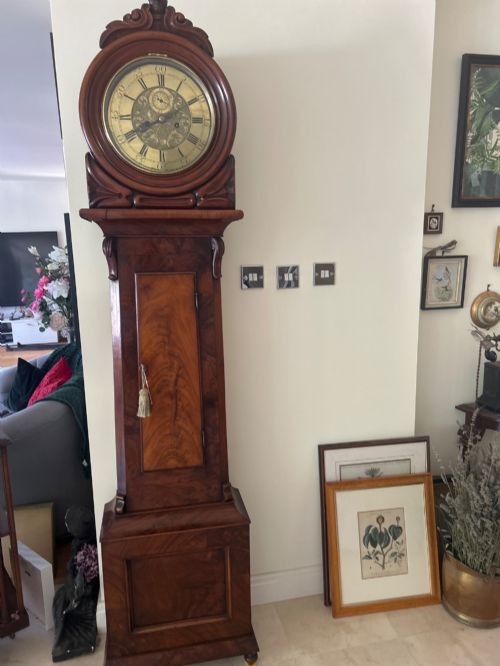


Nineteenth Century Longcase
Nineteenth century longcase clocks are tall floor-standing timepieces built to anchor a room with steady mechanical precision and rich timber cases.
Nineteenth Century Longcase
A nineteenth century longcase clock brings together a towering wooden trunk, a weighted movement, and a prominent dial to measure hours with architectural presence. The examples met on this page span the Georgian, Regency, and Victorian periods, often rendered in rich mahogany or oak.
Regional variations appear across the selection, including Scottish drumhead and marquetry designs, Welsh moonphase dials, and London regulator movements. These regional workshops adapted standard proportions to local tastes, resulting in distinct hood shapes and dial decorations.
Most pieces function as eight-day timekeepers, though smaller grandmother clocks and specialised regulators also populate the listings. Cabinets range from simple country oak builds to highly figured flame mahogany and inlaid Napoleon III cases.
Materials and Construction
Cabinetmakers constructed the tall cases using solid timbers like oak and mahogany, frequently applying flame mahogany veneers or intricate marquetry inlay to the exterior surfaces. Dial faces combined painted iron, silvered metal, and brass fittings to display the time and lunar phases.
Clockmakers housed complex brass gear trains within the trunk, driven by suspended weights and regulated by swinging pendulums. These mechanical components were paired with glass-fronted doors to protect the delicate movement while keeping the dial visible.
Some provincial dial painters added idiosyncratic local spelling to maker names, leaving charming permanent typos inside the clock hoods.
Judging Quality
Excellence in a nineteenth century longcase rests on the harmony between the cabinetwork and the maker's movement. Superior examples display tightly figured timber veneers, crisp dial engraving, and finely executed regional cabinetry rather than plain secondary woods.
The sophistication of the internal movement distinguishes standard household clocks from precision regulators. Signed dials by noted makers and complex rolling moon mechanisms elevate a piece beyond basic timekeeping utility.
Handley and Moore·David Craig·Whitelaw of Edinburgh·Wightman Of London·James Wood·Ganthony Of London·David Griffith Carnarvon·Aitchison of Glasgow·Frederick Rowe·Richard Rowell
The Nineteenth Century Longcase Glossary
- Drumhead clock
- A longcase clock featuring a circular dial housing mounted directly atop the trunk, popular in Scottish Regency design. This distinct dial shape departs from the traditional square or arched hood.
- Regulator
- A precision longcase clock designed for exact timekeeping, featuring a simplified dial layout with separate hands for hours, minutes, and seconds. These movements were essential for scientific observation and railway timing.
- Moonphase
- A dial mechanism that tracks the lunar cycle through a rotating painted disc visible beneath an arched window. This complication adds visual depth and mechanical interest to the clock face.
- Flame mahogany
- A veneer cut from the fork of the mahogany tree where the branch meets the trunk, creating a fiery, undulating grain pattern. Cabinetmakers used this figure on prominent door panels and hoods.
- Marquetry
- The art of applying thin slices of various woods and materials to form decorative patterns on a furniture surface. This technique appears on upscale nineteenth century cases to create floral or geometric motifs.
Nineteenth Century Longcase: Frequently Asked Questions
How do I wind a longcase clock?
Winding involves inserting a key into the winding holes on the dial face to raise the internal weights. Care must be taken not to overwind the mechanism.
Most eight-day movements require weekly attention, while thirty-hour versions need daily or weekly manual pulls depending on the weight drop.
Where should I place a longcase clock?
These tall clocks require a stable, level floor and a secure attachment to the wall through the backboard to prevent tipping. Plumb placement ensures the pendulum swings evenly.
Avoid positioning them in direct sunlight or near active heating vents, as fluctuating temperatures dry out and warp antique timbers.
What is the difference between a grandfather and grandmother clock?
Grandfather clocks are full-sized nineteenth century longcases that typically measure over six feet in height. They dominate a hallway or living room with imposing proportions.
Grandmother clocks are significantly smaller scaled down versions produced in the later nineteenth century, designed to fit rooms with lower ceilings.
How do I date a longcase clock?
Dating relies on stylistic clues in the hood architecture, dial materials, and the cabinet wood. Painted iron dials and flame mahogany veneers point toward the nineteenth century.
Signatures inscribed on the dial or movement backplate often allow buyers to trace the clock to a specific maker and working decade.