
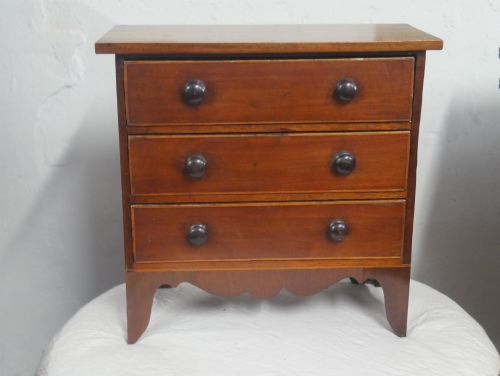
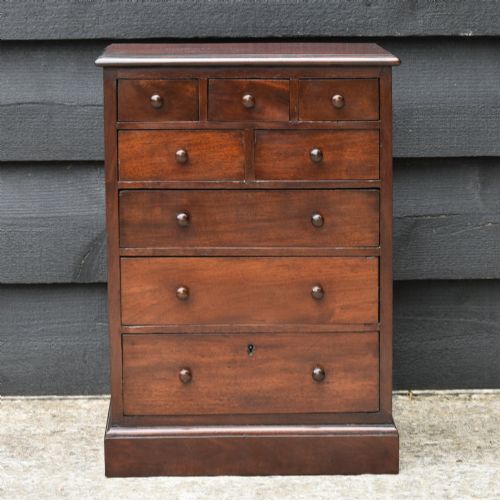
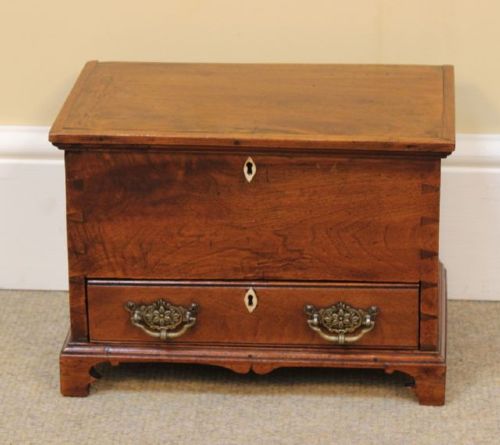
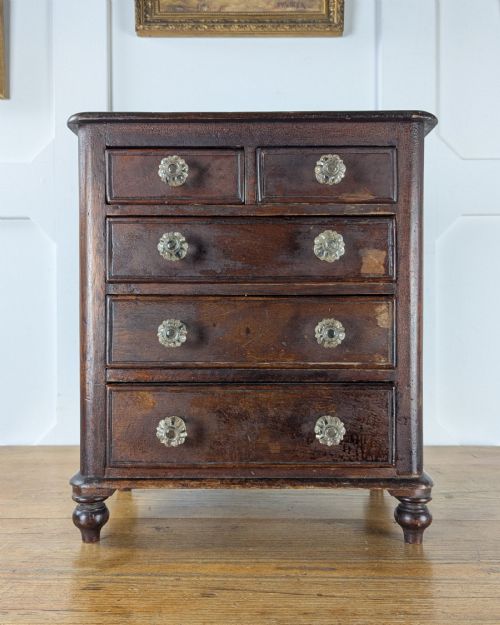

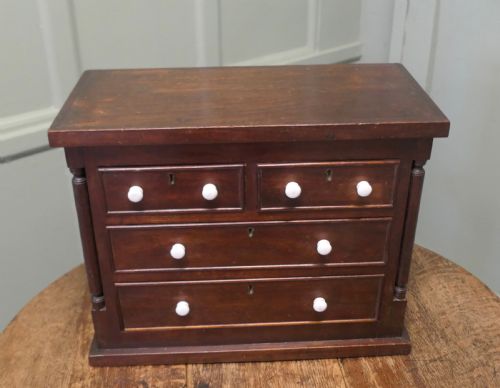
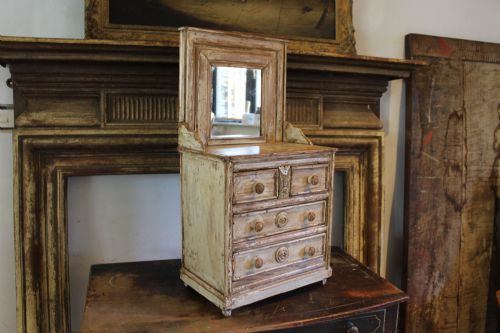
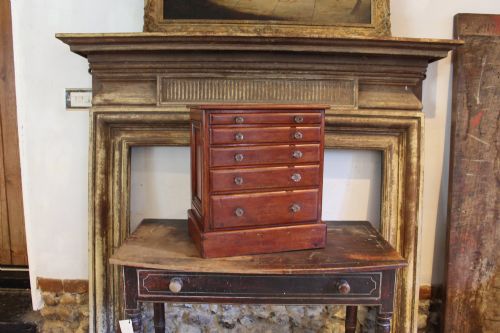
Apprentice Piece Chest Drawers
An apprentice piece chest drawers is a scaled-down masterwork made by a journeyman, offering the refined joinery of full-sized furniture in a tabletop format.
Apprentice Piece Chest Drawers
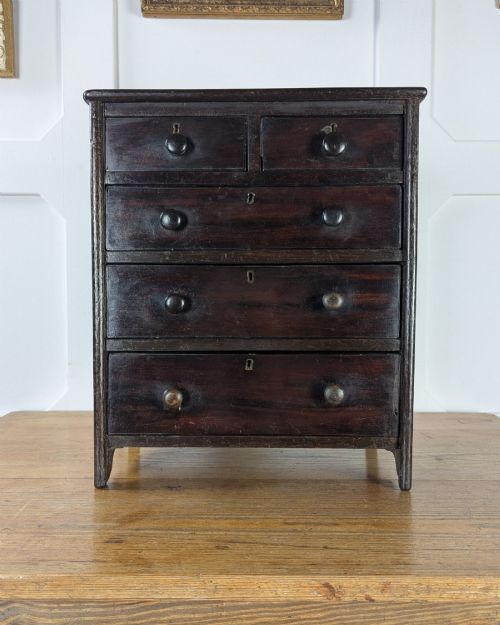
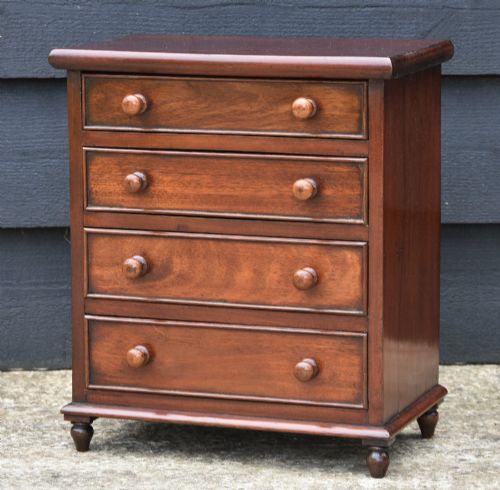
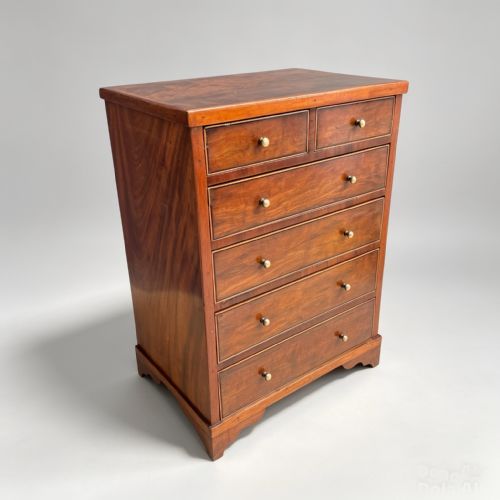
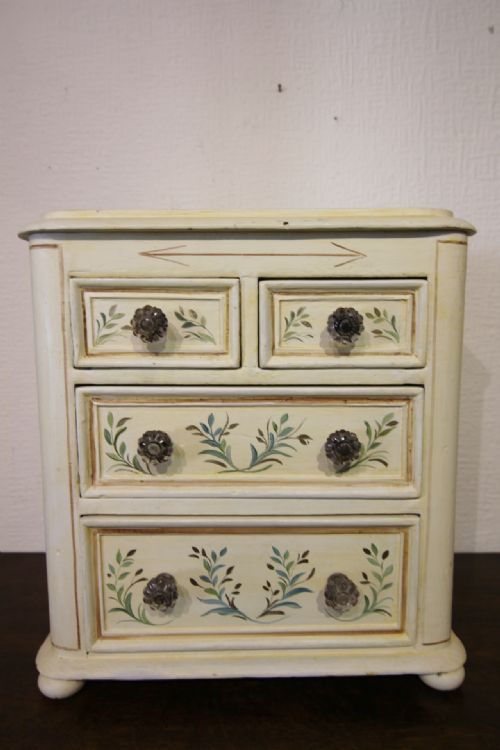
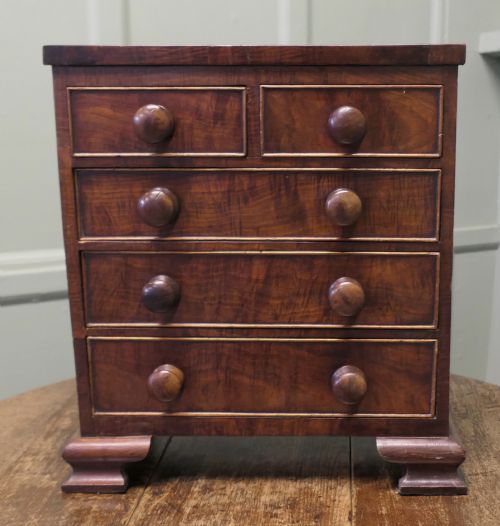
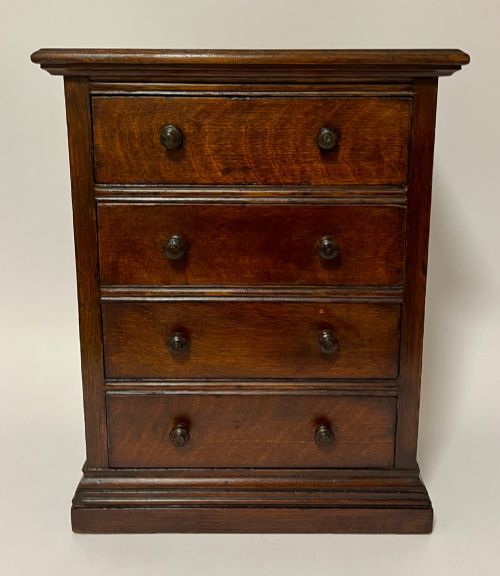
These items are small-scale models created to demonstrate a craftsman's skill to a guild, taking the form of miniature chests of drawers, desks, and cabinets. The pieces seen here span from the 18th century through the Edwardian era, with Victorian examples appearing most frequently.
Makers utilised timber and proportions identical to domestic furniture, producing faithful reductions that functioned as display items or travellers' salesman samples. Regional variations include Scottish scotch chests with distinctive top tier configurations and French provincial models.
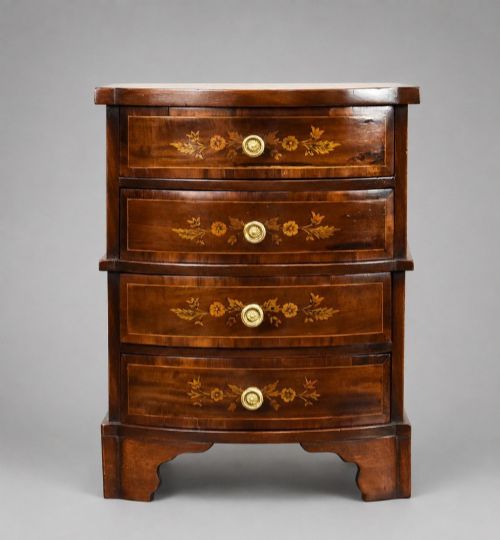
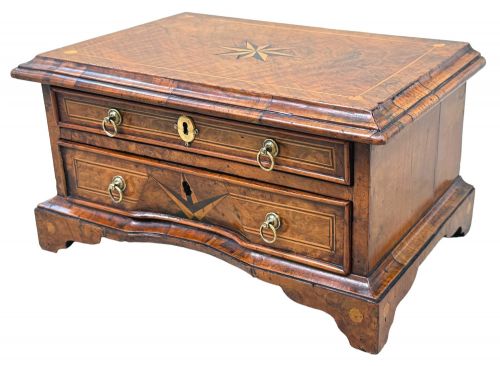
The format ranges from simple pine and oak boxes to sophisticated bow-fronted mahogany and walnut designs incorporating secret drawers, bone escutcheons, and marquetry. Collectors encounter these objects as self-contained examples of period cabinet-making.
Materials and construction methods
Timbers such as mahogany, walnut, oak, and pine form the primary structure, often accented with secondary woods, mother-of-pearl inlay, and brass hardware including turned knobs and engraved escutcheons. Cabinet-makers applied traditional dovetailing to the drawer boxes and pegged joints to the frames.
Surfaces received hand-rubbed wax finishes that developed a deep patina over centuries, while specialised woods like burr yew, amboyna, and bird's-eye maple provided striking decorative grain patterns. Secondary details include ebonised mouldings, slate models, and marquetry panels.
Cabinet-makers occasionally included hidden secret drawers within these tiny chests to conceal miniature valuables and test inquisitive minds.
Distinguishing quality in miniature furniture
The standard of execution in the dovetails and the precision of the drawer fit indicate the maker's proficiency, separating hastily made novelties from true demonstrations of craft. Superior pieces maintain correct architectural proportions and utilise solid secondary timbers rather than hurried substitutes.
Condition of the timber, originality of the brass fittings, and survival of fragile elements like miniature cockbeading determine the integrity of the object. Depth of patina and subtlety of veneer choice further elevate examples from standard workshop production.
The Apprentice Piece Chest Drawers Glossary
- Apprentice piece
- A small-scale item of furniture made by a craftsman seeking admission to a trade guild. These objects demonstrate mastery of scaling and joinery.
- Bow front
- A convex curved cabinet front popular during the Georgian and Regency periods. This shape requires advanced woodworking skill to achieve smooth curves.
- Dovetail
- A joint formed by interlocking wedge-shaped fingers used at the corners of drawer boxes. Fine miniature furniture relies on tightly cut pins and tails.
- Scotch chest
- A regional furniture form featuring a deep cushion drawer above the top working drawers. Scottish examples often display flame mahogany veneers.
- Patina
- The surface sheen and coloration developed by aged wood through handling, waxing, and light exposure over generations. It serves as an indicator of age.
Apprentice Piece Chest Drawers: Frequently Asked Questions
What is an apprentice piece chest of drawers?
An apprentice piece chest of drawers is a miniature model built by a tradesman to prove competency in woodworking techniques to a guild. These objects mirror full-sized furniture in every structural detail.
Craftsmen scaled down standard chests, desks, and dressers to tabletop dimensions while employing identical joinery methods and cabinet timbers.
Were these really made by apprentices?
Some pieces represent trade test items for journeymen or apprentices seeking master status within a guild. Other items served as salesman samples or bespoke ornamental objects for wealthy households.
Makers invested the same care into these miniatures as domestic furniture, utilising surplus fine timbers like mahogany, walnut, and rosewood.
How do I date a miniature chest?
Dating relies on identifying period characteristics in the wood species, drawer construction, handles, and overall architectural style. Georgian pieces show different proportions and hardware compared to Victorian or Edwardian examples.
Secondary woods inside the drawers and the style of the dovetails provide further clues to the decade of manufacture.
Where were these pieces displayed?
Original owners placed these items on top of larger chests, sideboards, or desk surfaces in period parlours and bedrooms. Their small footprint made them suitable for compact display while housing small valuables.
Certain examples equipped with velvet linings functioned specifically as jewellery chests or tea caddies.