
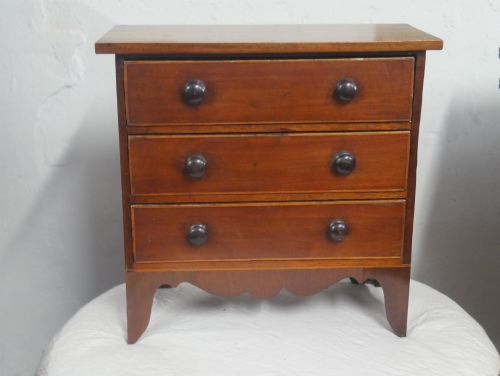
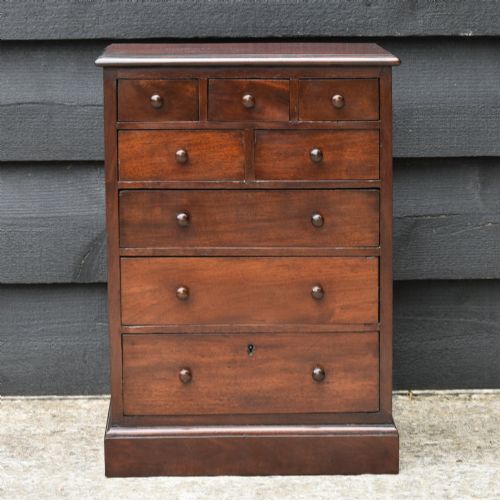
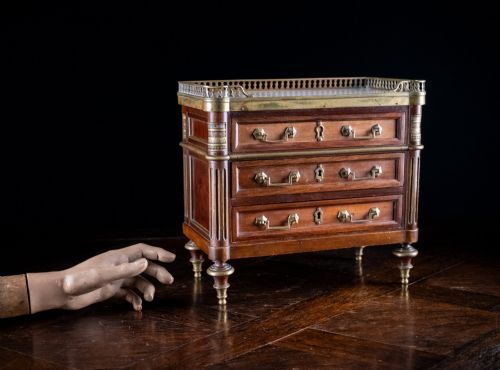
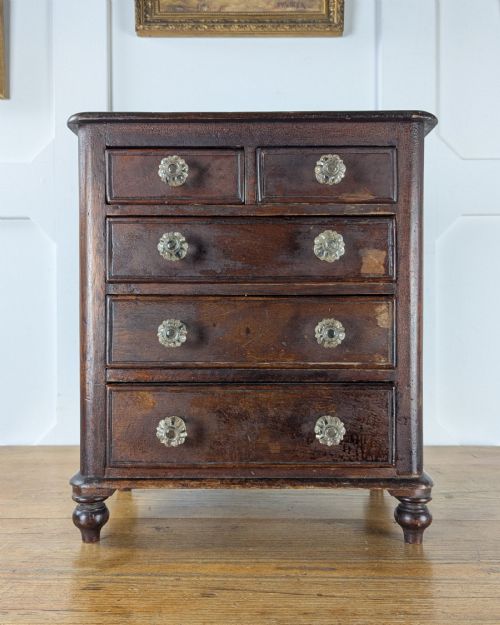
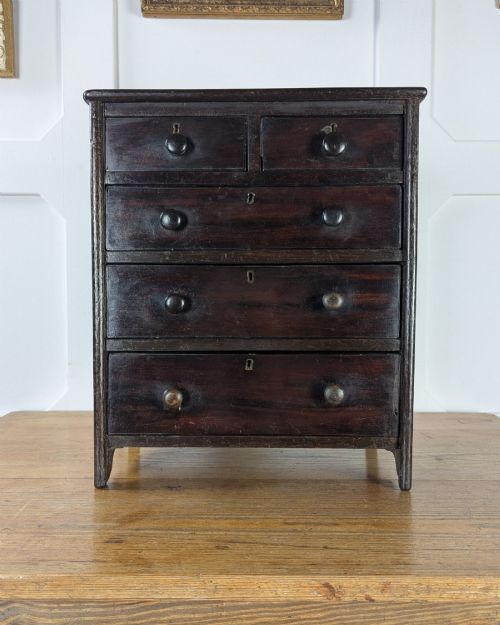
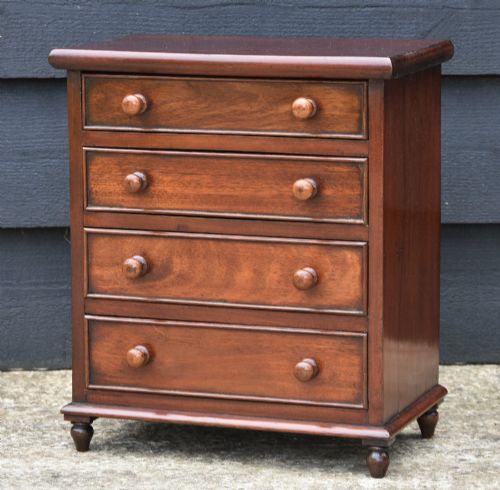

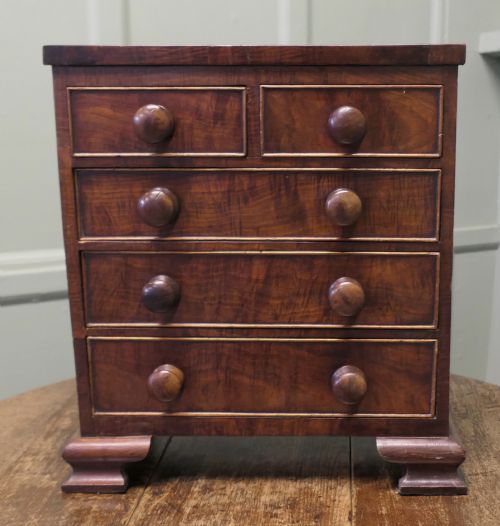
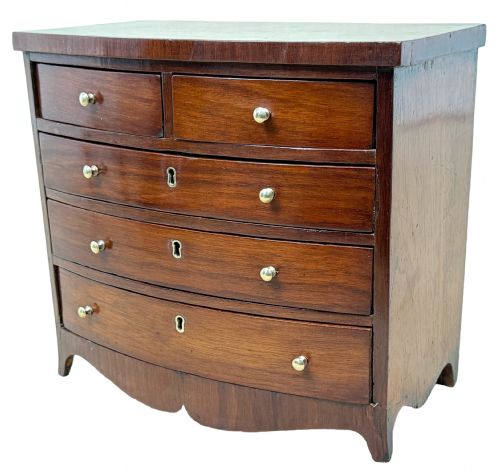

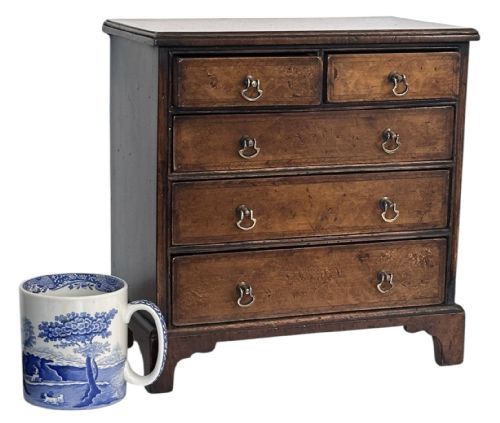


Salesman Sample Chest Drawers
A salesman sample chest drawers brings the refined proportions of full-scale cabinetry into miniature form, offering dense historical interest in a compact footprint.
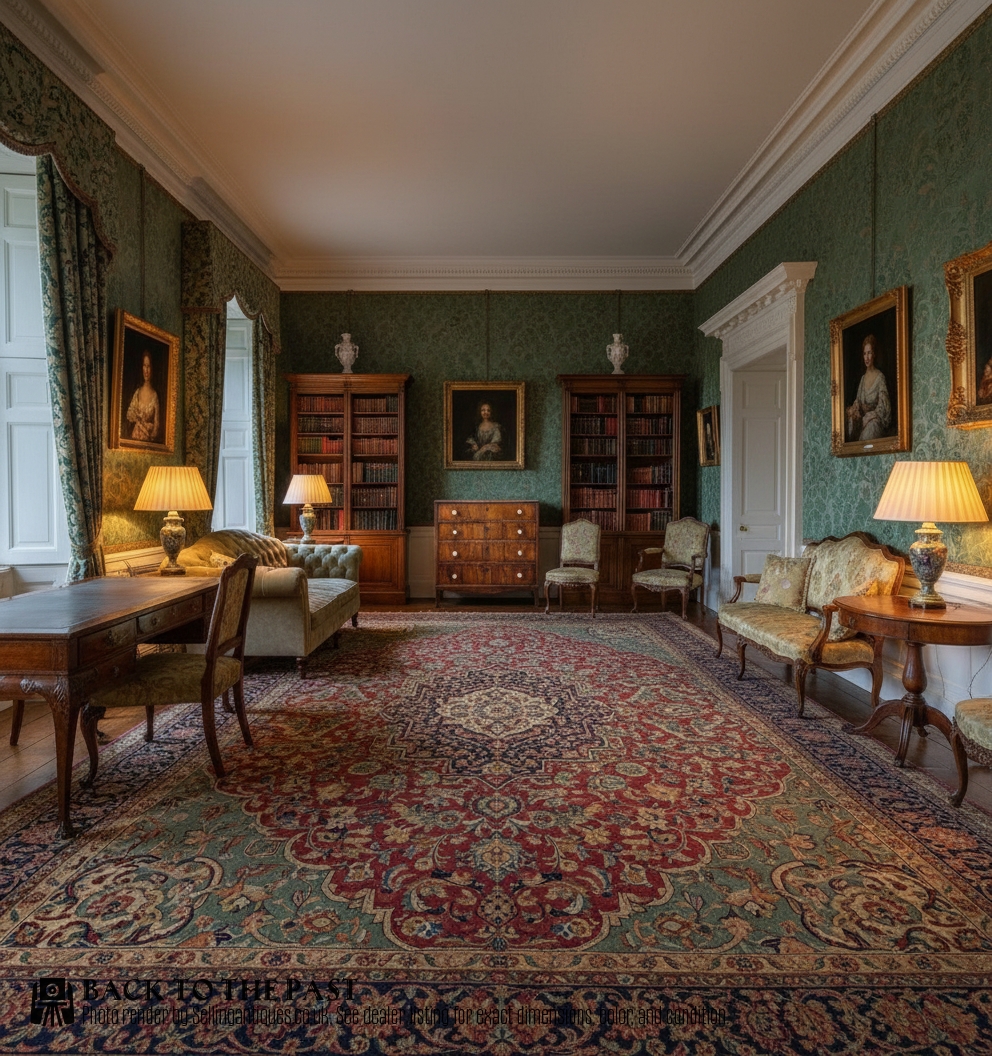
Salesman Sample Chest Drawers
A salesman sample chest drawers represents small-scale iterations of domestic storage, historically used by cabinetmakers or travelling merchants to demonstrate design capabilities to prospective clients. These items appear primarily as miniature chests of drawers, miniature chests, and miniature commodes spanning periods from the eighteenth century through the Victorian era.
Examples on this page draw from diverse regional traditions, including Scottish, Dutch, French, and American origins, alongside distinct stylistic expressions like Georgian, Regency, and Louis XVI. Makers utilised forms such as bowfront layouts and secret drawers, executed in woods like mahogany, oak, walnut, and pine.
The objects double as apprentice pieces, reflecting the practical skill required by a woodworker mastering joinery before admission to a guild. Buyers encounter both plain utility models and ornate versions incorporating brass, bone, marble, bronze, and specialised veneers.
Materials and construction methods
Cabinetmakers constructed these miniature pieces using dense hardwoods such as mahogany, walnut, and oak, often applying figured veneers like burr yew, kingwood, and tulipwood to primary surfaces. Secondary structural elements commonly relied upon pine, while decorative details incorporated bone, slate, bronze, and marble.
Joinery techniques mirrored full-sized furniture production, requiring precise dovetail joints for drawer construction and careful turning for feet and columns. Finishing touches included applied ebonised moulding, brass hardware, and specialised turning to achieve balanced miniature proportions.
Listings feature woods such as mahogany, oak, walnut, pine, burr yew, kingwood, and tulipwood, alongside decorative accents in bone, marble, slate, and brass.
Factors influencing quality
Quality rests heavily on the fidelity of the miniature scale to full-sized architectural precedents, separating competent workshop exercises from clumsy approximations. The sharpness of the dovetailing and the choice of timber figure distinguish sophisticated productions from utilitarian items.
The Salesman Sample Chest Drawers Glossary
- Apprentice piece
- A miniature furniture item created by a trainee woodworker to demonstrate mastery of joinery skills. These objects mirror full-scale furniture types.
- Bowfront
- A curved front facade characteristic of certain Georgian and Victorian chests. This shape requires advanced woodworking precision.
- Commode
- A low decorative chest of drawers or cabinet originating from French furniture design. They frequently feature veneered surfaces and marble tops.
- Secret drawer
- A concealed compartment built into the structure of a chest, often hidden behind decorative moulding or within the frieze.
- Veneer
- A thin layer of figured wood applied over a secondary timber base to create decorative patterns. Common varieties include burr walnut and tulipwood.
Salesman Sample Chest Drawers: Frequently Asked Questions
What is a salesman sample chest drawers?
These objects are small-scale models created by cabinetmakers to demonstrate furniture designs to clients or by trainees proving their woodworking proficiency.
They replicate full-sized chests using the same materials and joinery techniques scaled down to tabletop dimensions.
How were these miniature chests used?
Historical makers utilised them as portable portfolios to show domestic buyers various chest designs, wood selections, and ornamental details without transporting heavy furniture.
Alternatively, they served as tabletop jewellery chests or decorative items within affluent Victorian interiors.
How do I identify the period of a miniature chest?
Dating relies on stylistic markers such as bracket feet, cornice details, and veneer choices that correspond to periods like the Georgian, Regency, or Victorian eras.
Construction methods, including hand-cut dovetails and timber selection, further help narrow the manufacturing decade.
Where did these miniature pieces originate?
Makers produced them across British, Scottish, French, Dutch, and American workshops, each region applying local timber preferences and stylistic conventions.
Scottish and English examples often feature mahogany or pitch pine, while continental pieces frequently showcase kingwood and marble.
How should I care for antique miniature furniture?
Maintain stable indoor humidity levels and keep the timber away from direct sunlight to prevent veneer cracking and wood shrinkage.
Clean surfaces gently with a dry, soft cloth, avoiding harsh modern polishes that can damage historic finishes.