


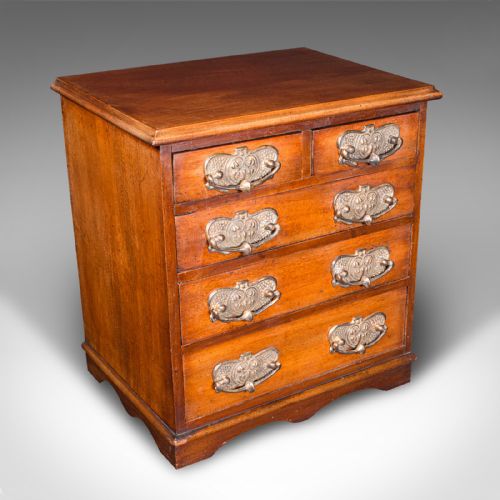


Brown Wood Apprentice Piece
These brown wood apprentice piece items are scaled-down furnishings made to display skill, offering collectors compact joinery from past centuries.
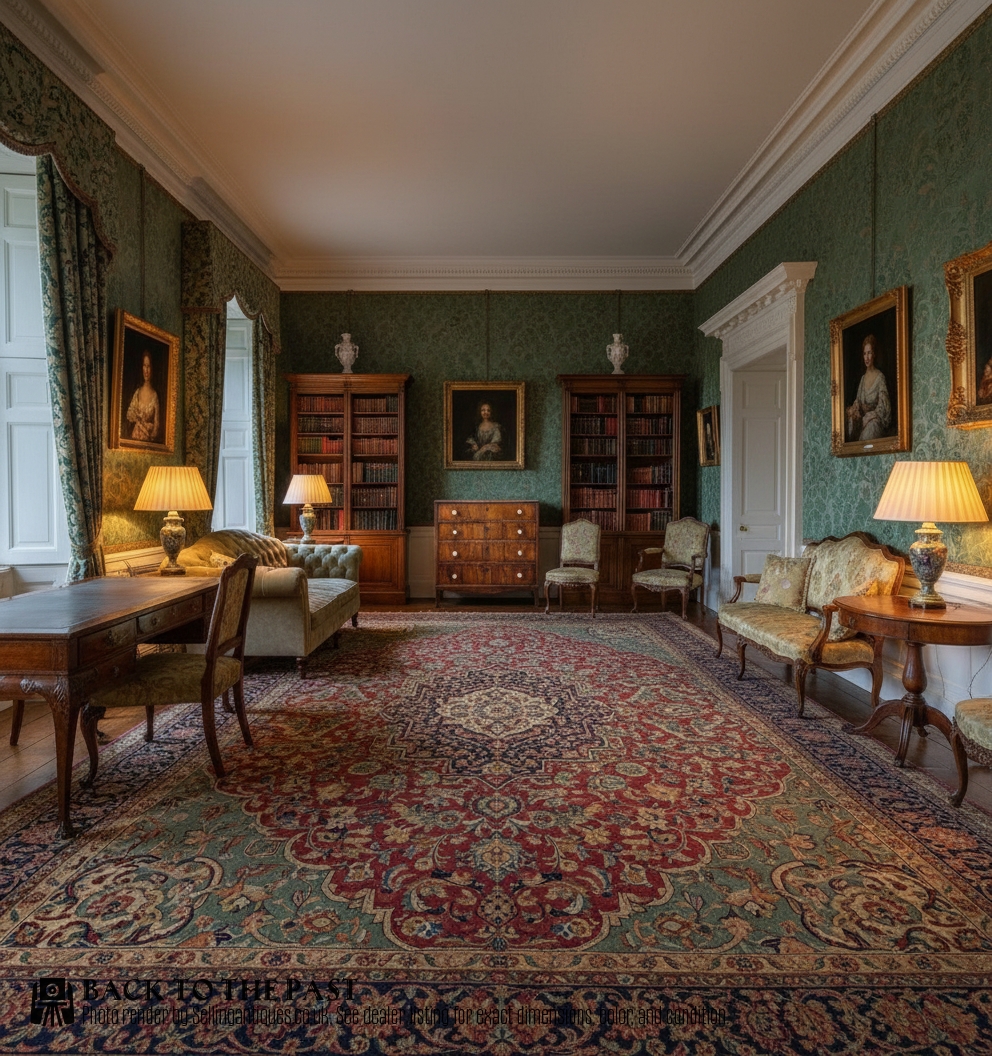
Brown Wood Apprentice Piece
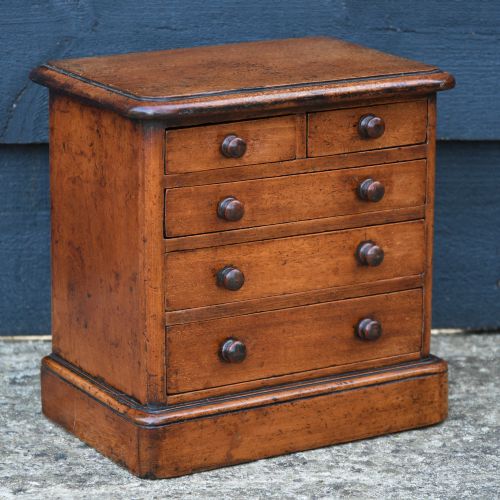
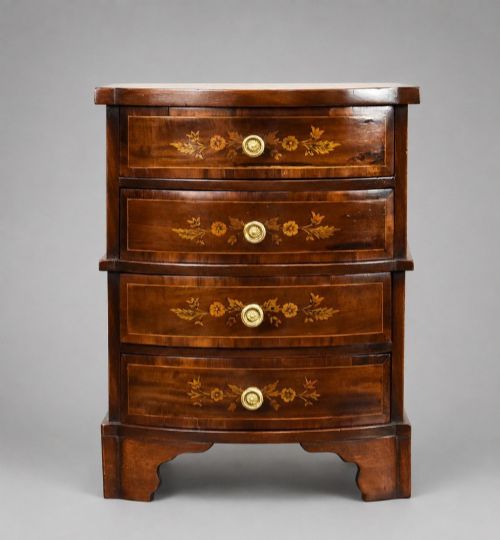
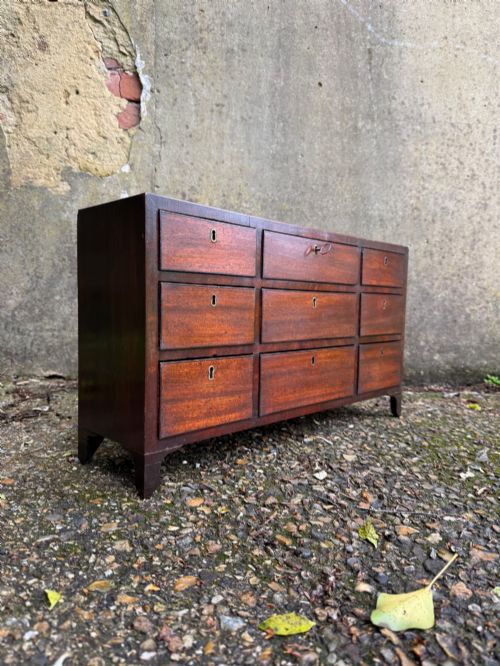
A brown wood apprentice piece represents scaled-down furniture such as miniature chests of drawers, cabinets, bureaux, and kneehole desks. These objects emerge from periods including the Georgian, Victorian, and Edwardian eras, spanning the eighteenth and nineteenth centuries.
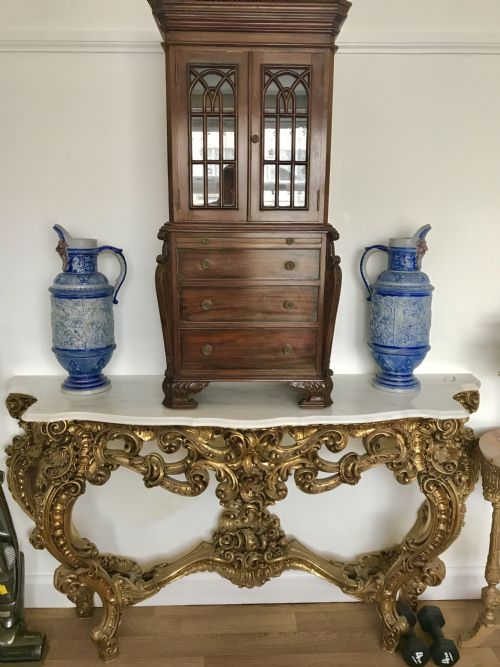
The forms mimic full-sized household furnishings on a reduced scale, ranging from bow-front chests to glazed display cabinets and bureau bookcases. Makers constructed these miniature items to demonstrate competence in woodworking techniques before admission to a trade guild.
Materials and construction methods
Cabinet-makers utilised dense timbers such as mahogany, oak, walnut, pine, burr yew, and amboyna to build these small-scale structures. Grain selection mattered deeply when working on miniature proportions, ensuring the wood featured attractive figures.
Workshops applied traditional joinery methods alongside decorative details such as brass handles, mother-of-pearl inlay, marquetry, and French polishing. Ebonised mouldings and glass panels frequently completed the fabrication of these small cabinets and desks.
Some miniature drawers are so tiny they could realistically only store a collection of very disgruntled beetles.
Distinctions in quality and execution
Execution of the scaled joinery separates standard decorative items from superior examples. Precision in the dovetail joints and the symmetry of drawers indicate the maker's level of skill.
The choice of timber and secondary veneers significantly influences the character of each piece. Finely figured burr yew or rich mahogany combined with careful inlaying elevates the standing of the object.
The Brown Wood Apprentice Piece Glossary
- Apprentice piece
- A small-scale item of furniture created by a trainee to prove technical mastery to a guild or master craftsman. These objects condense full-size design rules into portable formats.
- Mahogany
- A durable, reddish-brown tropical hardwood favoured by cabinet-makers for its stable working qualities and handsome grain. It appears frequently across Georgian and Victorian miniatures.
- Burr yew
- A highly prized wood featuring swirling knot growths that create intricate patterns. Craftsmen utilised yew veneers on luxury miniature chests to display decorative flair.
- Marquetry
- The art of applying thin decorative wood veneers onto a structural base to form pictorial or geometric patterns. Edwardian makers often employed this technique on bow-front chests.
- French polishing
- A wood finishing technique that applies shellac in numerous thin coats to yield a high gloss surface. This method enhances the deep red and brown tones of antique mahogany.
Brown Wood Apprentice Piece: Frequently Asked Questions
How were these miniature items used?
Cabinet-makers utilised them to demonstrate their technical competence to guild masters or prospective employers. Their small size allowed travelling salesmen to transport samples safely.
Over time, households adopted them as decorative desktop furnishings or specimen cases. Today, they function as display items in interior collections.
How do I date a miniature chest?
Dating relies upon examining the timber species, construction techniques, and secondary woods used inside the drawers. Georgian examples often display different dovetail styles compared to Victorian pieces.
Stylistic cues such as brass hardware, bracket feet, or inlaid mother-of-pearl provide further chronological markers. Comparing the proportions to full-sized furniture trends helps confirm the era.
Where should I display these pieces?
Their compact scale makes them suitable for placement on sideboards, desks, or dedicated display shelves. Protecting them from direct sunlight preserves the original polish and wood tones.
Keeping them in stable room environments prevents the timber from drying out or splitting. Their small footprint allows them to fit easily into modern living spaces.