
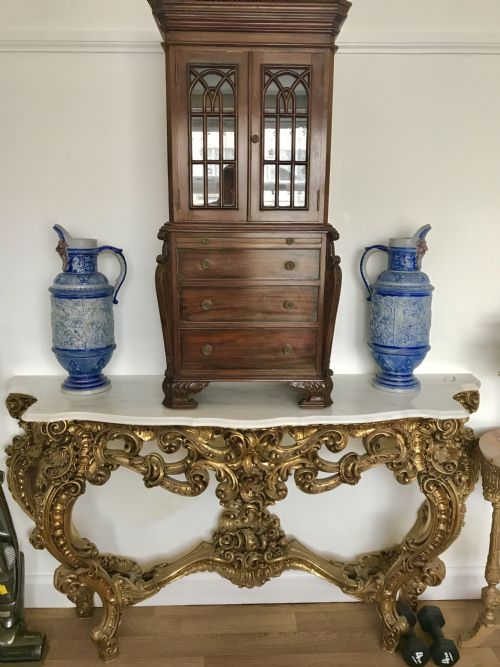




Victorian Salesman Sample Cabinet
These victorian salesman sample cabinet pieces are miniature furniture items crafted to scale, offering portable demonstrations of fine cabinetmaking skill for discerning collectors.
Victorian Salesman Sample Cabinet
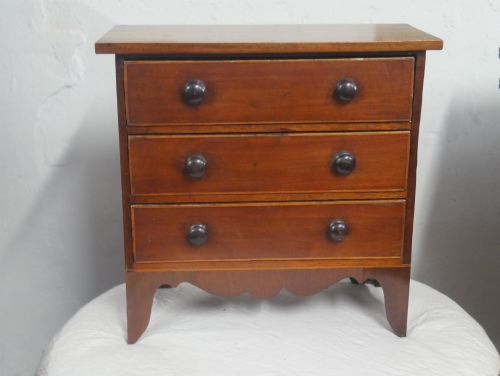
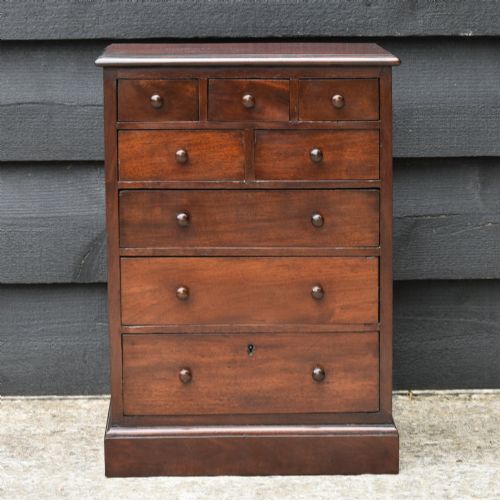
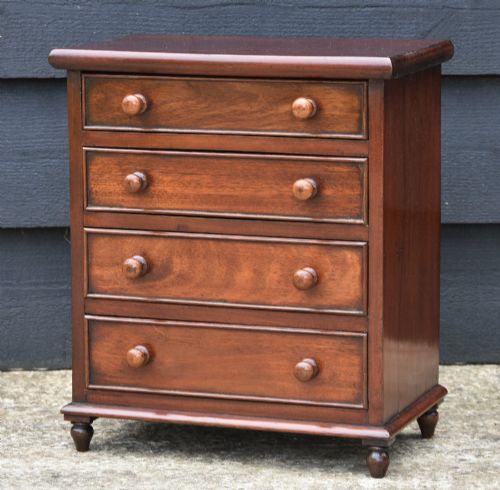
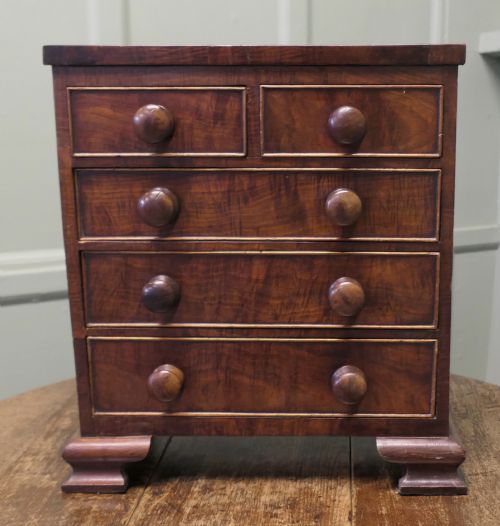
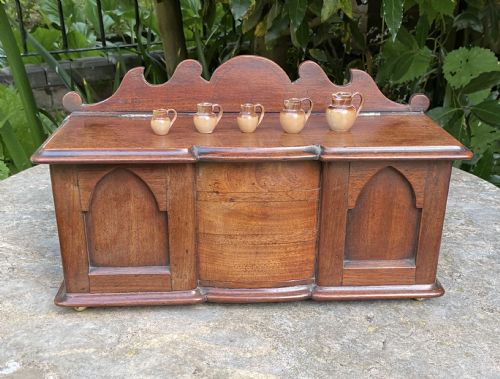
When you search for a victorian salesman sample cabinet, you encounter scaled-down items often referred to as apprentice pieces or miniature furniture. These objects include chests of drawers, bureau bookcases, dresser bases, sideboards, and linen presses originating from the nineteenth century.
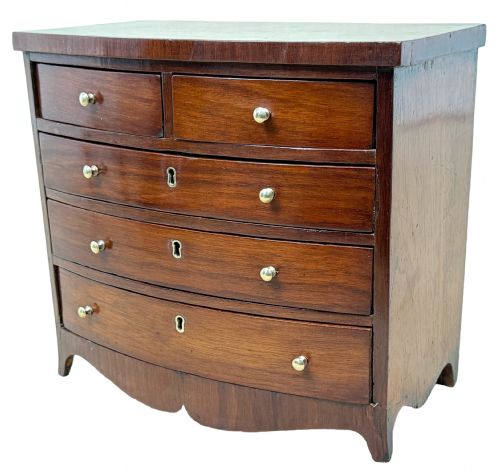
The version you are most likely to meet on this page is the miniature chest of drawers rendered in mahogany, occasionally displaying Scottish or Anglo-Indian stylistic influences. Pieces span the Victorian period from around eighteen forty to the early twentieth century, reflecting domestic woodworking traditions.
How they were made
Cabinetmakers utilised dense timbers such as mahogany, burr walnut, and pitch pine to construct these scaled-down forms. Surfaces frequently received a French polished finish to highlight the natural grain of the wood.
Detailing involves brass hardware, bone inlay accents, boxwood stringing, and applied ebonised moulding. Secret drawers and bowfront contours demonstrate the same joinery techniques used in full-sized furniture of the era.
What varies in quality
The distinction between ordinary and superior pieces rests on the precision of the miniature joinery and the selection of timber veneers. Subtle details such as hidden compartments, fine boxwood stringing, and well-fitted drawers elevate a piece.
Proportion and fidelity to period styles separate basic workshop exercises from accomplished demonstrations of cabinetmaking skill. The integration of secondary woods and the condition of the glass or brass fittings also influence the character of the object.
The Victorian Salesman Sample Cabinet Glossary
- Apprentice piece
- A small-scale item created by a trainee craftsman to demonstrate mastery of joinery techniques before admission to a guild. These objects typically replicate full-sized furniture forms.
- Bowfront
- A convex, curved front profile popular in nineteenth-century case furniture. This shape requires advanced woodworking skill to execute at a miniature scale.
- French polish
- A shellac finish applied in multiple thin layers using a rubbing pad to achieve a high gloss. This technique enhances the grain pattern of mahogany and walnut surfaces.
- Linen press
- A tall storage piece containing sliding trays above lower drawers for textiles. Miniature versions mirror the architectural proportions of the full-sized originals.
Victorian Salesman Sample Cabinet: Frequently Asked Questions
What is a salesman sample cabinet?
A miniature furniture piece built to scale for travelling representatives to display joinery capabilities and wood types to prospective clients without hauling full-sized items.
Many examples function as apprentice pieces created to prove competence in woodworking rather than commercial sales tools.
How old are these miniature cabinets?
The items listed originate primarily from the nineteenth century, spanning the Victorian era from the eighteen forties onward with occasional early twentieth-century examples.
Stylistic cues and wood choices help anchor specific pieces within this broader Victorian timeframe.
What woods were used?
Cabinetmakers relied heavily on mahogany for its stability and rich grain, alongside burr walnut and pitch pine.
Secondary materials include boxwood for stringing, brass for pulls, and occasional bone accents.
Where were they made?
Production occurred across British workshops, including regional variations such as nineteenth-century Scottish items and Anglo-Indian interpretations.
Local timber availability and prevailing regional styles shaped the design of each piece.
How do I display miniature furniture?
These pieces require stable placement away from direct heat sources and strong sunlight to protect nineteenth-century wood finishes and veneers.
Their compact scale allows placement on tabletops, desks, or within dedicated display shelving.