
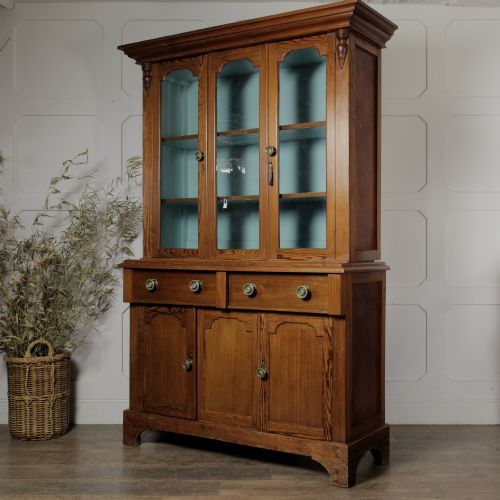

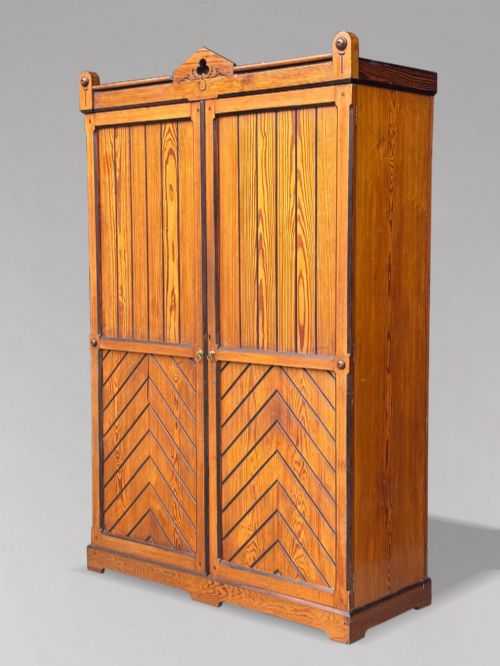
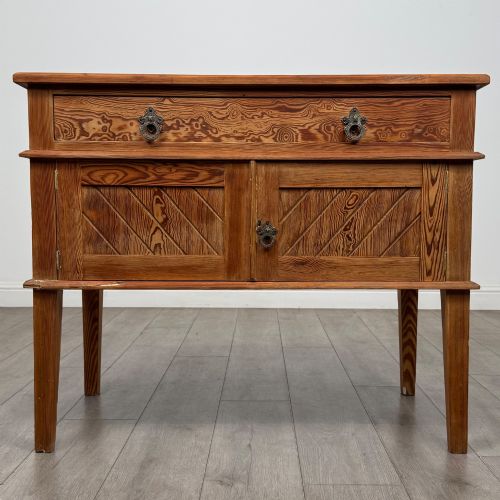
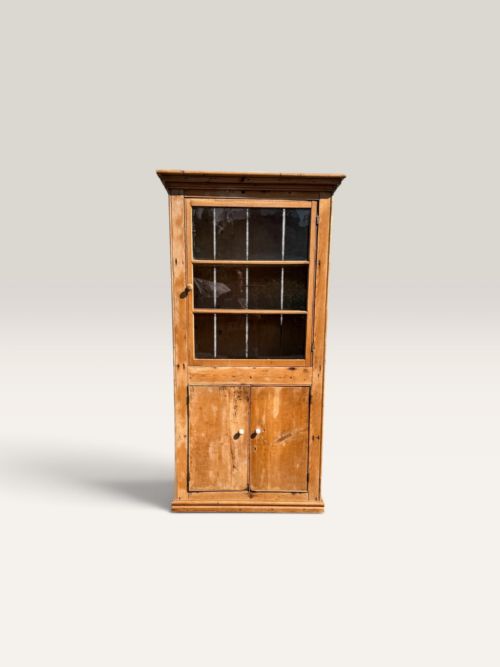


Victorian Pitch Pine Cabinet
A victorian pitch pine cabinet brings dense resinous timber and honest utility to a room, offering robust storage built to last.
Victorian Pitch Pine Cabinet
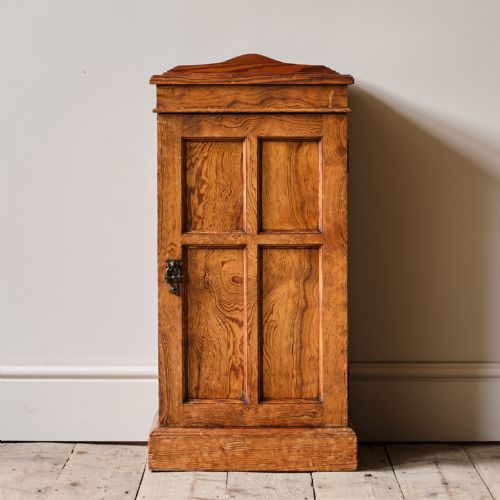
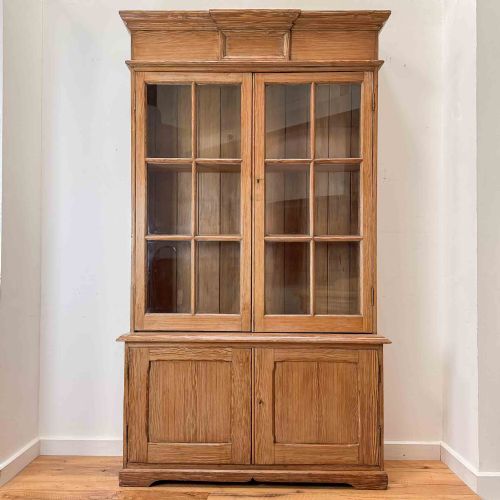
A victorian pitch pine cabinet encompasses diverse utilitarian and display forms spanning the nineteenth century, most frequently appearing as bedside cupboards, glazed bookcases, and kitchen housekeepers pieces. These items originate from the Victorian period, with specific examples dated around eighteen sixty, eighteen eighty, and nineteen hundred.
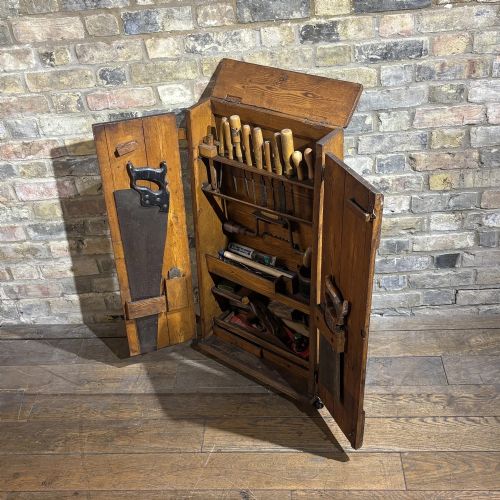
The selection ranges from portable tool chests and apprentice cabinets to large multi-door cupboards and Scottish cabinet bookcases. Buyers encounter both vernacular country house pieces and more refined display showcases or Wellington chests.
Materials and construction
Construction relies primarily on pitch pine, often paired with secondary pine, glass for glazed doors, and iron or brass hardware. Certain items incorporate ceramic details, porcelain elements, and ebonised moulding for decorative contrast.
Joinery methods serve heavy daily use, whether executed in a Gothic Revival style, an Arts and Crafts framework, or a Victorian country workshop tradition. Surfaces appear either stripped to the natural resinous grain, painted, or finished with polished timber surfaces.
One twenty-drawer collectors cabinet carries the signature of J.T. Crockett, proving that even bugs needed a very posh filing system.
Judging the piece
Quality rests on the selection of the resinous pine timber and the integrity of the original construction. Fine examples display careful proportion, tight joinery, and well-chosen hardware like brass handles and working locks.
The distinction between standard utility items and superior pieces often lies in the ambition of the design, such as Gothic Revival detailing, ebonised mouldings, or complex multi-drawer configurations like Wellington chests and collectors cabinets.
J T Crockett
The Victorian Pitch Pine Cabinet Glossary
- Pitch pine
- A dense, heavily resinous softwood native to North America and widely utilised in nineteenth-century British furniture for its durability and prominent grain. It resists moisture well and takes a clean finish.
- Wellington chest
- A tall, vertical chest of drawers secured by a locking hinged side flap that fastens over the drawer edges. This secure form gained popularity during the Victorian era.
- Pot cupboard
- A small bedside cabinet designed originally to house a chamber pot. These practical items typically feature a single door and sometimes an interior shelf.
- Housekeepers cabinet
- A large storage piece, frequently split into two parts, traditionally used in country houses for linen, dry goods, and household accounts. They combine lower cupboards with upper shelving or glazed display.
- Gothic revival
- An architectural and decorative style drawing on medieval forms, featuring pointed arches, tracery, and heavy mouldings. It heavily influenced nineteenth-century cabinet making.
Victorian Pitch Pine Cabinet: Frequently Asked Questions
What is a pitch pine cabinet used for?
These cabinets serve multiple storage needs throughout the home, from bedside tables and wardrobes to bookcases and kitchen dressers. Their sturdy timber construction makes them particularly suited for heavy everyday use.
Smaller formats function well as lamp tables or pot cupboards, while larger glazed bookcases and side cabinets provide prominent display and storage space in living areas.
How do I date a Victorian cabinet?
Dating relies on observing construction methods, timber preparation, and stylistic clues such as Gothic Revival or Arts and Crafts influences. Hardware styles and secondary woods also offer reliable chronological indicators.
Items stamped or bearing maker marks, like nineteenth-century collectors cabinets, provide precise attribution. Otherwise, general construction traits align pieces with the broader Victorian era or specific decades around eighteen eighty and nineteen hundred.
Is pitch pine different from regular pine?
Pitch pine contains significantly higher resin content than ordinary European or Scots pine, giving it a heavier weight and greater durability. This natural resin also produces a distinctively warm, striped grain pattern.
Because of its toughness, makers utilised pitch pine for demanding tasks where standard pine might warp or wear down quickly. This property helps explain its survival in robust items like tool chests and workshop cabinets.
How do I care for a stripped pine finish?
Maintain stripped pitch pine surfaces by dusting regularly with a soft cloth and avoiding excessive moisture. Occasional applications of natural beeswax help nourish the dry timber and protect the exposed grain.
Keep these cabinets away from direct heat sources and strong sunlight to prevent the resinous wood from drying out or splitting over time.