

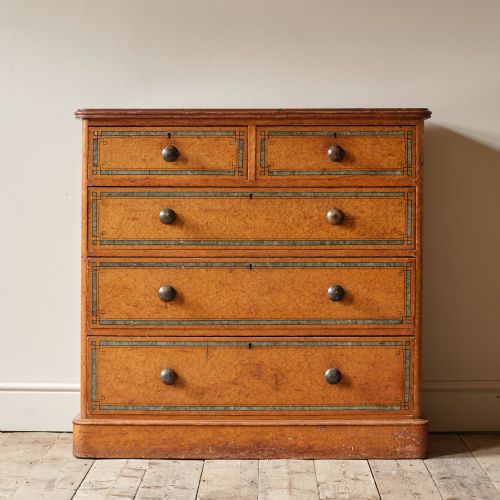
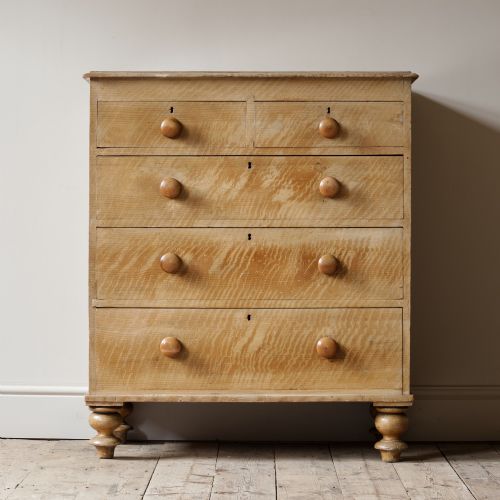
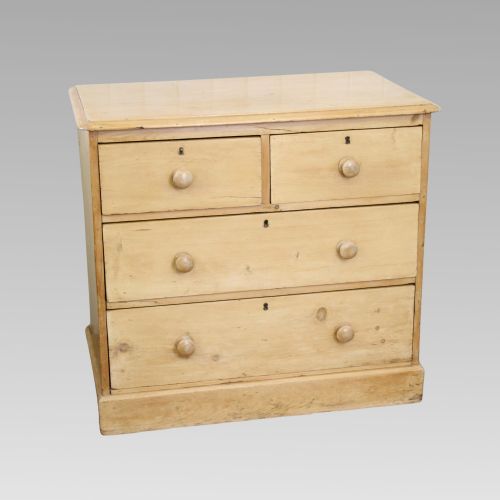
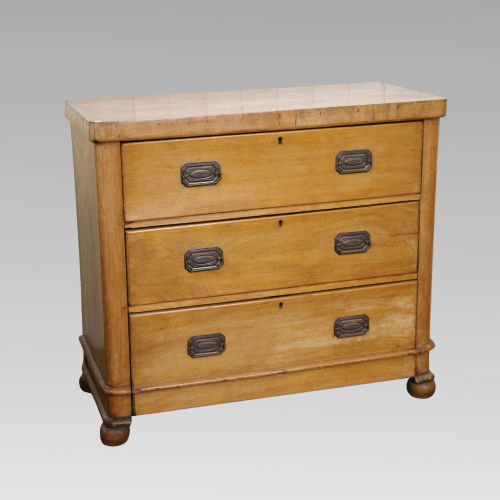
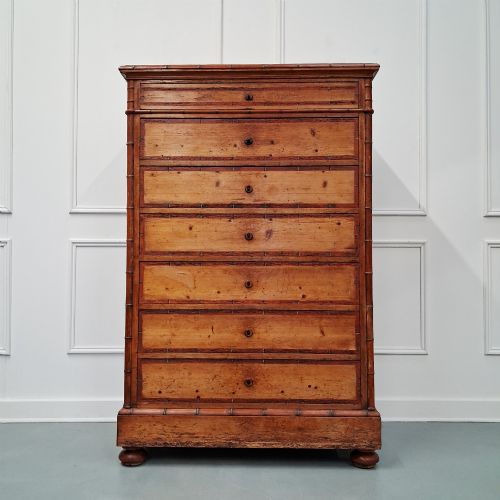
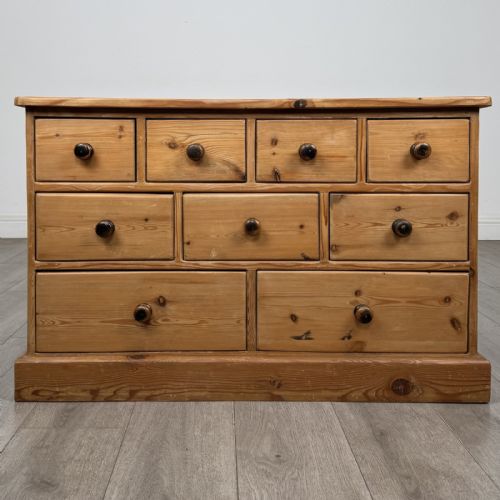
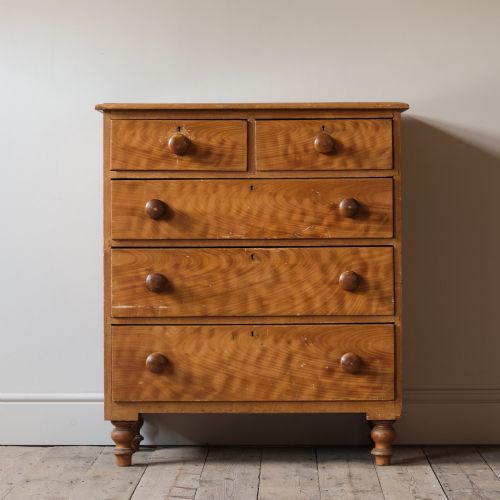
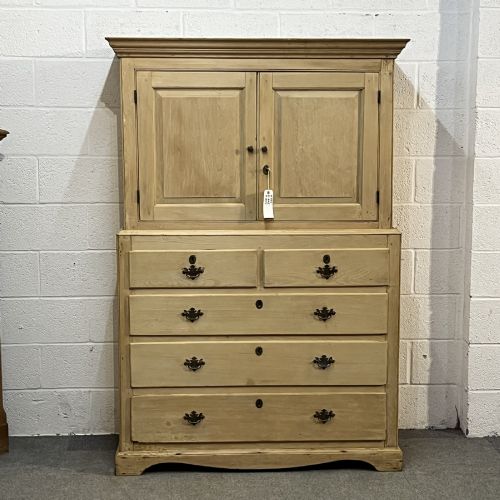


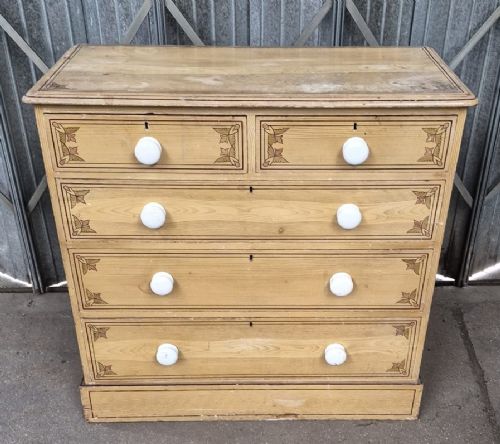
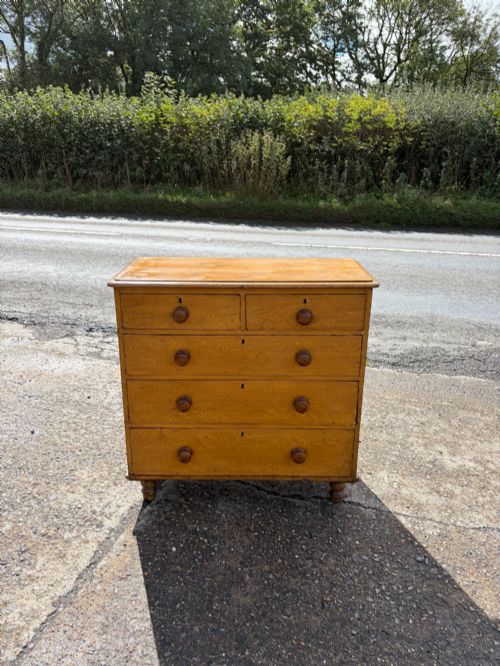
Pine Tallboy Drawers
Pine tallboy drawers are practical storage chests offering generous capacity, prized by collectors for their honest vernacular utility and warm timber character.

Pine Tallboy Drawers
When you search for pine tallboy drawers, you are looking at substantial vertical storage furniture designed to maximise capacity while occupying a compact footprint in a room. These pieces combine traditional craftsmanship with the robust utility demanded by households needing deep storage.
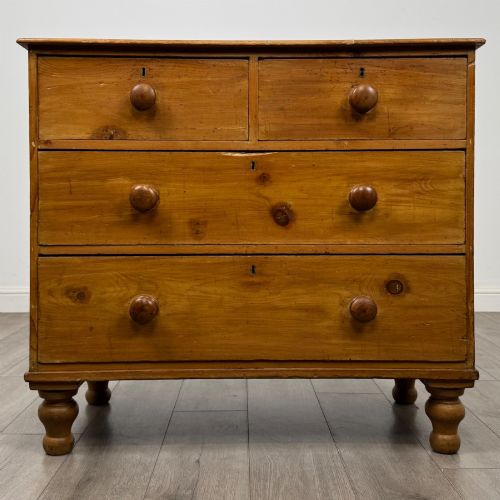
The versions you are most likely to meet on this page hail from the Victorian era and around 1900. They present in forms such as five-drawer and seven-drawer configurations, alongside traditional chest of drawers designs, reflecting the domestic requirements of their period.
Origins span British and Scandinavian workshops, showing how different regions adapted softwoods for everyday utility. Surviving examples demonstrate how robust construction kept these functional items in service across generations.
How they were made
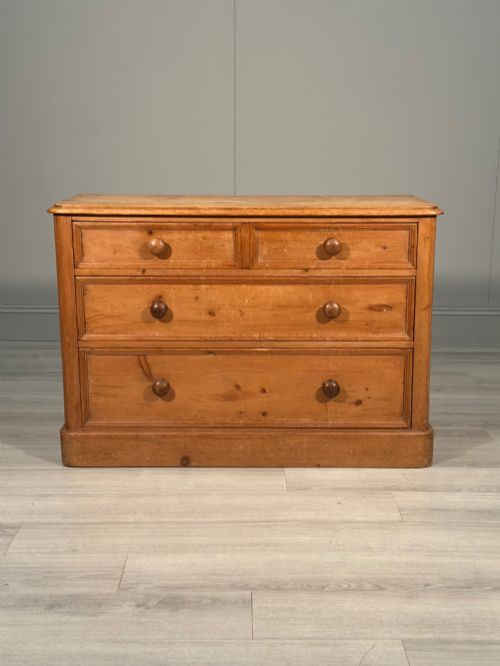
Makers utilised pine, pitch pine, and standard wood to construct the primary carcases and drawers of these items. These softwoods provided an accessible, workable medium that carpenters shaped into durable storage solutions.
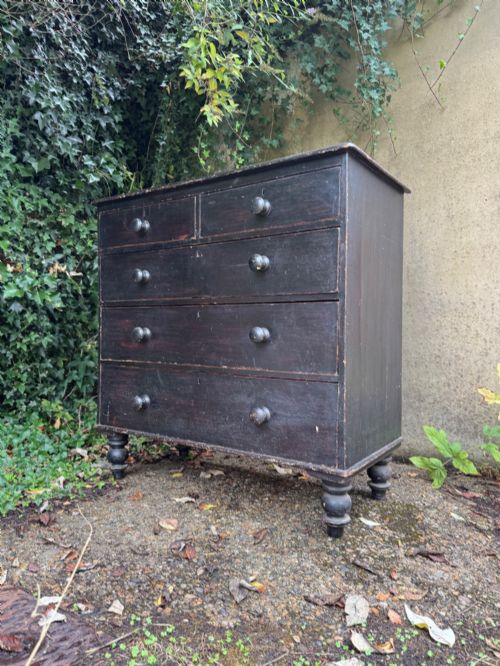
Surfaces frequently show wax finishes, paint, or scumbled decoration applied to protect the timber and alter its appearance. Hardware elements typically include metal, brass, and ceramic fittings for handles and key escutcheons.
Pine Tallboy Drawers Retail Price Guide 2026
Typical asking prices for pine tallboy drawers among the pieces listed under this phrase on Sellingantiques today, from the lower quarter to the upper quarter. They describe what is for sale here now, not the wider market.
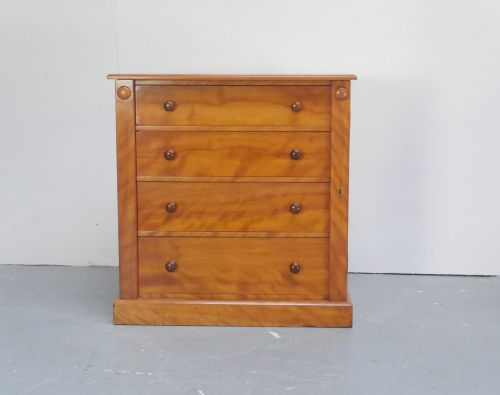
Some tallboys feature clever locking side stiles originally designed to guard private journals from wandering eyes.
What varies in quality
Quality in these pieces is dictated by the selection of timber and the integrity of the joinery rather than ornate decoration. Dense pitch pine and careful softwood framing sit at the higher end, offering superior weight and structural endurance.
The application of original finishes, such as scumbled paint or historical wax, determines authenticity and aesthetic depth. Retaining original metal, brass, or ceramic hardware elevates a piece above those altered with replacement fittings.
The Pine Tallboy Drawers Glossary
- Tallboy
- A tall chest of drawers, often comprising a chest stacked upon another or built as a single high unit to save floor space while increasing storage capacity.
- Scumbled
- A decorative paint technique involving translucent layers dragged over a base coat to imitate the grain of more expensive hardwoods. This method was widely applied to humble pine to elevate its visual appeal.
- Pitch Pine
- A dense, resinous softwood sourced primarily from North America, noted for its distinct grain pattern and durability. It offers greater weight and resilience than standard softwoods.
- Wellington Chest
- A tall, narrow chest of drawers secured by a single hinged locking stile on the right-hand side that fastens over the drawer edges. This design originated in the nineteenth century for secure document storage.
Pine Tallboy Drawers: Frequently Asked Questions
What is a pine tallboy?
A pine tallboy is a tall vertical storage unit built from softwood, designed to hold substantial amounts of clothing or linens within a compact footprint.
These pieces use height rather than width to fit into domestic spaces while offering deep drawer capacity.
How do I date a pine chest?
Dating relies on examining construction methods, timber types, and hardware styles against known historical periods. Victorian and turn-of-the-century examples display specific joinery traits and drawer configurations.
Secondary woods and backboards also provide clues to the manufacturing decade.
Are painted pine chests original?
Many pine chests received surface treatments like paint or scumbling during the nineteenth century to mimic finer woods or provide a wipeable finish. Original decorative coats add historical character to the piece.
Distinguishing between period paint and later decoration requires inspecting wear patterns and underlying timber.
How should I care for waxed pine?
Waxed pine benefits from occasional application of traditional beeswax to nourish the soft timber and maintain its sheen. Avoid placing these chests near direct heat sources to prevent the wood from drying out.
Regular dusting with a soft cloth preserves the historical finish without stripping the patina.