
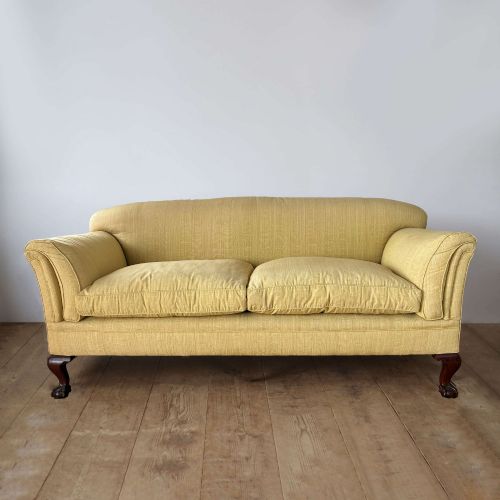
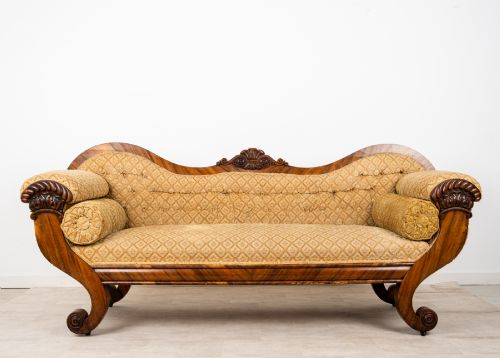


Antique Yellow Couch
An antique yellow couch brings warmth and character to a room, offering classic seating shaped across centuries of cabinet making.
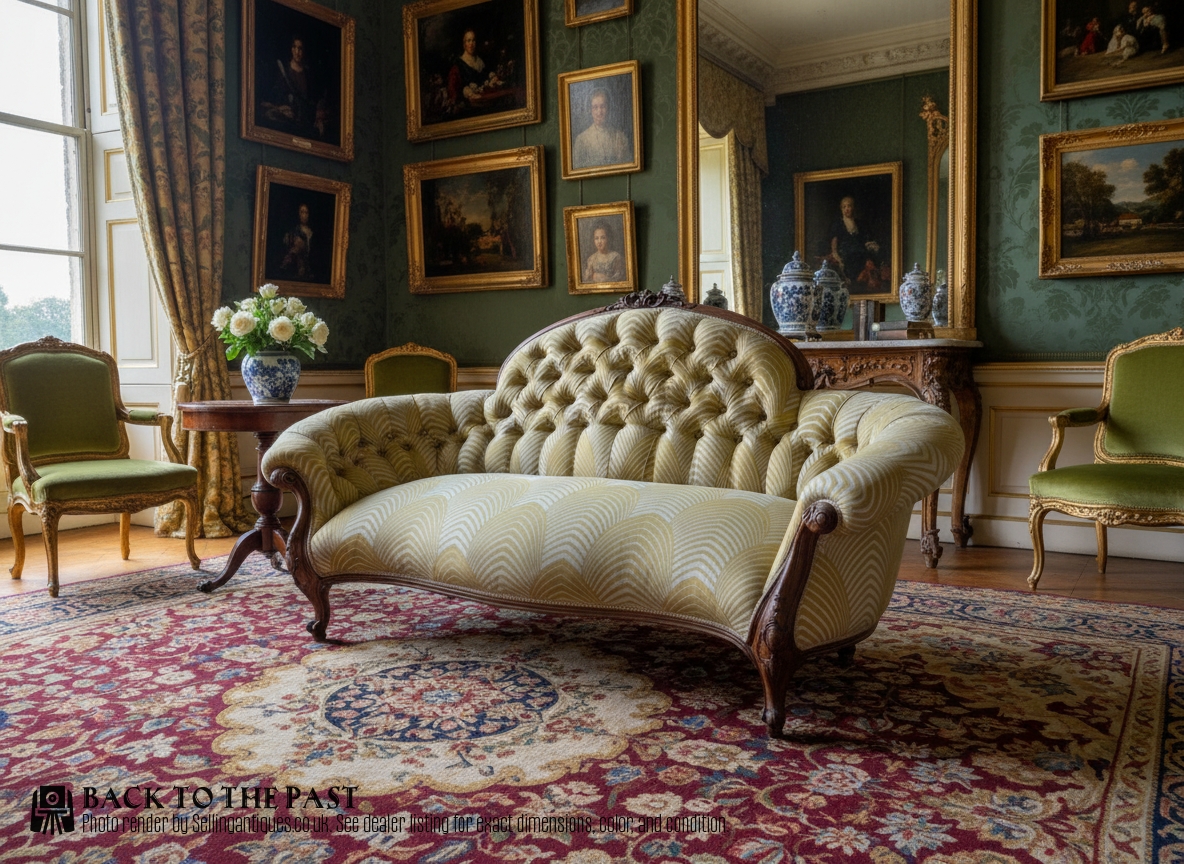
Antique Yellow Couch
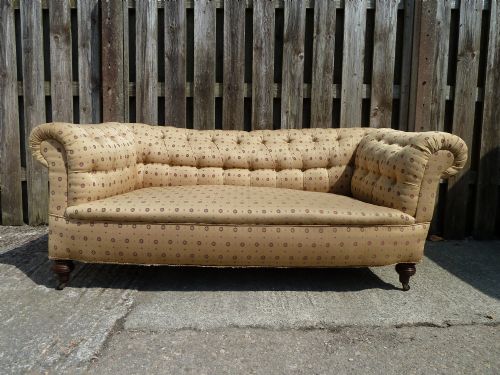
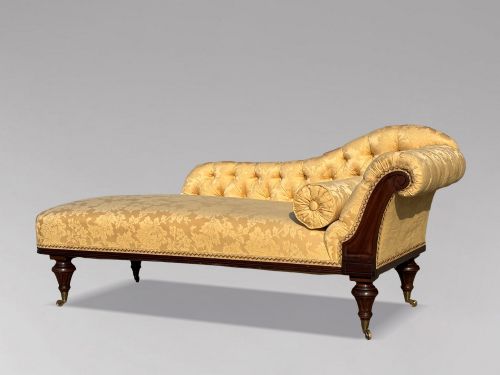
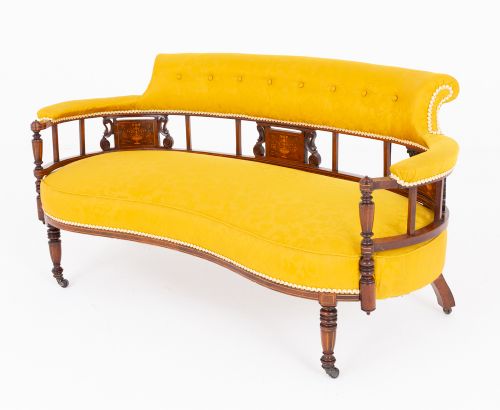
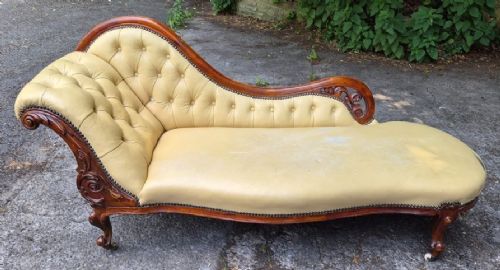
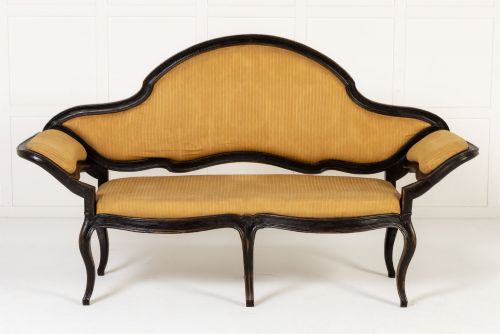
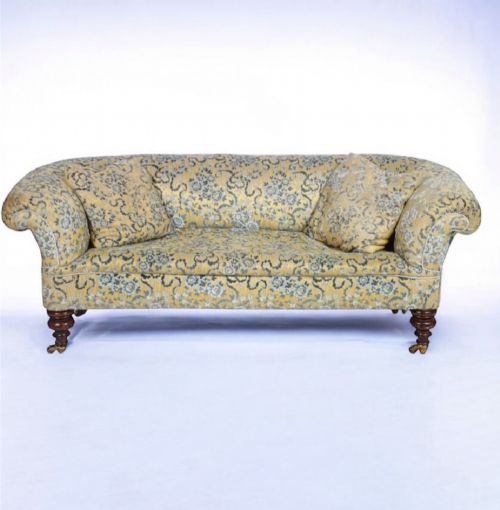
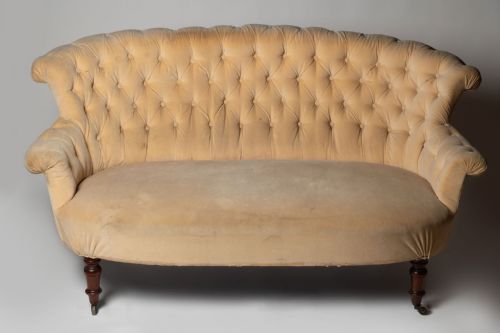
When searching for an antique yellow couch, buyers encounter various forms including settees, day beds, and chaise longues from the 18th, 19th, and early 20th centuries. These seating pieces span styles such as Victorian, Regency, Edwardian, and Georgian, reflecting diverse design movements.
The pieces often feature frames of mahogany, walnut, rosewood, or brass, paired with upholstery fabrics like velvet, damask, and silk. Forms range from scrolled end couches to camel-backed and double spoonback settees.
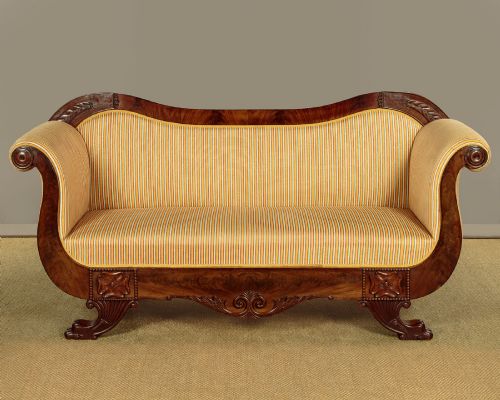
Victorian and Regency examples appear frequently among these furnishings, displaying carved wooden frames and distinct period silhouettes. Each item carries the craftsmanship of its specific decade, from the 1820s scroll ends to later 1900s variations.
Materials and construction
Frames are constructed from dense timbers such as mahogany, walnut, rosewood, and ebonised wood, often shaped with carved details and supported on turned legs or brass fixtures. Joinery relies on traditional cabinet-making methods suited to each period.
Upholstery techniques involve durable fabric coverings like velvet, damask, and fabric over padded foundations. Wood frames are occasionally painted or gilded to match specific French, Italian, or Scandinavian stylistic revivals.
Some Victorian settees feature carved wooden scrolls so enthusiastic they practically demand a velvet cushion and a fainting spell.
Assessing quality in period seating
Quality rests in the crispness of the timber carving and the structural integrity of the frame. Heavier hardwoods like mahogany and walnut provide superior durability compared to softer woods.
The refinement of the upholstery work and the proportion of the scroll ends or backrests distinguish finer pieces. Maker attributions, such as Howard and Sons, elevate the standing of a couch.
Howard and Sons·Gillows
The Antique Yellow Couch Glossary
- Chaise Longue
- An elongated chair designed for reclining, featuring a backrest and a single raised end. Originating in France, these pieces gained popularity during the Regency and Victorian periods.
- Damask
- A reversible figured fabric woven on a jacquard loom, frequently utilised for period upholstery. Silk, wool, or synthetic fibres create patterns that catch the light.
- Knole Sofa
- A historic sofa style characterised by high, adjustable sides and exposed wooden finials tied with decorative braid. Early versions served ceremonial seating functions in great houses.
- Scroll End
- A wooden or upholstered armrest curving outward and downward in a tight spiral. This feature defines many Regency and Victorian couches.
- Settee
- A long upholstered seat with a back and arms, designed to accommodate multiple people. They emerge across Georgian, Victorian, and Edwardian cabinet making.
Antique Yellow Couch: Frequently Asked Questions
What is the difference between a settee and a couch?
A settee generally refers to a small upholstered bench with a back and arms intended for two or more people. A couch often implies a piece designed for reclining, such as a chaise longue or day bed.
Terminology shifted between the eighteenth and twentieth centuries, causing makers to use these labels interchangeably. Examining the actual form remains the best guide to its intended use.
How do I care for antique upholstery?
Protecting vintage fabric requires keeping the furniture away from direct sunlight to prevent fading of yellow dyes and delicate fibres. Regular gentle vacuuming with a soft brush attachment removes dust without abrading the weave.
Professional cleaning is recommended for antique textiles to avoid damaging the underlying padding. Avoiding moisture buildup preserves both the wooden frames and the fabric integrity.
Can I use an antique day bed daily?
Period day beds and settees function well for everyday seating when placed with care. The structural strength depends on the hardwood frame and the condition of the internal webbing.
Occasional sitting suits these pieces, though heavy daily use may require professional reupholstery or joint tightening. Assessing the frame stability ensures safe long-term enjoyment.
What woods were commonly used?
Cabinet makers predominantly utilised mahogany, walnut, and rosewood for high-end seating frames. These dense hardwoods allowed for intricate carving on scroll ends and legs.
Other materials included ebonised wood and painted or gilded surfaces, particularly on pieces influenced by French and Italian designs. Secondary woods were occasionally employed for internal framing.