




Antique Writing Slope Stand
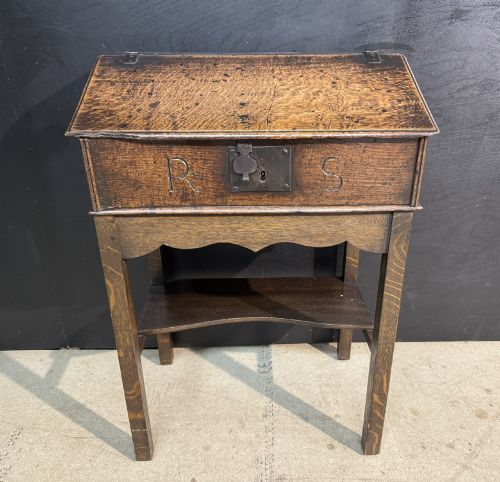
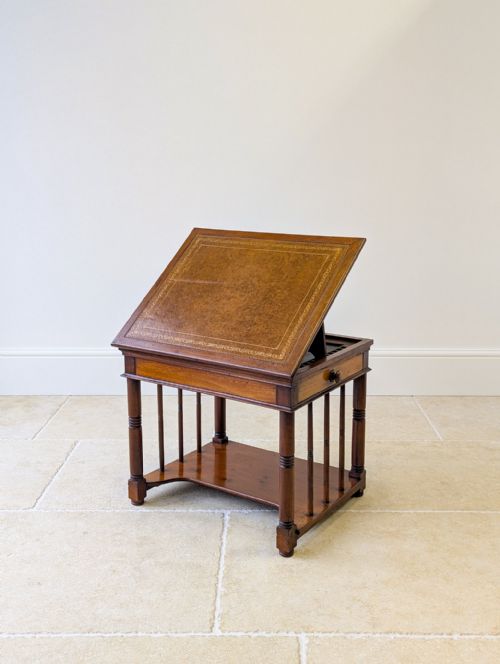
An antique writing slope stand is a portable desk raised on its own legs or support, offering a convenient surface for correspondence.
Antique Writing Slope Stand
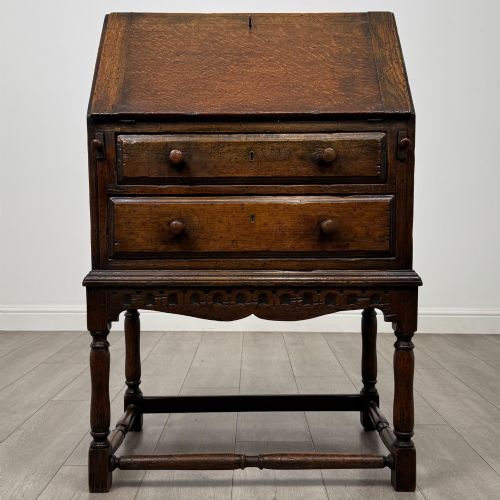
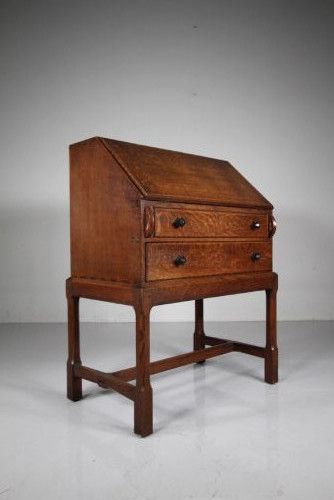
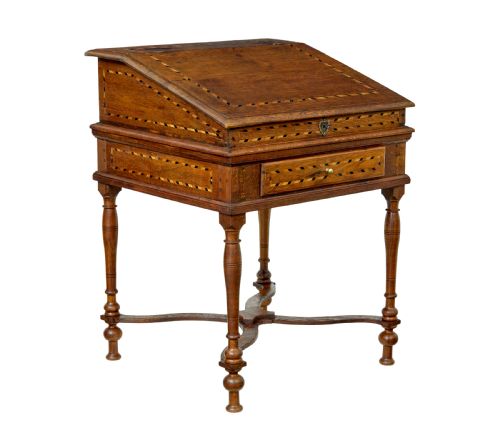
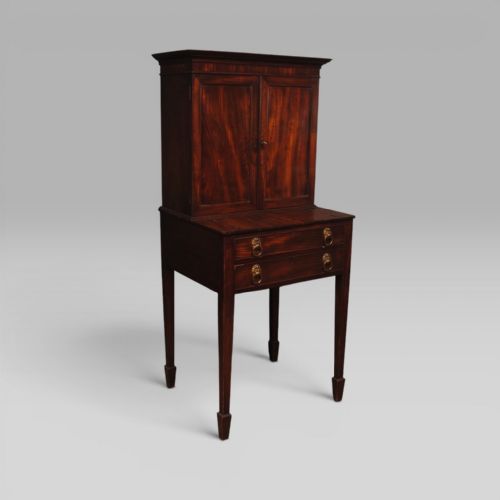
An antique writing slope stand encompasses various forms designed for working with documents, from compact boxes mounted on frames to larger bureaus and clerks desks.
The pieces on this page span several eras, predominantly featuring Georgian, Victorian, and 17th Century examples alongside later Edwardian and 20th-century adaptations.
Origins range from English oak clerk's desks to continental writing furniture, incorporating specialised pieces like reading tables, inkstands, and campaign desks.
Materials and Construction
Cabinetmakers utilised sturdy timbers such as oak, mahogany, walnut, and elm, often applying finer veneers like burr walnut, satinwood, and yew wood to visible surfaces.
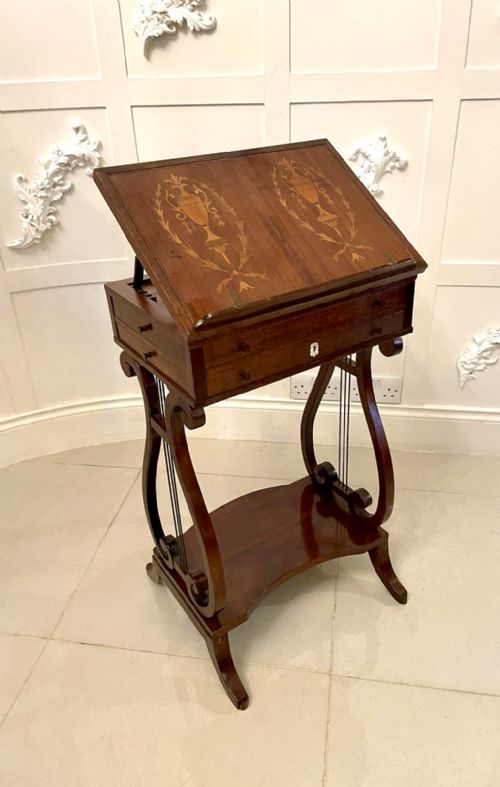
Decoration relied on marquetry inlay, brass hardware, leather writing inserts, and occasional mother-of-pearl or ormolu mounts to enhance the appearance.
Construction methods include boxes designed to sit on separate stands, folding campaign configurations, and integrated desks built with dedicated drawers and compartments.
Periods represented span from the 17th century through the Georgian, Regency, and Victorian eras into the early 20th century.
Evaluating the Pieces
Quality rests on the choice of timber and the precision of the cabinetwork, particularly in the execution of marquetry inlay and the fit of internal drawers.
The integrity of the stand relative to the upper slope or desk matters significantly, as some items combine older boxes with later supports.
Material richness, such as the use of coromandel, solid mahogany, or finely figured burr elm, distinguishes more ambitious examples from utilitarian pieces.
Stanley Webb Davies·Simpsons of Kendall
The Antique Writing Slope Stand Glossary
- Writing slope
- A portable box with an angled lid designed to hold paper and provide a slanted surface for writing.
- Bureau
- A desk with a sloping hinged lid that opens to reveal fitted pigeonholes and small drawers.
- Clerk's desk
- A tall, utilitarian writing desk, traditionally used by office workers, often fitted with a sloping top.
- Inkstand
- A tray or stand holding inkwells, pen holders, and sometimes a sander or bell for correspondence.
- Campaign desk
- A folding or modular piece of furniture designed for easy transport by military officers.
Antique Writing Slope Stand: Frequently Asked Questions
What is an antique writing slope stand?
It is a piece of furniture combining a sloping desk box with a dedicated stand or table base, built for writing and storing stationery.
These pieces vary from simple oak clerk's desks to elaborate inlaid walnut and mahogany cabinets raised on legs.
How were these stands used?
They provided a stable, elevated writing surface for correspondence, architectural drafting, or bookkeeping before the widespread use of flat modern desks.
Many incorporated internal compartments for ink, pens, and paper, while campaign versions allowed travellers to pack up their writing gear.
How do I tell periods apart?
Earlier pieces from the 17th century and Georgian era typically feature solid oak or mahogany with simpler, robust joinery, while Victorian examples often introduce richer veneers, Boulle work, or campaign hardware.
Edwardian and later pieces frequently adapt earlier Queen Anne or Georgian styles using walnut, elm, or inlaid details.
Are the stands original to the boxes?
Some writing boxes were originally manufactured alongside matching stands, while others are writing slopes placed on later bases built to match the period.
Examining the timber, fixings, and wear patterns helps determine whether the upper box and lower stand share the same origin.