


French Boulle Work Desk
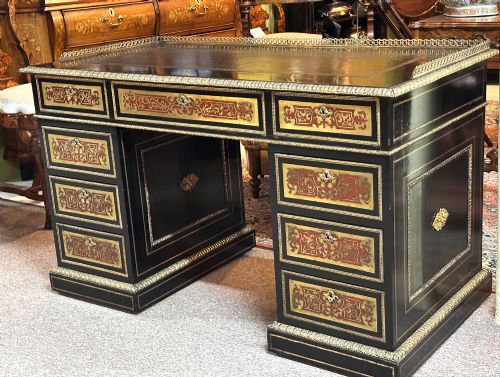
A French boulle work desk brings striking tortoiseshell and brass marquetry into a room, offering both a functional writing surface and an ornate focal point.
French Boulle Work Desk
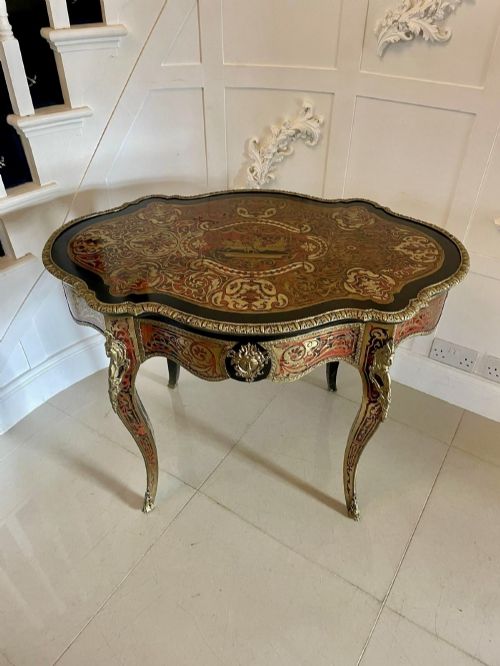
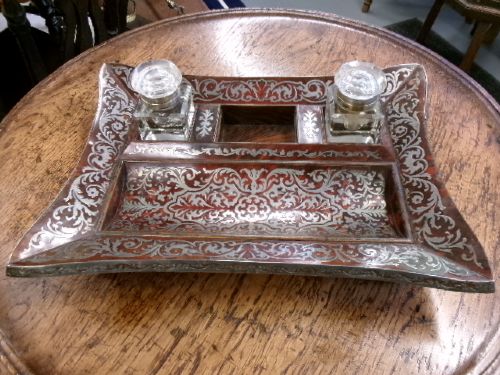
A French boulle work desk sits among nineteenth century centre tables, inkstands, and writing cabinets originating from the Victorian era and the Napoleon III style. These items showcase elaborate marquetry techniques applied to ebonised wood and rosewood surfaces.
The most common forms on this page include centre tables and desk stands featuring detailed brass and tortoiseshell inlays. Buyers also encounter occasional writing boxes, tea caddies, and mantel clocks sharing the same decorative vocabulary.
How they were made
Artisans combined tortoiseshell and brass in intricate inlay patterns set into ebonised wood or rosewood foundations. Ormolu mounts and leather writing inserts frequently complete the construction of these nineteenth century pieces.
The technique relies on precise cutting of metal and shell layers together, creating contrasting patterns known as première partie and contre-partie. Structural carcases utilise solid timbers beneath the decorative veneer and cast bronze ornaments.
Tortoiseshell used in these desks often came from hawksbill turtles, turning Victorian studies into miniature marine exhibitions.
What varies in quality
Quality depends on the crispness of the brass engraving and the depth of the tortoiseshell beneath the surface. Finer examples display tight joints in the marquetry and delicately chased ormolu mounts rather than cast metal with soft detail.
The overall proportion and the harmony between the inlay and the ebonised wood define the better specimens. Superior items maintain intact marquetry panels without excessive lifting or crude historical repairs.
Maison Millet
The French Boulle Work Desk Glossary
- Boulle work
- A method of marquetry using contrasting pieces of brass and tortoiseshell, named after the cabinetmaker André-Charles Boulle. This technique defines the ornate surfaces of nineteenth century French furniture.
- Ormolu
- Gilded bronze used for decorative mounts, feet, and edging on tables and desks. The finish provides a bright metallic contrast to dark ebonised wood.
- Ebonised wood
- Timber treated to resemble ebony, providing a dark background that highlights bright brass and tortoiseshell inlays. It is common on Victorian and Napoleon III pieces.
- Marquetry
- Decorative patterns formed by fitting pieces of veneer into a wood foundation. In these pieces, it involves delicate combinations of metal and organic shell.
French Boulle Work Desk: Frequently Asked Questions
How do I care for boulle work?
Keep the wood and tortoiseshell away from direct sunlight and excessive humidity to prevent the marquetry from lifting or cracking over time. Dust gently with a dry, soft cloth and avoid using harsh liquid polishes on the brass and shell.
Conditioning the wood occasionally with appropriate specialist wax preserves the finish. Stable room temperatures protect the delicate adhesives holding the metal and shell in place.
Are these desks suitable for writing?
Many examples feature fitted leather writing surfaces intended for daily correspondence and paperwork. Their sturdy wooden carcases support writing tasks just as they did in the nineteenth century.
Protecting the leather insert with a desk pad prevents accidental ink stains or scratches. The surrounding brass and tortoiseshell require careful placement to avoid heavy wear on the decorative edges.
What is the Napoleon III style?
The Napoleon III style reflects the eclectic revival aesthetic of the French Second Empire during the mid nineteenth century. It frequently draws inspiration from earlier Louis periods, incorporating lavish ornamentation and bold marquetry.
Pieces from this era often combine ebonised finishes with gleaming ormolu mounts and intricate brass inlays. This aesthetic values theatrical visual impact and intricate craftsmanship above minimalist restraint.
Where should I place a centre table?
A freestanding centre table works best where it can be viewed from all sides, as the marquetry often extends across the entire top surface. Placing it in the middle of a room or in a well-lit reception space highlights the detailed brass work.
Ensure the table has adequate clearance from foot traffic to protect the delicate edges of the tortoiseshell and metal inlay. Positioning it away from direct heat sources prevents the timber from warping.