






Antique Writing Companion
An antique writing companion gathers the inkstands, slopes and stationery boxes that once kept a desk in order.
Antique Writing Companion
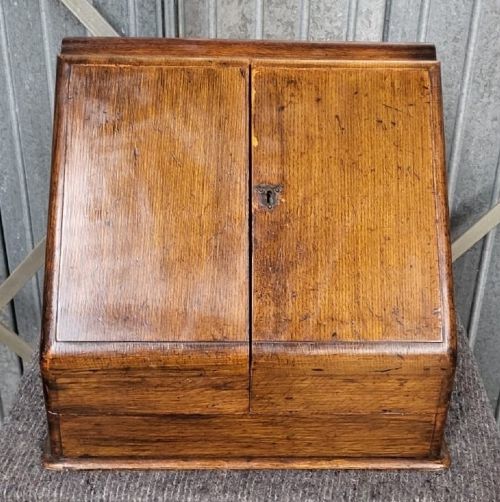
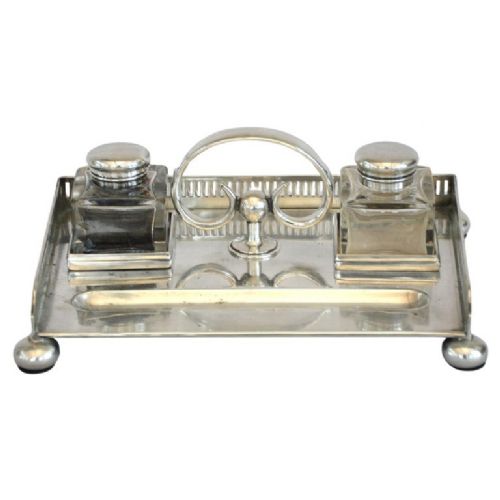
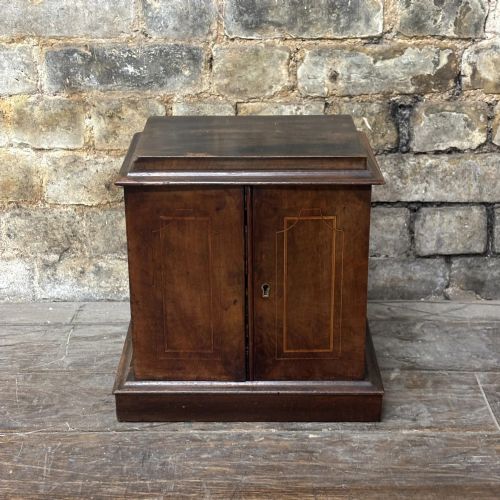
An antique writing companion encompasses portable slopes, desk stands, inkstands and stationery cabinets designed for correspondence. These pieces bridge the gap between portable travel desks and heavy library furnishings, keeping writing materials ready at hand.
The Victorian period dominates the selection, alongside Regency, Edwardian and Art Deco examples. Walnut, oak and rosewood provide the wooden foundations, while brass mountings, cut glass inkwells and leather inserts complete the forms.
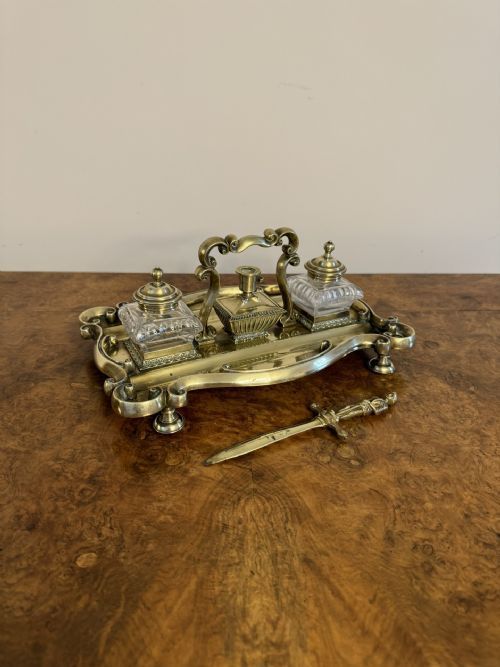
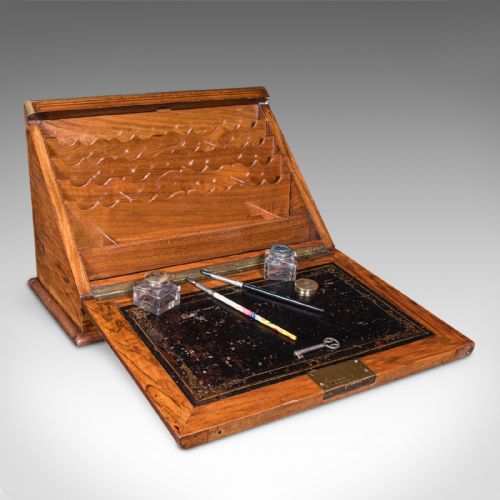
Stationery boxes and double inkstands appear frequently amongst the items. Many incorporate letter racks, drawers for nibs, and compartments for stamps and sealing wax.
How they were made
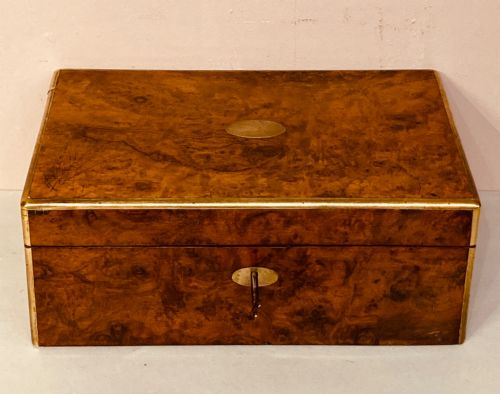
Cabinetmakers utilised hardwoods such as walnut, mahogany and coromandel, often applying burr veneers to the exterior surfaces. Brass banding, mother of pearl inlay and ormolu mounts were added to enrich the presentation.
Glassblowers shaped thick cut glass for the accompanying inkwells, fitted with hinged metal lids to prevent evaporation. Leather surfaces were tooled with gilt borders to provide a smooth writing plane inside portable slopes.
Antique Writing Companion Retail Price Guide 2026
Typical asking prices for writing companion among the pieces listed under this phrase on Sellingantiques today, from the lower quarter to the upper quarter. They describe what is for sale here now, not the wider market.
Desk accessories occasionally concealed secret spring-loaded compartments meant for love letters or stray postage stamps.
What varies in quality
The refinement of the internal fittings separates standard pieces from exceptional examples. Superior items integrate matched cut glass inkwells, secret drawers, and substantial brass mounts rather than plated substitutes.
The selection of timber grain dictates visual appeal, with well-matched burr walnut or figured rosewood commanding attention. Precision in the joinery and the retention of original key escutcheons mark out the better workshops.
Walker And Hall·Marson And Jones·Lund of London
The Antique Writing Companion Glossary
- Writing slope
- A portable box with a hinged sloping lid that opens to reveal a slanted surface for writing and storage space beneath. These pieces often feature secret compartments for confidential papers.
- Inkstand
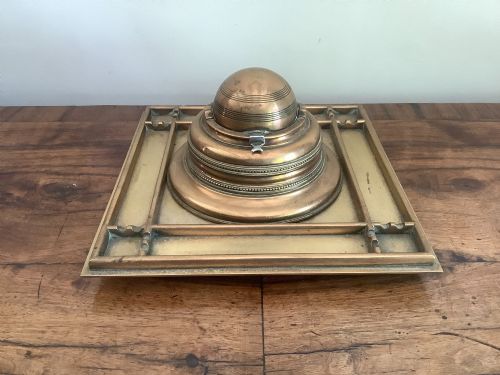
- A tray or stand holding one or more inkwells, often accompanied by pen troughs and sanders. They sit permanently upon a desk rather than travelling.
- Stationery cabinet
- A desktop box designed to hold writing paper, envelopes and sometimes account books. They frequently include drop fronts and internal letter racks.
- Ormolu
- Gilded bronze or brass mounts applied to furniture and desk accessories. This technique adds ornamental detail to corners and handles.
- Dolphin inkstand
- An inkstand cast or carved in the form of a marine mammal. These figural pieces were popular during the nineteenth century.
Antique Writing Companion: Frequently Asked Questions
What is an antique writing companion?
An antique writing companion is a desk accessory or box designed to hold writing instruments, ink and stationery.
These pieces range from portable wooden slopes to heavy desk stands fitted with cut glass inkwells.
How were writing slopes used?
Writing slopes provided a stable, angled surface for correspondence before the widespread use of fountain pens and typewriters.
Inside the folding box, users stored paper, envelopes, wax and spare nibs for travel or home use.
How do I care for wooden desk accessories?
Wooden desk stands and cabinets require protection from direct sunlight and extreme humidity changes to prevent timber splitting.
Applying a traditional beeswax polish helps maintain the lustre of walnut, mahogany and rosewood surfaces.
How do I identify the period of a desk stand?
Periods are identified through a combination of timber choices, decorative motifs and hardware styles. Regency pieces often use brass inlay on rosewood, whilst Edwardian items favour lighter oak and simpler lines.