

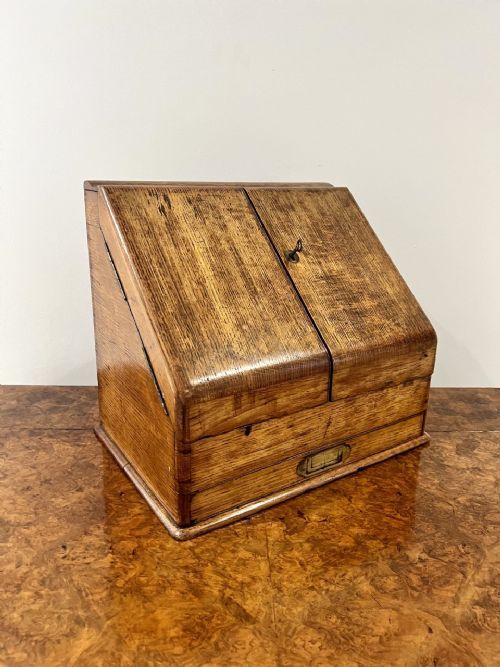


Golden Oak Stationery Box
A golden oak stationery box is a desk tidy crafted to keep correspondence and papers orderly, combining utility with rich timber grain.
Golden Oak Stationery Box
A golden oak stationery box serves as a desktop cabinet designed for holding letters and writing materials. These pieces range from compact desk tidies to larger correspondence cabinets with fall fronts or domed tops.
The golden oak stationery box takes various forms across the Victorian and Edwardian periods, including country house letter boxes and hotel letterboxes. Buyers frequently encounter Edwardian and 19th-century examples featuring fitted interiors and compartments.
Makers utilised sturdy timbers to construct these desktop accessories for daily use in studies and offices. The selection includes styles from simple Arts and Crafts models to elaborate Victorian Gothic Revival pieces.
How they were made
Carpenters built the primary structure using solid oak and pollard oak timber to achieve durable enclosures. These woods provide distinct grain patterns that catch the light.
Metalwork such as brass mounts and hinges reinforced the corners and doors of the cabinets. Glass panels and fabric linings occasionally appeared inside the compartments for holding smaller items.
Golden Oak Stationery Box Retail Price Guide 2026
Typical asking prices for golden oak stationery box among the pieces listed under this phrase on Sellingantiques today, from the lower quarter to the upper quarter. They describe what is for sale here now, not the wider market.
Listings feature oak, brass, glass, pollard oak, metal, and fabric across Victorian, Edwardian, Arts and Crafts, and Gothic Revival styles.
What varies in quality
The refinement of the timber selection dictates the visual appeal of the exterior, with figured pollard oak sitting at the upper end. Plain timber construction represents a more utilitarian standard.
The complexity of the mechanism, such as fall-front desks and drop-front cabinets, separates standard boxes from sophisticated desk furniture. Heavy brass mountings and fitted internal divisions also indicate higher production standards.
The Golden Oak Stationery Box Glossary
- Fall front
- A hinged panel that folds downwards to reveal internal compartments and writing surfaces. This feature allows easy access to stationery while maintaining a neat exterior profile.
- Pollard oak
- Oak timber taken from a tree that has been pollarded, producing a heavily figured and decorative grain pattern. Cabinet makers used this veneer for high-status furniture.
- Stationery box
- A desktop container specifically sized for holding envelopes, paper, and writing implements. These items became essential desk accessories during the 19th century.
- Arts and Crafts
- A design movement valuing honest construction and traditional craftsmanship over mass production. Pieces from this style often display simple lines and exposed joinery.
- Dome top
- A rounded upper lid profile that increases internal clearance for tall ledgers and letters. This shape appears on Victorian and Edwardian desk boxes.
Golden Oak Stationery Box: Frequently Asked Questions
How do I date an oak stationery box?
Dating relies on observing stylistic markers, hardware, and construction methods associated with specific periods. Pieces from the 19th century often display Victorian Gothic Revival influences, while Edwardian examples tend towards simpler country house aesthetics.
Makers utilised brass mounts and distinct lock mechanisms that evolved over the decades. Examining the timber and internal fittings helps establish whether a piece originates from the 1870s or around 1900.
Where were stationery boxes used?
These boxes found places on desks in private studies, grand country houses, and hotel reception areas. They kept correspondence private and organised before the widespread use of modern filing systems.
Households and businesses relied on them to store incoming post, stamps, and writing paper in a single accessible location. Their portable nature allowed them to move between rooms as needed.
How do I care for golden oak furniture?
Maintenance involves keeping the timber away from direct sunlight and extreme temperature fluctuations to prevent splitting. Regular dusting with a soft, dry cloth preserves the natural finish of the oak.
Applying a traditional beeswax polish occasionally helps nourish the grain and protects the surface. Avoid liquid cleaners that might damage the antique polish or any fabric linings.