

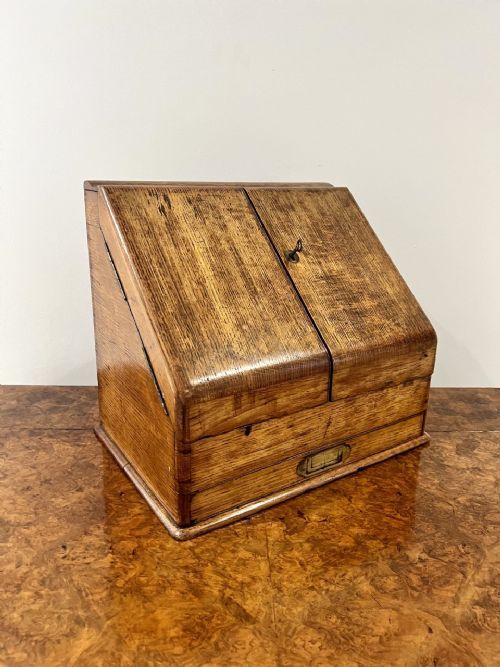



Oak Letter Compendium
An oak letter compendium is a neat desktop cabinet designed to organise correspondence, bringing both practical order and period charm to a study.
Oak Letter Compendium
An oak letter compendium, often catalogued as a stationery cabinet or box, provides dedicated slots for envelopes, papers, and writing implements. These desk accessories appear in various regional and temporal iterations, ranging from mid-nineteenth-century examples to later twentieth-century pieces.
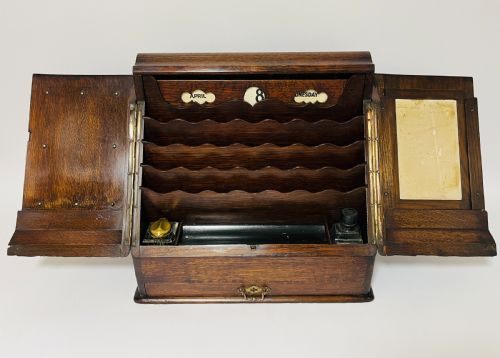
The most common form encountered on this page is the Victorian or Edwardian desktop stationery cabinet, frequently featuring a fall front or hinged doors. These items reflect the domestic and professional writing habits of the period, housing items such as adjustable dates and internal paper dividers.
Makers utilised sturdy timbers to construct these boxes, often incorporating English or American oak. Such pieces vary from simple utilitarian boxes to more elaborate compendiums displaying Arts and Crafts stylistic influences.
Materials and construction
Makers built these pieces primarily using solid oak veneers and timber planks, frequently selecting golden or quarter-sawn boards to highlight the grain. This durable wood formed the structural carcass of stationery boxes and desk tidies alike.
Brass fittings such as hinges, handles, and lock escutcheons appear regularly alongside internal glass inkwells and leather or fabric linings. These secondary materials added both functional utility and decorative contrast to the dark or golden oak surfaces.
Oak Letter Compendium Retail Price Guide 2026
Typical asking prices for oak letter compendium among the pieces listed under this phrase on Sellingantiques today, from the lower quarter to the upper quarter. They describe what is for sale here now, not the wider market.
Some cabinets hide adjustable date rolls so neatly that owners spent decades failing to notice the tiny rotating wooden drums.
Judging quality
The distinction between standard domestic boxes and superior compendiums lies in the precision of the joinery and the complexity of the interior fittings. Better examples integrate clever mechanisms like fall fronts that reveal tiered letter slots and dedicated compartments.
Material selection also dictates overall grade, with denser timbers and finer brass hardware marking out the more ambitious workshops. Arts and Crafts models often display thoughtful hand-finished details that elevate them above mass-produced counterparts.
The Oak Letter Compendium Glossary
- Fall front
- A hinged panel that drops forward to reveal interior stationery slots and writing surfaces. This mechanism allows quick access to desk accessories.
- Stationery cabinet
- A desktop box designed to hold writing paper, envelopes, and small implements. These containers protect correspondence from dust.
- Arts and Crafts
- A design movement favouring honest construction, simple forms, and visible material qualities. Pieces from this style often display subtle handcrafted details.
- Escutcheon
- A decorative brass plate surrounding a keyhole on a cabinet door or lid. It protects the surrounding wood from wear.
Oak Letter Compendium: Frequently Asked Questions
What is an oak letter compendium?
An oak letter compendium is a desktop cabinet built to store writing paper, envelopes, and correspondence accessories. They typically feature internal dividers and compartments designed for nineteenth-century desk organisation.
These pieces range from simple lidded boxes to elaborate cabinets with fall fronts and integrated calendars. They served as both functional furniture and decorative items in period studies.
How were stationery boxes used?
Stationery boxes kept loose writing materials tidy and protected from dust in Victorian and Edwardian homes. People stored incoming letters, blank paper, and stamps inside the fitted interior compartments.
Many examples included small racks for pens and slots for blotting paper. Some variants also incorporated inkwells and adjustable date mechanisms for daily correspondence tasks.
How do I date an oak compendium?
Dating relies on observing construction methods, timber choices, and stylistic cues such as Arts and Crafts influences or Victorian proportions. Cabinet hardware like brass hinges and lock plates also provides clues to the era of manufacture.
Reference dates provided in listings often point to specific decades between the mid-nineteenth and early twentieth centuries. Examining the interior fittings helps confirm whether a piece belongs to the Victorian or Edwardian period.
Where were these cabinets made?
Surviving stationery compendiums originate primarily from British workshops, though American examples also appear in the record. English makers frequently employed native oak to produce durable desk accessories for offices and homes. Nooks and compartments reflect the specific writing customs of these regions during the nineteenth and early twentieth centuries. Regional variations in brassware and interior layout help identify the likely origin.