



Brown Oak Desk Organiser
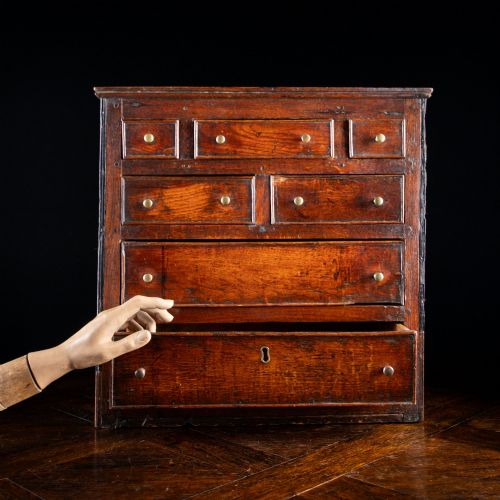
These brown oak desk organiser pieces are practical timber desktop accessories designed to keep correspondence and stationery in order.
Brown Oak Desk Organiser
The selections span distinct historical periods including the Georgian era, the Victorian age, and the Edwardian epoch. Forms range from simple hinged Bible boxes and letter racks to substantial clerk cupboards featuring fitted interiors and secret drawers.
Materials and construction methods
These pieces are principally constructed from solid oak, selected for durability and distinctive grain patterns, often complemented by contrasting brass hinges, locks, and handles. Certain items incorporate cut glass inkwells, iron fittings, and silver plated details to enhance both utility and appearance.
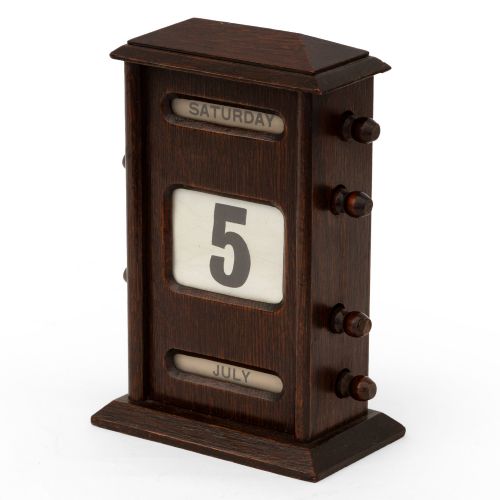
Cabinet makers utilised traditional joinery techniques to assemble sloping lids, tiered letter dividers, and revolving book frames. Carved ornamentation appears on select examples, alongside functional additions such as adjustable calendars and internal filing mechanisms.
Brown Oak Desk Organiser Retail Price Guide 2026
Typical asking prices for brown oak desk organiser among the pieces listed under this phrase on Sellingantiques today, from the lower quarter to the upper quarter. They describe what is for sale here now, not the wider market.
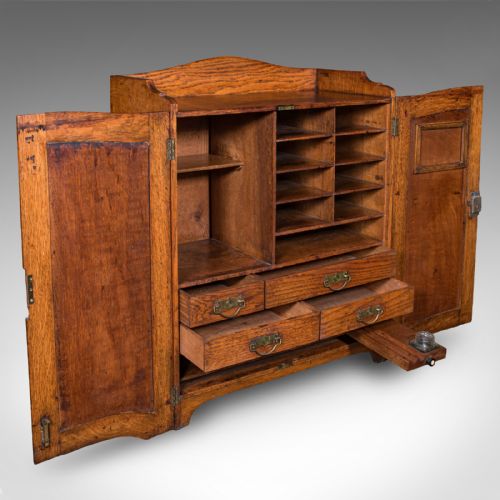
A gamekeeper cabinet hides paperwork behind heavy Scottish oak, proving that even rural game management required proper filing.
Distinctions in quality and execution
Quality in these desktop pieces rests upon the precision of the cabinet work, the soundness of the timber, and the completeness of original internal fittings. Superior examples display thoughtful proportions, seamless dovetail joints, and intact operational elements like working locks with matching keys.
The presence of specialised hardware, such as integrated perpetual calendars or well-engineered revolving mechanisms, separates standard utility items from more ambitious pieces. Retaining original glass inserts and unblemished brass mounts further elevates the standing of an item.
The Brown Oak Desk Organiser Glossary
- Stationery cabinet
- A tabletop cabinet fitted with internal slots, pigeonholes, and compartments specifically designed for holding writing paper and envelopes. These enclosures frequently feature panelled doors and sloping lids.
- Inkstand
- A tray or stand holding one or more inkwells, often accompanied by pen troughs and sometimes incorporating a small drawer or sander. They sit directly upon the writing surface.
- Bible box
- A small wooden chest with a sloped or flat lid, historically used for holding sacred texts or documents, predating dedicated writing desks. They represent some of the earliest portable storage forms.
- Slant box
- A portable desk box featuring an inclined writing surface that lifts to reveal storage space for paper and writing implements. The exterior is usually constructed from robust timber.
- Revolving bookcase
- A compact tabletop or floor standing bookcase designed to turn on a central pivot, allowing easy access to a small collection of reference volumes. They reflect late period innovation in space saving furniture.
Brown Oak Desk Organiser: Frequently Asked Questions
What is a brown oak desk organiser used for?
These pieces provide desktop storage for correspondence, writing paper, and small office supplies. They help maintain order in a workspace by keeping documents sorted into dedicated compartments.
Historically, they sat upon writing tables or clerks' desks to manage daily paperwork. Today, they serve a similar practical function while adding traditional character to modern interiors.
How do I date a wooden stationery cabinet?
Dating relies on observing construction methods, hardware types, and stylistic influences present in the piece. Georgian and early nineteenth century examples often show hand-cut dovetails and simpler timber framing.
Later Victorian and Edwardian pieces may incorporate patented mechanisms, brass gallery rails, or machine-produced fixings. Comparing the overall design vocabulary to established historical periods helps narrow the timeframe.
Are these desk accessories made of solid oak?
Most pieces feature solid oak construction, chosen for its strength and prominent grain. Some larger cabinet backs or internal partitions might utilise secondary timbers.
Examining the grain patterns across joints helps confirm whether the timber is solid throughout. The weight and stability of the piece also offer clues regarding its material composition.
How should I care for antique oak desk pieces?
Maintain these items by keeping them away from direct heat sources and strong sunlight, which can dry out the timber. Regular dusting with a soft, dry cloth preserves the finish.
Application of traditional wax polish occasionally helps nourish the wood and maintain its lustre. Avoid using harsh chemical cleaners that might strip the historic patina.