





Antique Desk Stationary Cabinet
An antique desk stationary cabinet organises correspondence with fitted pigeonholes and lidded compartments, keeping the writing table orderly.
Antique Desk Stationary Cabinet
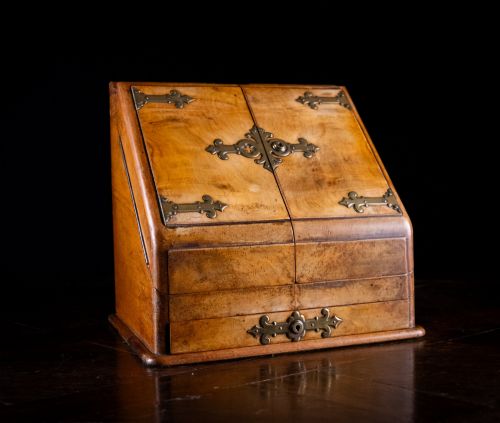
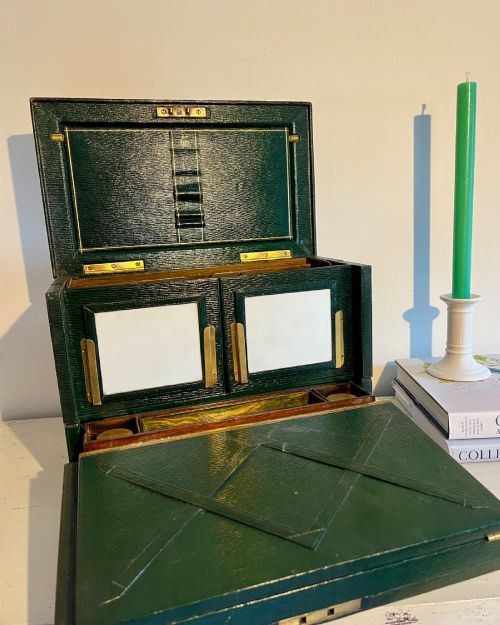
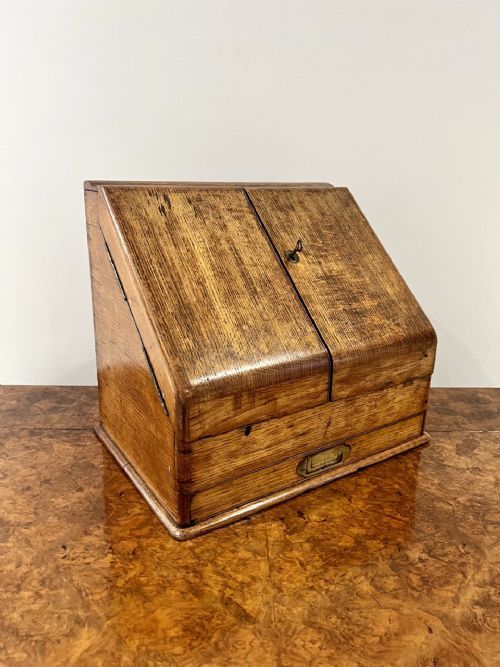
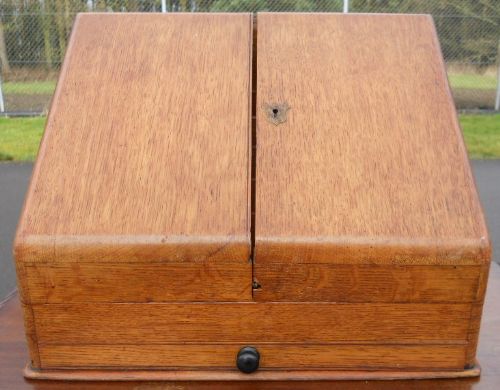
An antique desk stationary cabinet provides dedicated desktop storage for paper, envelopes and writing implements, appearing most frequently in walnut, oak and mahogany across nineteenth century and Edwardian periods. These table-top chests feature sloping or hinged doors that open to reveal fitted letter tiers and small drawers.
The selection here encompasses compact stationary boxes alongside combined designs incorporating inkstands and adjustable date calendars. Victorian examples dominate the pieces listed now, accompanied by occasional Edwardian and Regency variations.
Forms range from simple desktop writing boxes to substantial two-part bureau bookcases and Davenport desks with stationary compartments. Buyers encounter both plain utility versions and highly decorated cabinets fitted with brass mounts and maker labels.
Materials and construction methods
Cabinet makers constructed these pieces using dense hardwoods including walnut, oak, mahogany, rosewood and coromandel. Selected timbers were often matched for grain pattern across the fall fronts and doors.
Antique Desk Stationary Cabinet Retail Price Guide 2026
Typical asking prices for desk stationary cabinet among the pieces listed under this phrase on Sellingantiques today, from the lower quarter to the upper quarter. They describe what is for sale here now, not the wider market.
Answered and unanswered novelty letters boxes sorted post before email ever existed.
Distinctions in execution and finish
Superior examples display precise timber selection with well-figured veneers and harmonious grain alignment across structural surfaces. The interior joinery reveals thoughtful proportioning in the pigeonholes and smoothly operating drawers without binding.
Hardware execution separates standard production from finer workshop output, evident in heavy cast brass mounts, functioning locks with original keys and documented maker labels from firms such as Gillows of Lancaster, Houghton and Gunn, or F Waller.
Gillows of Lancaster·Houghton and Gunn·F Waller
The Antique Desk Stationary Cabinet Glossary
- Stationary cabinet
- A desktop container designed specifically to hold writing paper and envelopes upright within partitioned slots. These boxes usually feature folding fronts or lifting lids.
- Davenport desk
- A compact nineteenth-century writing desk featuring a sloping top above a pedestal of drawers. Many incorporate stationary compartments built into the upper superstructure.
- Bureau bookcase
- A piece of furniture combining a sloping writing flap with upper shelving enclosed by doors. Edwardian variants often integrate stationary fittings inside the writing section.
- Coromandel
- A dense, heavily figured exotic hardwood imported from Asia. Cabinet makers utilised this timber for luxury Victorian writing boxes and desktop accessories.
Antique Desk Stationary Cabinet: Frequently Asked Questions
What is an antique desk stationary cabinet?
An antique desk stationary cabinet is a tabletop wooden box or small chest designed to hold writing paper, envelopes and correspondence neatly organised in vertical slots.
These pieces emerged during the nineteenth century as domestic and office writing habits required dedicated storage for paper goods on top of desks.
How were stationary cabinets used?
Users placed these cabinets on writing tables to keep incoming mail, blank stationery and postage supplies within reach. The compartments kept papers sorted by category or urgency.
Many examples included integrated inkstands, pen trays and small drawers for stamps and sealing wax, creating a complete writing station.
Where should I place one?
These cabinets suit placement on study desks, writing tables or living room sideboards where their fitted interiors can remain accessible. They serve their original purpose of holding correspondence and modern paper items alike.
Keeping them away from direct heat sources protects the polished wood finishes and delicate brass hinges from drying out.
How do I identify the period?
Period attribution relies on timber choice, construction techniques and decorative styles associated with Victorian, Edwardian or Regency eras. Heavy oak and walnut models with Gothic or Arts and Crafts details typically point to the later nineteenth century.
Maker labels, patent brass hardware and fitted interior configurations also help narrow down the date of manufacture.