

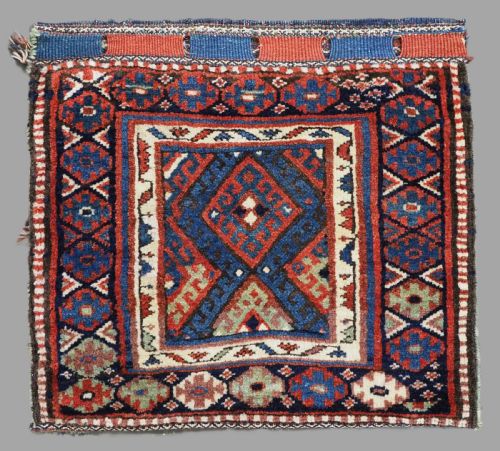
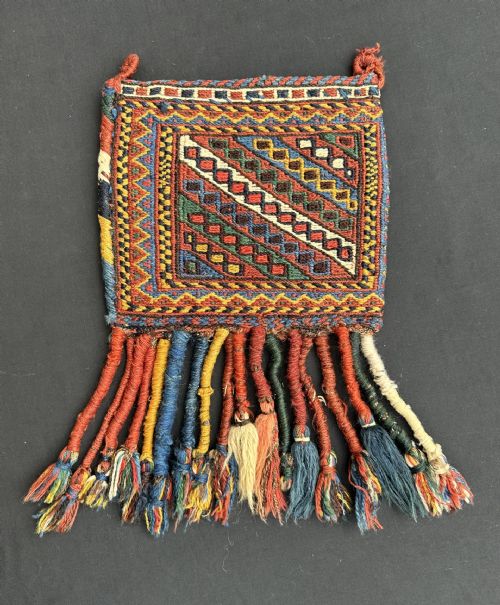


Antique Wool Saddlebag
An antique wool saddlebag brings nomadic tribal weaving into your home, offering portable utility turned into expressive textile art.
Antique Wool Saddlebag
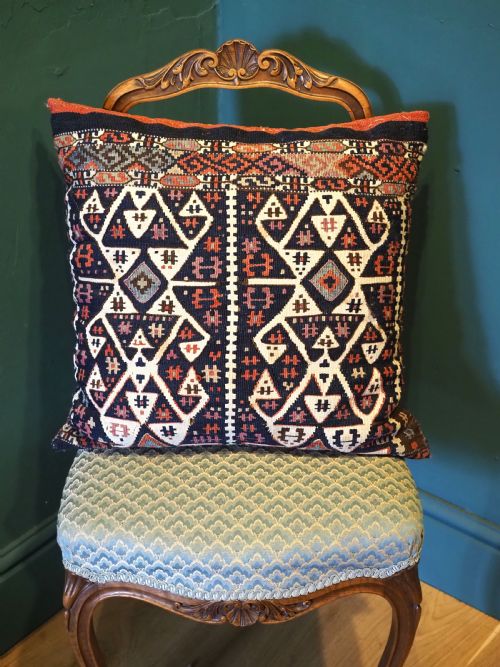
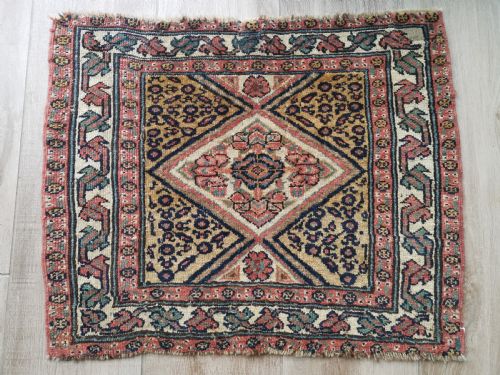
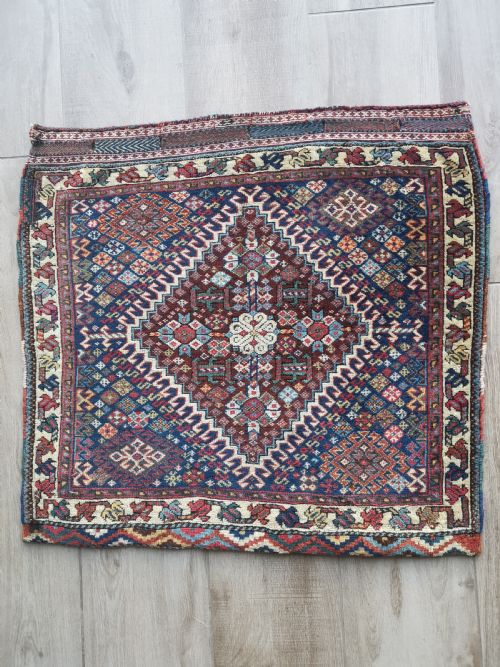
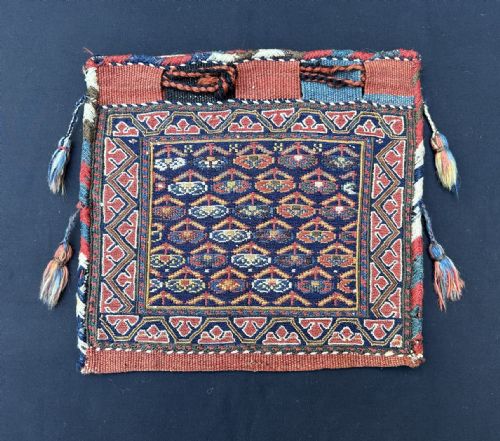
An antique wool saddlebag originates from nomadic and village weavers across Persia, Anatolia, and the Caucasus, created originally for transport on animals. These textiles appear as complete double saddlebags with plain weave backs, split half-bags, or isolated bag faces intended for storage or travel.
The pieces on this page span the mid-nineteenth century through the early twentieth century, showing structural variety from flatwoven kilims to pile-woven surfaces. Tribal groups such as the Shahsavan, Qashqai, Afshar, and Jaf Kurd account for the primary regional attributions found in the inventory.
How they were made
Weavers utilised hand-spun wool for the pile and foundation yarns, frequently combining cotton and occasionally metal threads for structural support or decorative emphasis. Natural dyes provide the chromatic foundation, creating depth across complex geometric, medallion, and boteh motifs.
Techniques range from soumac and other supplementary weft wrapping to standard symmetrical knotting, matched with flatwoven plain weave backs for functional durability. Leather and additional cotton reinforcement appear on specific functional storage pieces designed to bear physical weight.
Nomads wove these portable cupboards with extra-durable flatweave backs so the family camel would not complain about rough luggage.
What varies in quality
The handled quality of the wool dictates tactile richness, where lustrous, high-lanolin fleeces yield deeper chromatic refraction and greater resilience under touch. Structural completeness also defines the tier of a piece, separating isolated cut bag faces from intact pairs retaining their original plain weave backs.
Design execution and dye saturation differentiate standard utilitarian work from master tribal weaving, observed in the crispness of tribal motifs and the harmonious interaction of natural colour palettes. Fineness of knotting or precision in soumac wrapping further establishes the technical mastery behind individual pieces.
The Antique Wool Saddlebag Glossary
- Khorjin
- The traditional Persian term for a double-sided saddlebag used by nomadic tribes for transport and storage.
- Bagface
- The decorative front panel of a saddlebag, frequently preserved independently as a small rug after the utilitarian back deteriorated.
- Soumac
- A flatweaving technique involving wrapped weft threads that produce a durable, braided surface texture on the textile face.
- Boteh
- A recurring almond-shaped or paisley motif representing a floral shoot or cypress tree, common in Persian tribal weaving.
- Kilim
- A tapestry-woven, pileless textile utilising interlocking weft techniques to create sharp geometric patterns.
Antique Wool Saddlebag: Frequently Asked Questions
How were antique wool saddlebags originally used?
Nomadic tribes suspended these paired bags across the backs of horses, donkeys, or camels to carry personal possessions, provisions, and household goods during seasonal migrations.
Once settled in camp, the bags served inside tents for storage, functioning simultaneously as containers and decorative furnishings.
What is the difference between a saddlebag face and a complete bag?
A saddlebag face represents only the decorated front panel of the original double pouch, often removed and framed or used as a small mat after the reverse side wore out.
A complete bag retains its original plain weave back and connecting bridge, preserving the full utilitarian structure created by the nomad weaver.
How do I care for and display an antique saddlebag?
Display these textiles away from direct sunlight to protect natural dye colours from fading, and vacuum them gently through a mesh screen using low suction.
For wall mounting, use a non-invasive padded sleeve or support stitch rather than hanging the textile by direct pins or nails.
How can I tell which tribe made a saddlebag?
Attributions rely on specific combinations of colour palettes, structural weaves, animal hair usage, and characteristic geometric or medallion motifs associated with groups like the Shahsavan or Qashqai.
Regional weaving centres and nomadic confederations left distinct technical signatures in their handling of soumac wrapping and边饰 border designs.