



Antique Geometric Tribal Saddlebag
These antique geometric tribal saddlebag examples are woven wool pieces created by nomadic groups for daily transport, prized today for their bold patterns.
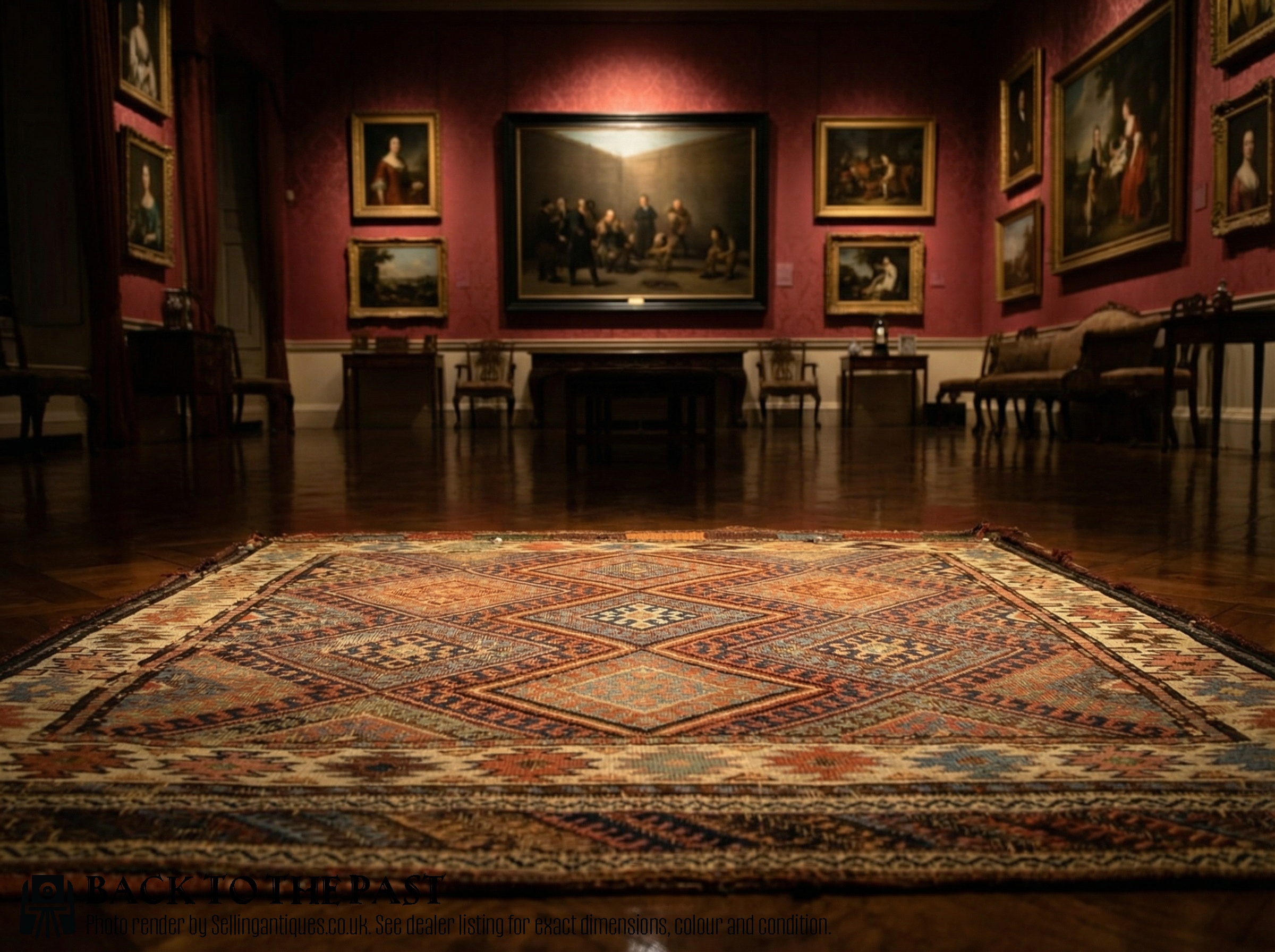
Antique Geometric Tribal Saddlebag
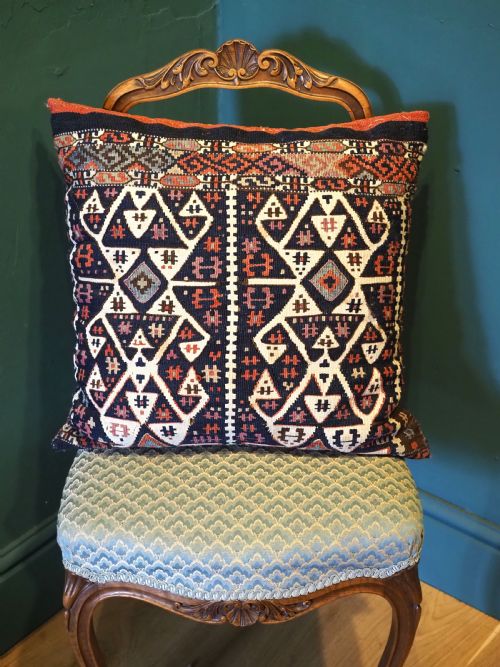
When searching for an antique geometric tribal saddlebag, collectors encounter utilitarian objects originally woven by nomadic and village groups across Persia, the Caucasus, Anatolia, and Central Asia. These items include complete double saddlebags with plain weave backs, single bag faces, storage bags, and fragments adapted into cushions.
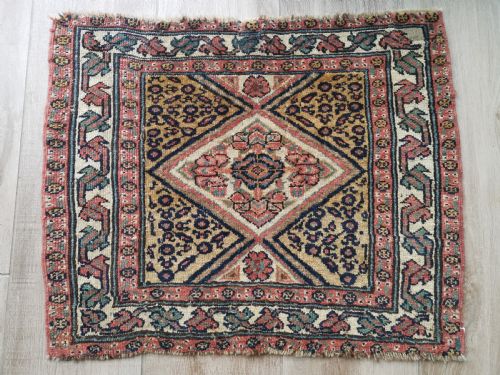
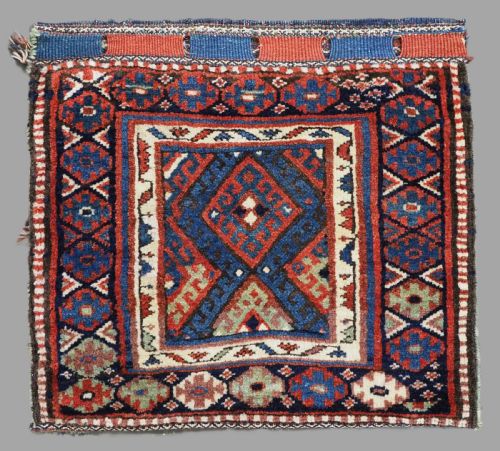
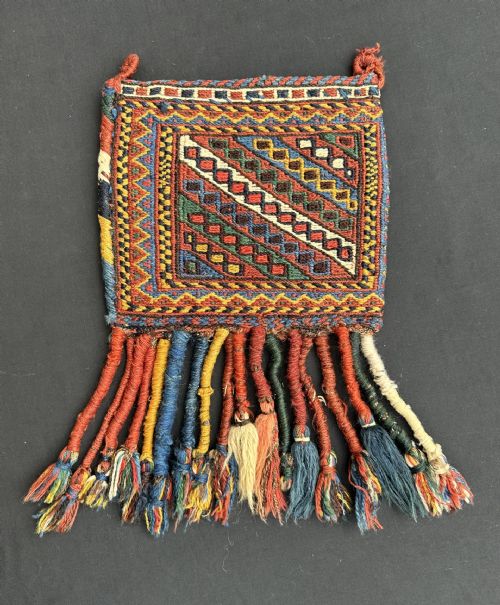
The pieces on this page span the nineteenth century and the early twentieth century, showing the distinct regional traditions of tribal makers such as the Shahsavan, Qashqa'i, Jaf Kurd, Afshar, and Luri groups. Forms range from square bag faces with central medallions to banded weft work designs and sumac khorjin panels.
Materials and construction
The construction relies heavily on wool, hand-spun wool, and cotton foundations, worked into hand-knotted piles or flat-woven structures. Makers utilised natural dyes to achieve rich colour palettes across the various tribal regions.
Techniques vary from soumak work and plain weave backs to intricate pile knotting on bag faces. The durability of the materials ensured these utilitarian transport items survived decades of nomadic use.
Assessing quality
Quality rests in the crispness of the geometric motifs and the depth of the natural dyes used in the wool. Pieces exhibiting lustrous, luminous wool and precise structural execution distinguish themselves within the range.
The preservation of original format, such as complete double bags with their backs intact rather than isolated fragments, alters the character of the piece. The tightness of the weave and the clarity of regional tribal patterns also govern the standing of an item.
The Antique Geometric Tribal Saddlebag Glossary
- Khorjin
- The traditional Persian term for a double-sided saddlebag used for transport by nomads. These transport containers were slung over pack animals.
- Bag face
- The decorative front panel of a saddlebag, often preserved independently after the back section wore away or was removed. These mounted textiles display the primary geometric design.
- Soumak
- A flat-weave technique involving wrapping coloured weft threads over warp threads to create a textured, durable surface. This method produces crisp geometric lines without a pile.
- Medallion
- A central ornamental motif placed within the field of the textile. It forms the focal point of the geometric design.
- Warp
- The stationary vertical threads stretched on a loom before weaving begins. Weft threads are passed through these structural elements.
Antique Geometric Tribal Saddlebag: Frequently Asked Questions
What is a tribal saddlebag?
A tribal saddlebag is a woven container made by nomadic groups for carrying belongings on animals during seasonal migrations.
These pieces feature distinct geometric patterns characteristic of specific tribal confederations and weaving traditions.
How were these bags used?
Nomadic families used them paired as double bags thrown across pack horses, donkeys, or camels for storage on the move.
Inside tents, the bags served as containers for household goods, grain, and personal possessions.
How do I identify the tribe?
Specific geometric motifs, colour combinations, and weave structures point to distinct regional groups like the Shahsavan or Qashqa'i.
Examining the border arrangements and technical details helps separate one tribal tradition from another.
How should I display a bag face?
Many collectors mount single bag faces on fabric-backed frames for hanging on walls as textile art.
Smaller formats also function well as decorative mats or when stuffed to create scatter cushions.
Are complete bags common?
Complete saddlebags featuring both the decorative face and the plain weave back appear less frequently than isolated bag faces.
Time and heavy use often caused the backing materials to separate or wear away entirely.