




Blue Tribal Flatweave Rug
When you search for a blue tribal flatweave rug, you are looking at nomadic textiles woven across Persia, the Caucasus, and Central Asia.
Blue Tribal Flatweave Rug
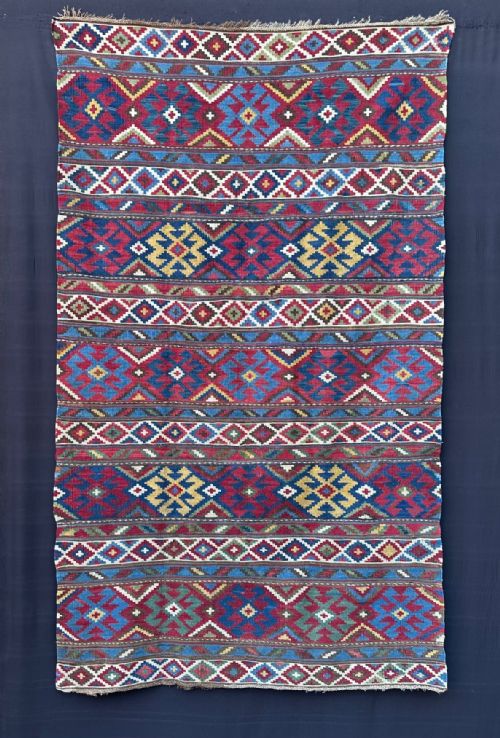
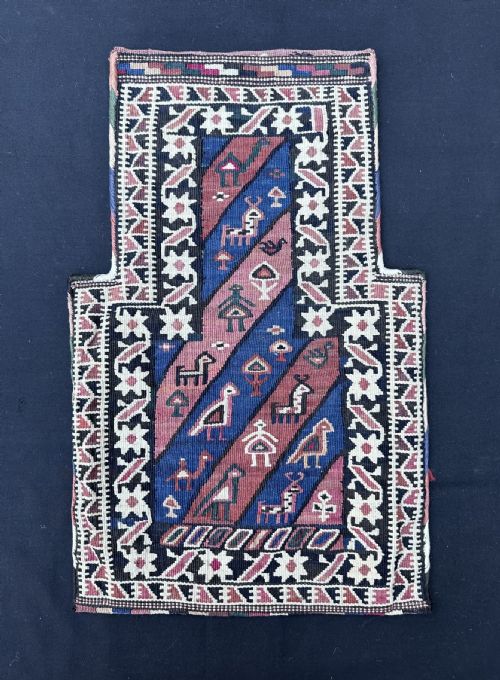
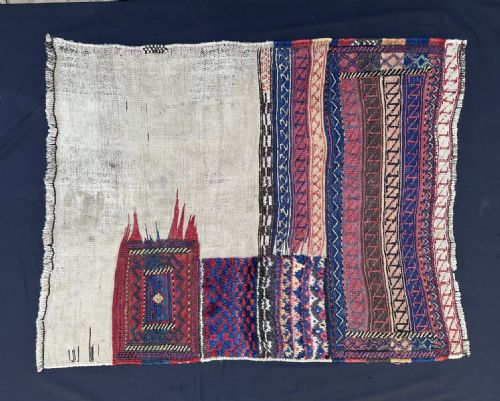
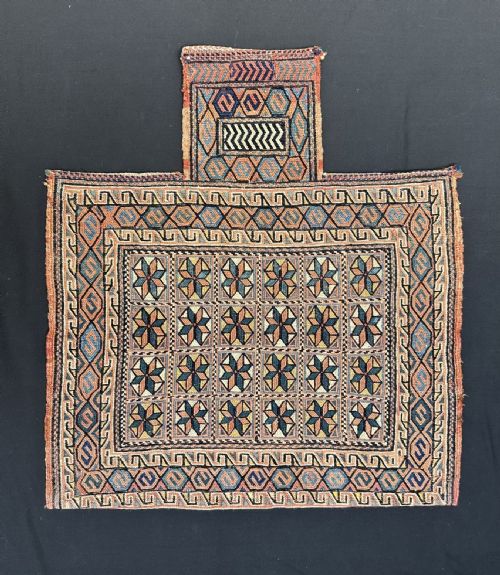
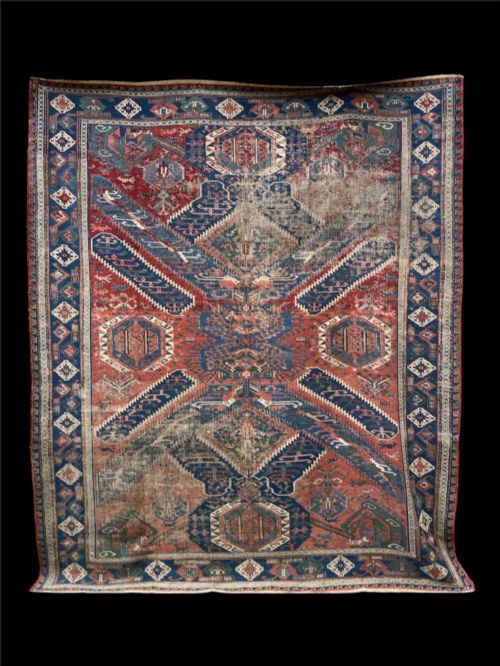
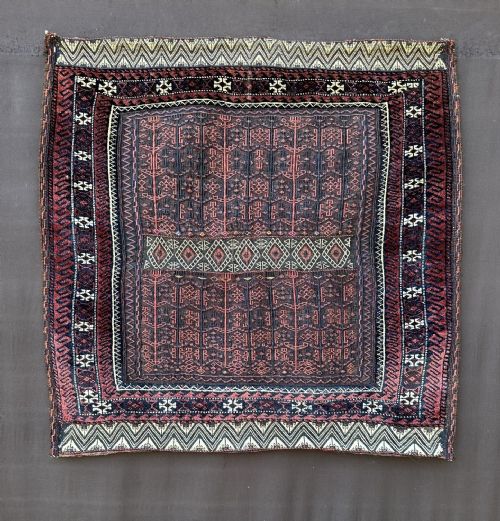
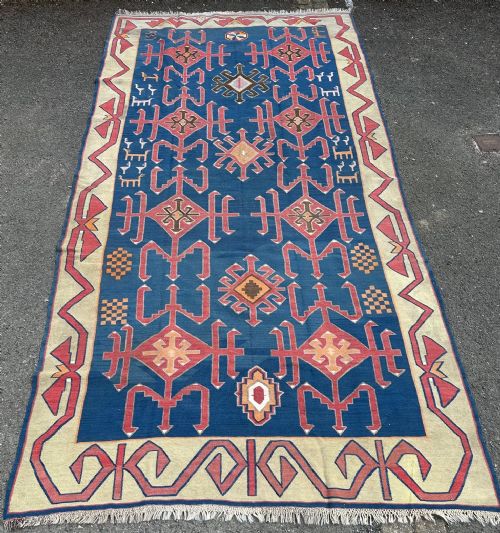
A blue tribal flatweave rug encompasses diverse regional forms, including kilims, sof-ehs, salt-bags, and saddlebags originating from nomadic groups such as the Afshar, Baluch, Shahsavan, and Uzbek. These items span periods from the late nineteenth century through to the early twentieth century, reflecting traditional weaving practices.
Buyers will encounter utilitarian textiles originally utilised for storage, dining, and household organisation, alongside floor-covering kilims. Many examples are constructed in multiple panels or strips and subsequently joined to create larger formats.
The regional aesthetics range from the bold geometric motifs of Caucasian workshops to the intricate field designs of Persian tribal groups. Indigo and various shades of blue frequently dominate the palette, often contrasted with madder reds and ivory highlights.
Materials and Construction
The foundation and surface rely primarily on wool and hand-spun wool, occasionally supplemented by goat hair for structural durability and cotton for specific foundation details. Natural dyes and vegetable dyes provide the colour palette, yielding subtle tonal variations across individual panels.
Weaving techniques include slit-tapestry flatweaving for kilims and intricate weft-wrapping methods such as soumak work for bags and storage containers. These demanding techniques produce strong, pileless textiles designed for arduous nomadic living conditions.
The inventory documents regional formats from the Caucasus, Persia, and Anatolia, including multi-strip kilims and complete nomadic storage bags.
Assessing Quality
Quality rests upon the fineness of the weave, the structural integrity of the joins in multi-part textiles, and the handling of the wool. Superior examples display tightly packed weft threads and crisp geometric precision in complex motifs like dragons and shields.
The depth and harmonisation of the dye work distinguish exceptional pieces, particularly where natural indigo has aged with uniform character. The resilience of the original materials and the completeness of traditional formats also influence the standing of each textile.
The Blue Tribal Flatweave Rug Glossary
- Kilim
- A flat-woven carpet or rug produced by tightly interweaving warp and weft strands without creating a pile. This technique results in a lightweight, durable textile suitable for both floor use and hanging.
- Sofreh
- A spreading cloth traditionally utilised for dining, bread preparation, or grain handling among nomadic communities. These textiles often feature specialised field designs distinct from standard floor rugs.
- Soumak
- A historic weft-faced brocading technique that wraps supplementary weft threads over the warp to create a textured, ribbed surface on the face of the textile. It offers greater structural weight than standard flatweaving.
- Mafrash
- A large rectangular storage chest panel or complete bag used by nomads for bedding and household possessions during migration. They frequently exhibit striking banded or medallion designs.
- Madder
- A natural red dye derived from the roots of the Rubia tinctorum plant, commonly utilised alongside indigo in traditional dyeing. It produces rich terracotta and brick-red hues that mellow gracefully over decades.
Blue Tribal Flatweave Rug: Frequently Asked Questions
What is a tribal flatweave rug?
A tribal flatweave rug is a pileless textile created by nomadic and village weavers using traditional hand-spinning and dyeing methods. These pieces range from household utility cloths to floor kilims.
They derive their distinct character from the specific geographic regions and tribal groups that produced them, utilising local wool and plant-based colorants.
How were flatweave bags used?
Items like salt-bags, saddlebags, and mafrash containers served practical storage functions within nomadic daily life. They held provisions, grain, and personal belongings during seasonal migrations.
Many surviving examples preserve their original plain-weave backs or hanging straps, demonstrating their integration into pastoral routines.
How do I care for an antique flatweave?
Gentle vacuuming without a rotating brush helps maintain the surface of a flatweave textile. Professional cleaning suited to antique wool ensures the preservation of natural dyes.
Using a quality underlay provides stability on floors and reduces friction between the weave and the ground surface.
How do I distinguish regional styles?
Caucasian pieces tend to display crisp, geometric medallion and shield configurations with strong contrasting borders. Persian and Afghan tribal pieces often incorporate softer indigo fields, repeating boteh motifs, or specialised utility formats.
Examining the structure, wool preparation, and dye palette helps identify the specific weaving community.