
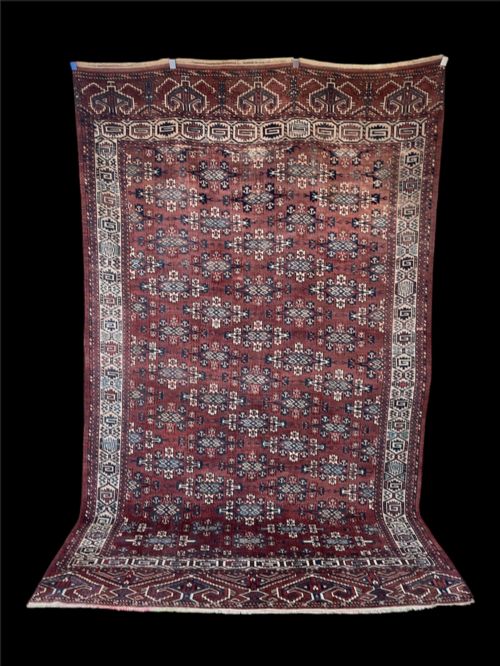


Antique Wool Main Carpet
When sourcing an antique wool main carpet, collectors encounter tribal floor coverings woven across Central Asia and Persia during the nineteenth and early twentieth centuries.
Antique Wool Main Carpet
An antique wool main carpet represents large-format floor coverings produced by nomadic and settled tribal groups, primarily originating from Turkmen, Baluch, and Persian confederacies. These pieces were intended for practical domestic use within tents or communal spaces rather than formal court manufacture.
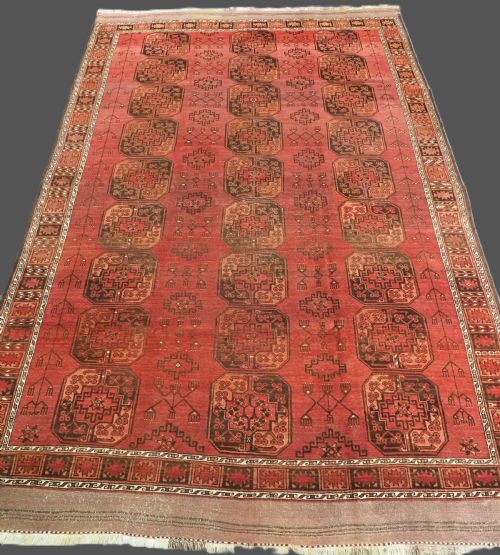
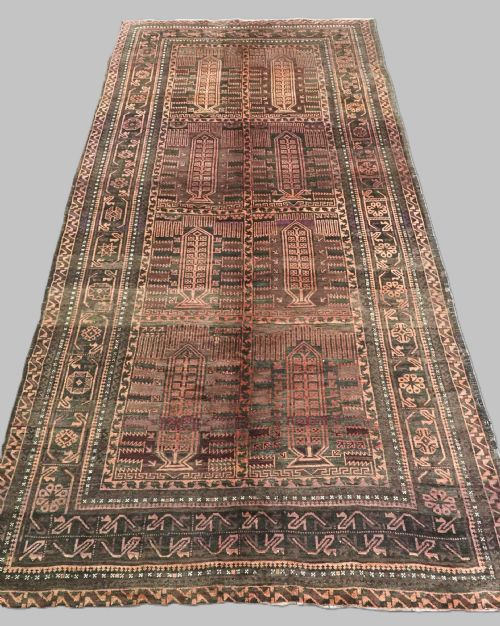
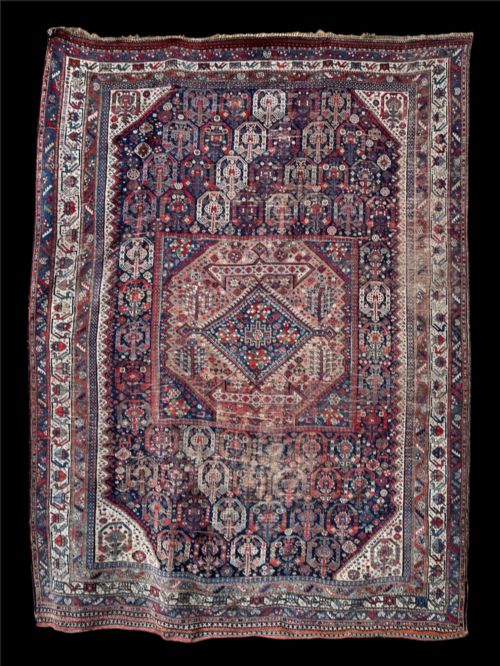
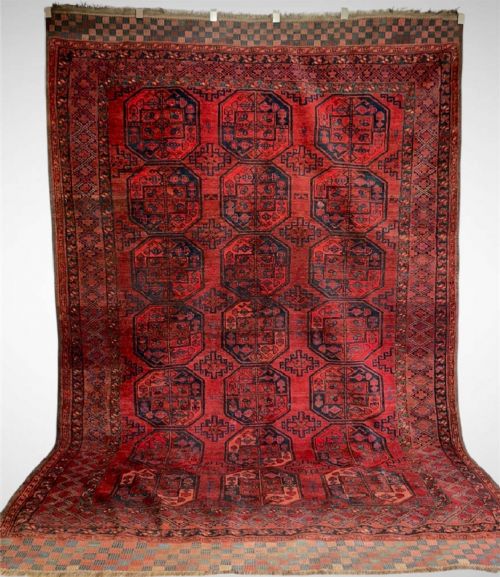
The selections encountered here most frequently include Ersari, Yomut, Tekke, and Timuri or Baluch tribal main carpets spanning the mid-nineteenth century to the early twentieth century. Examples often display traditional geometric motifs, repeating guls, and distinctive border configurations typical of their specific regional weavers.
Scale distinguishes main carpets from smaller scatter rugs or dowry pieces, providing substantial surface area covered in complex tribal designs. Buyers searching for an antique wool main carpet look for authentic tribal provenance grounded in historical nomadic weaving traditions.
Materials and construction methods
These textiles rely predominantly on wool, incorporating hand-spun wool fibres that lend a tactile, yielding quality to the pile. Foundations occasionally integrate goat hair or horsehair alongside wool to achieve structural durability across large dimensions.
Weavers utilised natural dyes to achieve deep palettes, ranging from rich madder reds to cochineal highlights and earthy brown tones. The combination of resilient animal fibres and stable natural colourants accounts for the enduring survival of these nineteenth-century floor coverings.
Keep an eye out for rogue pecking chickens and wandering tribal birds stitched into the borders alongside standard geometric motifs.
What separates examples in quality
Quality in these carpets rests upon the handle and integrity of the wool, where soft, lustrous pile distinguishes superior weaving from coarser production. The handling of natural dyes creates visual depth, whereas flat or muddy palettes diminish the impact of the repeating tribal motifs.
Structural tightness and the precision of the guls or border patterns also dictate standing within the range. Pieces exhibiting intact original borders, balanced proportions, and careful knotting reflect the highest standards of tribal craftsmanship.
The Antique Wool Main Carpet Glossary
- Gul
- A primary octagonal or medallion motif repeated across Turkmen carpets. Each tribal group utilised distinct gul variations to signify lineage and origin.
- Main carpet
- A large-format floor covering designed for central domestic use within a tribal tent or dwelling, distinct from small bags or trapping pieces.
- Kalam donner
- A specific repeating design often described as a pencil box motif. It appears frequently in Timuri and Baluch weaving traditions.
- Kepse gul
- A characteristic diamond-shaped lattice pattern associated with Yomut tribal carpets. The motif creates an interlocking field across the textile.
- Cochineal
- A natural red dye derived from scale insects, utilised to impart vibrant pinkish-red highlights to the wool pile.
Antique Wool Main Carpet: Frequently Asked Questions
How do I identify different tribal designs?
Different tribes utilised signature geometric medallions known as guls, alongside specific border systems and palette preferences. Recognising these repeating emblems allows observers to separate Turkmen subtypes from Baluch or Khamseh examples.
Examining the structural foundation, such as the presence of goat hair or hand-spun wool, further clarifies the regional origin of the weaving.
Were these rugs used on floors?
Main carpets served as primary floor coverings within traditional tribal dwellings, providing insulation and decoration for large interior spaces. Despite heavy domestic foot traffic, their durable wool construction ensured longevity.
Many surviving examples retain substantial pile, reflecting careful placement in areas subject to less intense daily wear.
How should I care for an antique carpet?
Preserving these textiles involves regular gentle vacuuming without rotary brushes and maintaining stable indoor humidity away from direct sunlight. Professional cleaning geared towards antique vegetable-dyed wool safeguards the integrity of the natural fibres.
Placing a suitable underlay beneath the carpet prevents slipping and reduces friction against hard flooring surfaces.