

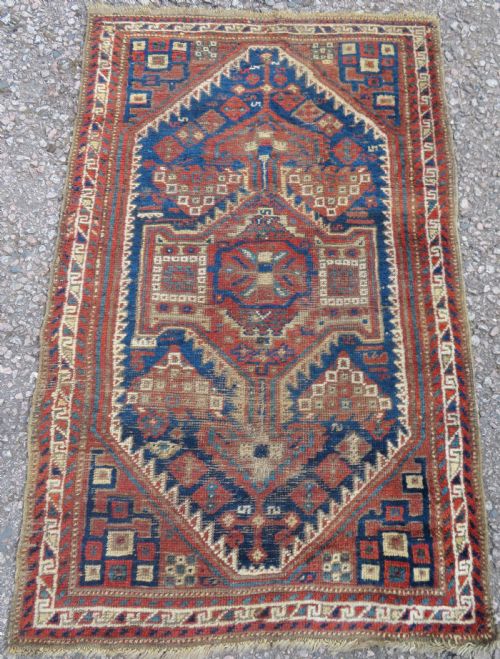
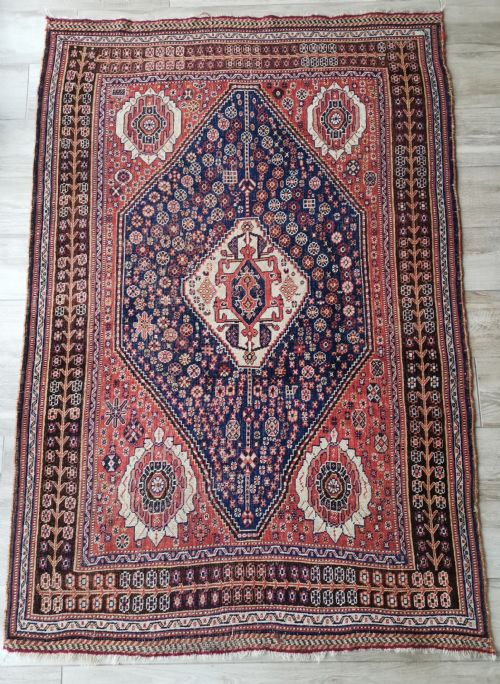
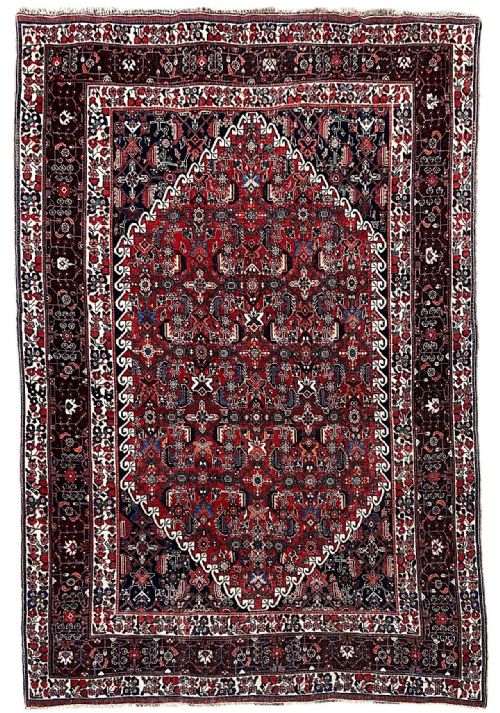
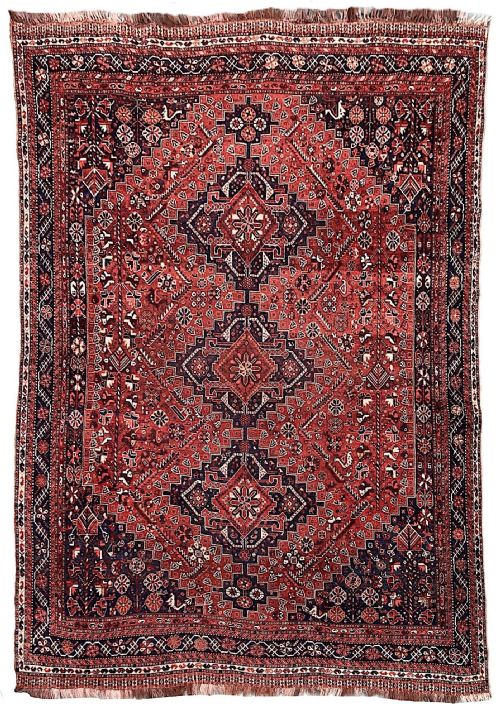


Shiraz Tribal Wool Rug
A shiraz tribal wool rug brings the bold geometric patterns and rich natural dyes of southwest Persia directly into a room.
Shiraz Tribal Wool Rug
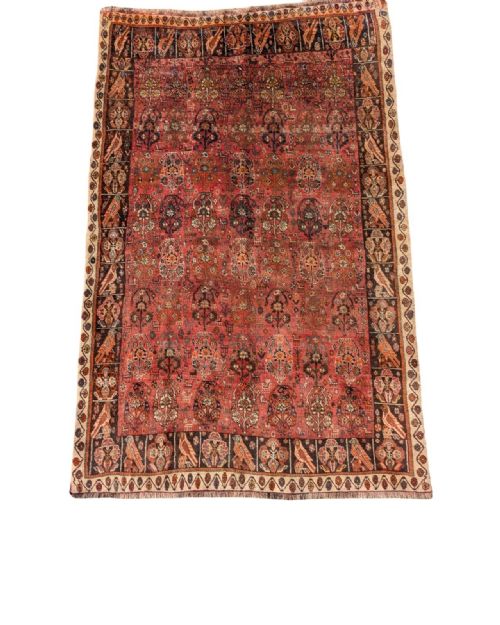
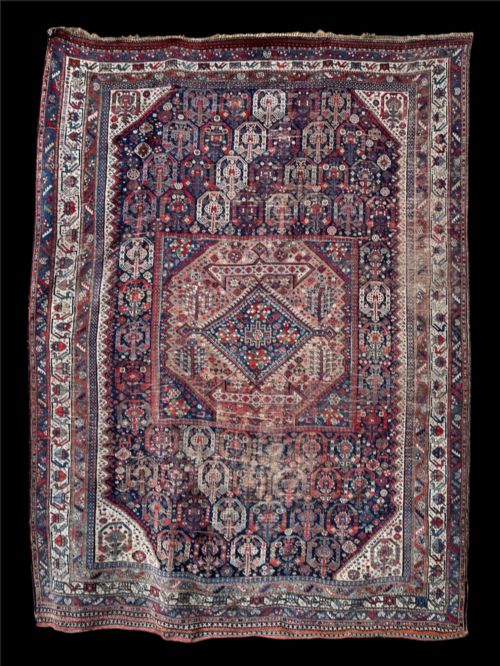
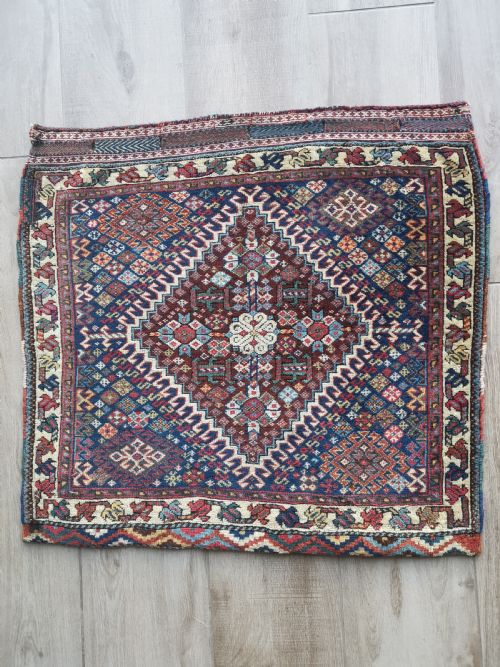
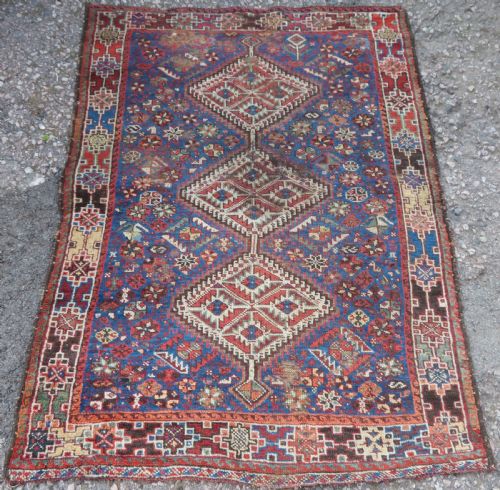
A shiraz tribal wool rug embodies the weaving traditions of nomadic and village groups from southwest Persia, including Qashqai and Khamseh confederacies. These pieces encompass formats ranging from small area rugs and long runners to utilitarian saddlebags and bag faces.
The most common examples on this page date from the nineteenth and early twentieth centuries, displaying characteristic tribal motifs such as geometric medallions, animal figures, and repeating patterns. They reflect the practical artistry of weavers working within specific regional traditions.
Formats vary from compact hearth rugs to large room-sized carpets, allowing these textiles to function in diverse spatial settings. Each piece carries the distinct visual vocabulary of South Persian nomadic life.
Construction and Materials
These textiles rely on hand-spun wool for both the pile and the foundation, often paired with cotton for structural warp and weft threads in later or more formal village pieces. The inherent lanolin in traditional wool provides durability and a soft tactile quality to the surface.
Weavers utilised natural dyes extracted from plants and minerals to colour the fleece, creating deep shades that mature gracefully over decades. The hand-woven technique binds the pile firmly to the foundation through structured knotting.
Shiraz Tribal Wool Rug Retail Price Guide 2026
Typical asking prices for shiraz tribal wool rug among the pieces listed under this phrase on Sellingantiques today, from the lower quarter to the upper quarter. They describe what is for sale here now, not the wider market.
Current listings span the nineteenth and early twentieth centuries, featuring wool construction and natural dyes.
Assessing Quality
Quality in these textiles depends heavily on the density of the weave and the precision of the knotting, which dictates the clarity of the geometric motifs. Finer knot counts allow for sharper execution of complex medallion designs and intricate border details.
The choice and preservation of natural dyes influence the visual depth of the rug, as well-dyed wool develops a harmonious patina over time. The condition of the wool pile, foundation integrity, and completeness of original edges and ends also separate standard examples from superior ones.
The Shiraz Tribal Wool Rug Glossary
- Khorjin
- A traditional pair of saddlebags woven for transport on pack animals, often found today as single bag faces.
- Medallion
- A central ornamental motif set into the field of the rug, frequently repeated in rows along the length.
- Warp
- The vertical foundation threads stretched tightly on the loom before weaving begins.
- Weft
- The horizontal threads passed through the warp threads to secure each row of knots in place.
- Kashkuli
- A finer grade of Qashqai weaving associated with specific sub-tribal groups known for superior wool quality.
Shiraz Tribal Wool Rug: Frequently Asked Questions
How do I care for an old wool rug?
Regular gentle vacuuming without a rotating power brush helps remove embedded dust from the wool pile. Professional cleaning by a specialist in antique textiles prevents fibre degradation.
Placing the rug out of direct sunlight preserves the natural dyes. Using a breathable underlay prevents slipping and reduces wear against hard flooring.
Where were these rugs made?
These pieces originate from the Fars province in southwest Persia, historically marketed through the regional hub of Shiraz. Nomadic confederacies like the Qashqai and Khamseh produced them in seasonal camps and villages.
Weavers drew inspiration from their surrounding environment, incorporating tribal symbols and local flora into their geometric layouts. The geographic isolation of these groups preserved distinct regional styles well into the twentieth century.
Are these rugs suitable for heavy traffic?
Traditional wool construction and high lanolin content provide considerable natural resilience against daily wear. Fully piled examples handle moderate foot traffic in living areas and hallways quite well.
Extremely fine or fragile pieces with low pile benefit from placement in low-traffic zones or display as wall hangings. Assessing the remaining pile depth helps determine the best placement for daily use.
How are different tribal styles identified?
Identification relies on examining structural characteristics such as selvedge finishes, end treatments, and the specific palette of natural dyes. Qashqai pieces often feature distinctive multi-medallion layouts and rich indigo grounds.
Khamseh and Baharlu pieces frequently display darker palettes and dense repeating geometric motifs like small birds or stars. Comparing knotting direction and wool characteristics further aids in separating distinct tribal origins.