




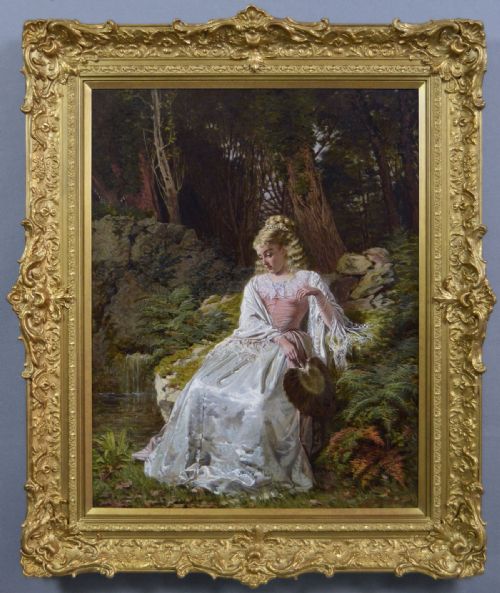


Antique Woodland Oil Painting
An antique woodland oil painting brings the quiet depth of nineteenth-century trees and sunlight directly into a room.
Antique Woodland Oil Painting
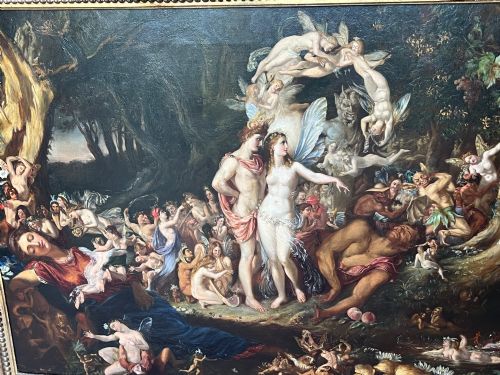
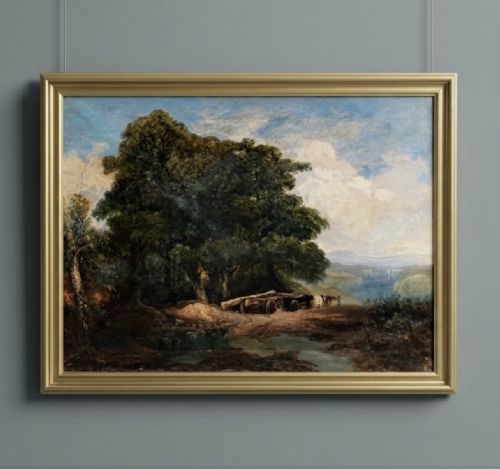
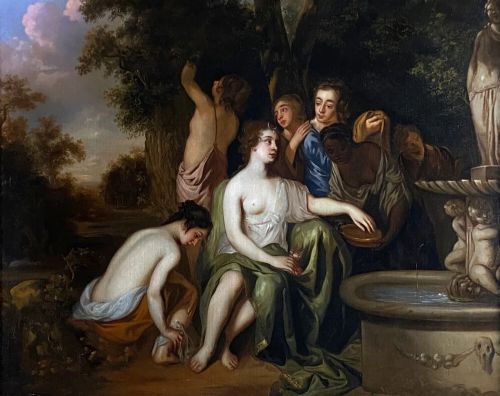
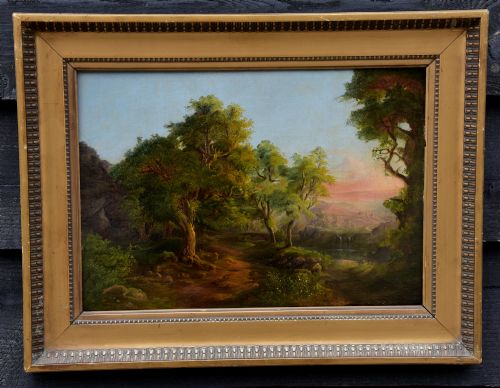
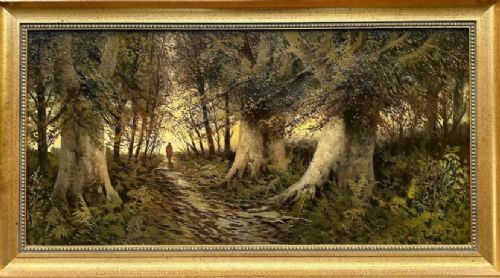
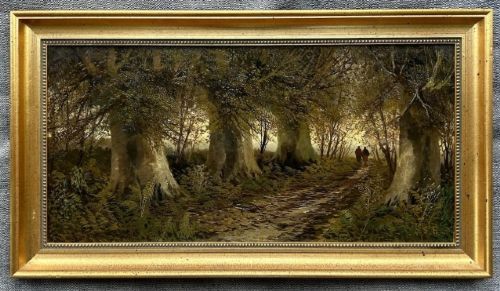
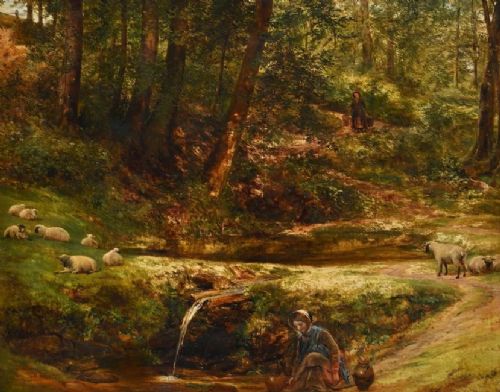
An antique woodland oil painting captures the natural world through nineteenth-century and early twentieth-century brushwork, focusing on trees, shaded paths, and forest glades. Buyers searching this phrase encounter canvases and board panels portraying British and European landscapes, often populated with figures, cattle, or pastoral streams.
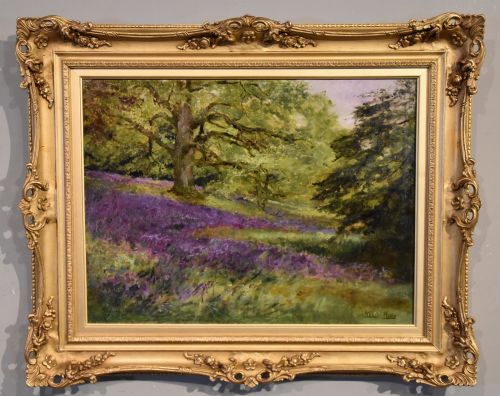
The nineteenth-century pieces dominate this selection, ranging from Victorian naturalism to Barbizon School influences and British Impressionism. These works vary from intimate studies on wood to large framed gallery landscapes signed by named artists of the period.
How They Were Made
Artists applied oil paint using traditional mediums onto stretched canvas, wood panels, or board supports, sometimes laying canvas over board for stability. Giltwood frames adorned with gesso and gold leaf frequently complete the construction of these period artworks.
The physical build relies on woven textile supports or rigid wooden panels that hold the oil pigmennts securely over centuries. Master framers enclose these works in decorative moulded timber housings finished in gold leaf.
Listings feature nineteenth-century and early twentieth-century canvases, boards, and panels utilising oil paint and giltwood frames.
What Varies in Quality
The distinction between ordinary and exceptional pieces rests in the artist's handling of light filtering through a canopy and the depth achieved in the perspective of the trees. Skilled painters render the atmosphere of a seasonal glade with precise brush control, whereas lesser works remain flat and formulaic.
Provenance and signature attribution elevate certain canvases, alongside the original condition of the painted surface and its matching period frame. Works bearing documented signatures from recognised landscape painters command greater attention than unsigned student pieces.
Richard Sebastian Bond·William H Myers·Thomas W Lascelles·Richard Redgrave·Paul Desire Trouillebert·Henry Yeen King·Arthur Herbert Rigg·Thomas Bromley Blacklock·Thomas Edward Roberts·James Mallard Bromley·Clarence Henry Roe·David Watts·William Mellor·John Wright Oakes·James Proudfoot·Abraham Hulk Jnr·Thomas Hollingsworth·Ernest Higgins Rigg·Frederick Golden Short·Edward H Holder·George F Wetherbee·J McIntyre·Ferdinand E Grone·Fred Cecil Jones·Karl Peter Burnitz
The Antique Woodland Oil Painting Glossary
- Canvas
- A heavy woven fabric stretched across a wooden frame to serve as a support for oil painting. It provides a flexible and durable ground for brushwork.
- Gesso
- A plaster-like mixture applied to wood frames or panels to prepare the surface for gilding and decoration. It creates a smooth base for gold leaf application.
- Giltwood
- Timber carved and coated with gold leaf or metallic paint to produce a decorative frame. It protects and enhances the appearance of the artwork.
- Barbizon School
- A nineteenth-century French movement focused on realistic landscape painting en plein air. Practitioners prioritized direct observation of forests and rural scenery.
- Impressionism
- A style emphasising transient effects of light, loose brushstrokes, and everyday subjects. It emerged strongly in British and French painting during the later nineteenth century.
Antique Woodland Oil Painting: Frequently Asked Questions
Should these paintings be kept out of direct sunlight?
Sunlight fades organic oil pigments and accelerates the yellowing of old varnish layers over time. Hanging them on interior walls away from direct beams preserves the original colour balance.
Stable room temperatures and moderate humidity also protect wooden panels and canvas stretchers from warping or cracking across the seasons.
How can I tell the period of a woodland landscape?
Stylistic clues such as costume details on figures, Barbizon brushwork techniques, or nineteenth-century framing methods indicate the likely era of creation. Signatures and dates inscribed on the canvas or reverse board offer the clearest chronological markers.
Examining the canvas weave, tack holes, and backing boards provides additional physical evidence of the decade in which the work was assembled.
Were these paintings always framed in gold leaf?
Giltwood frames with gesso ornamentation were standard for finer nineteenth-century landscapes, elevating the status of the artwork. Many pieces retain their original decorative frames from the Victorian or Edwardian periods.
Simpler wood or painted frames also appeared, particularly on smaller board sketches or works intended for domestic rather than gallery display.