
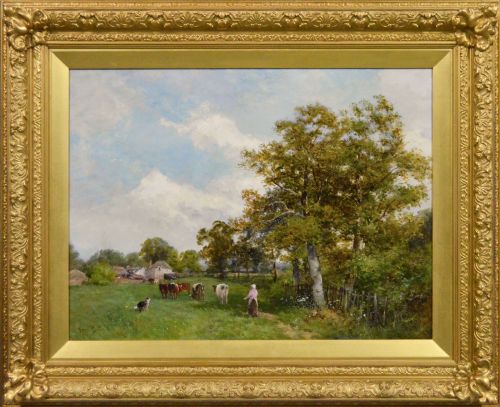
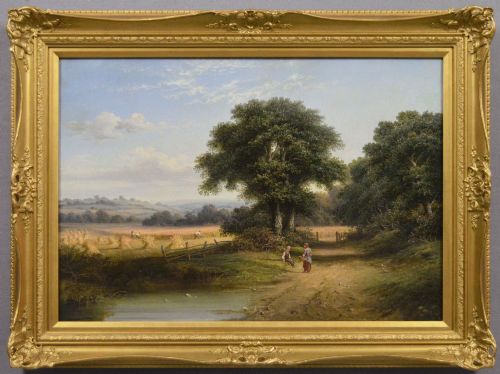
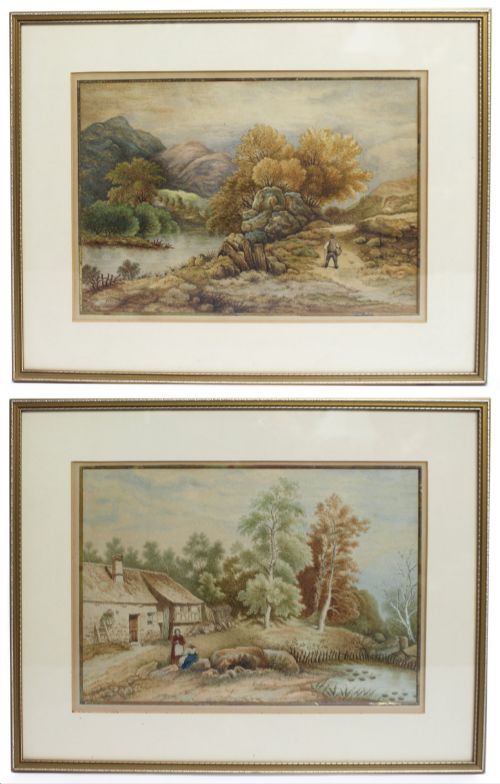
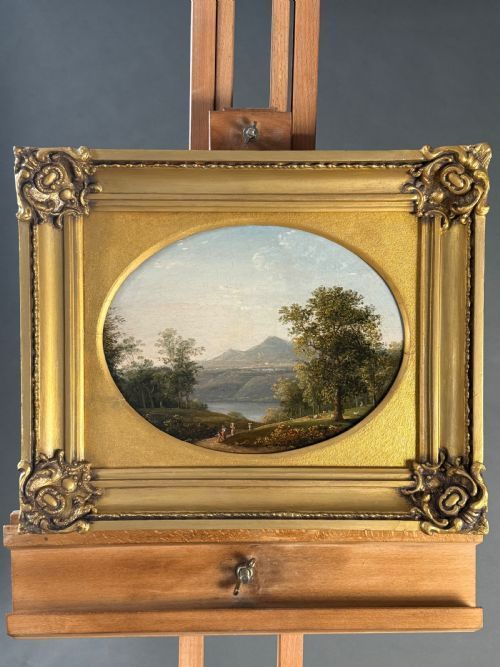
Gold Framed Pastoral Painting
A gold framed pastoral painting brings the quiet of the countryside indoors through rural scenes framed in rich gilt.
Gold Framed Pastoral Painting
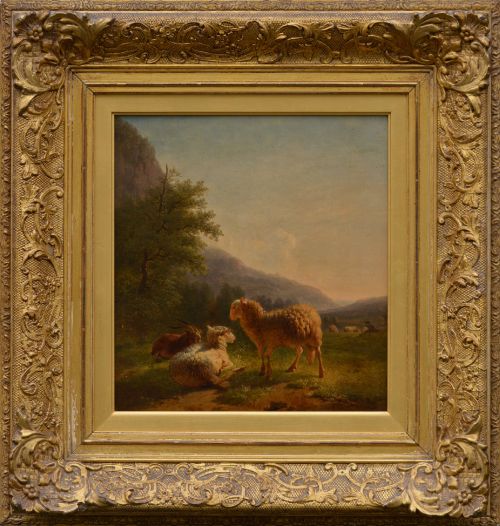
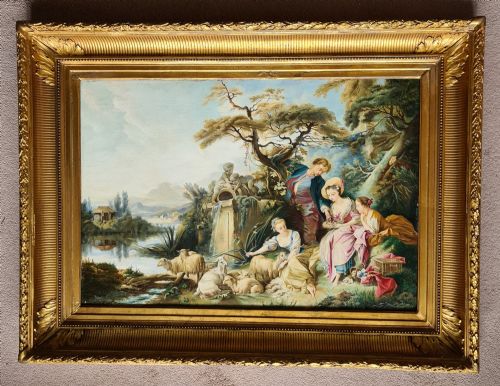
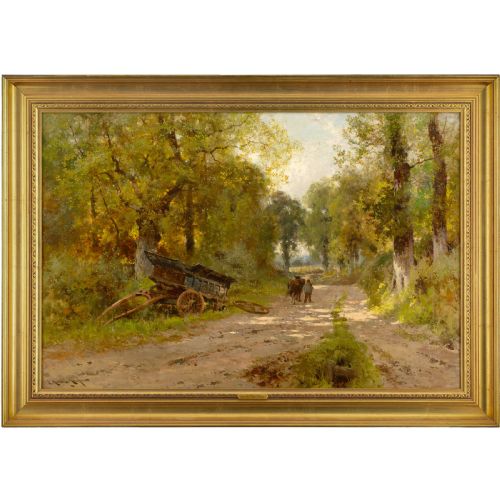
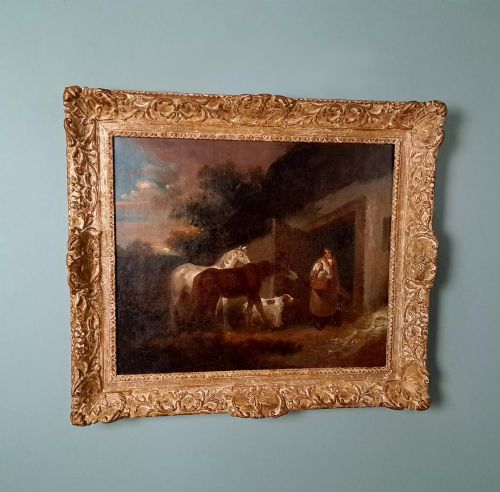
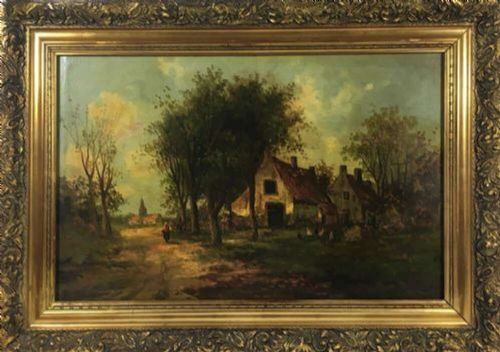
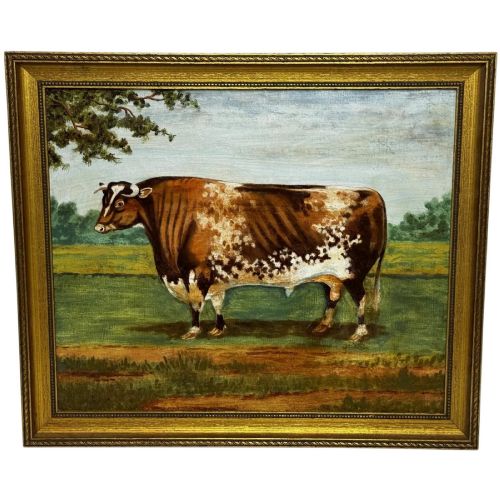
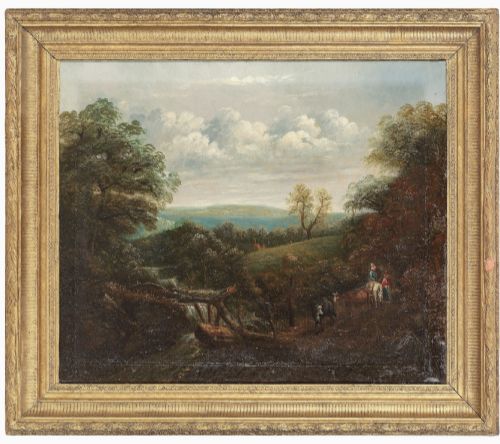
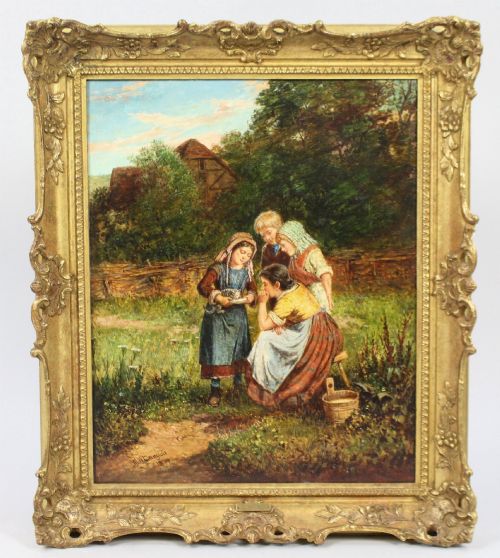
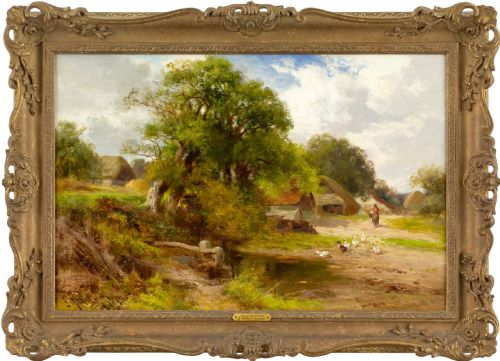
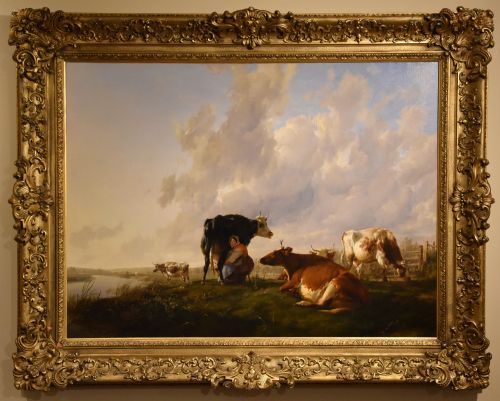
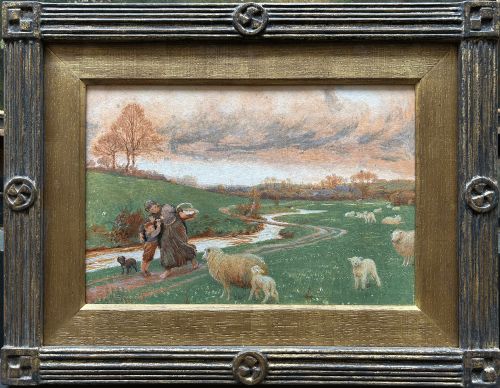
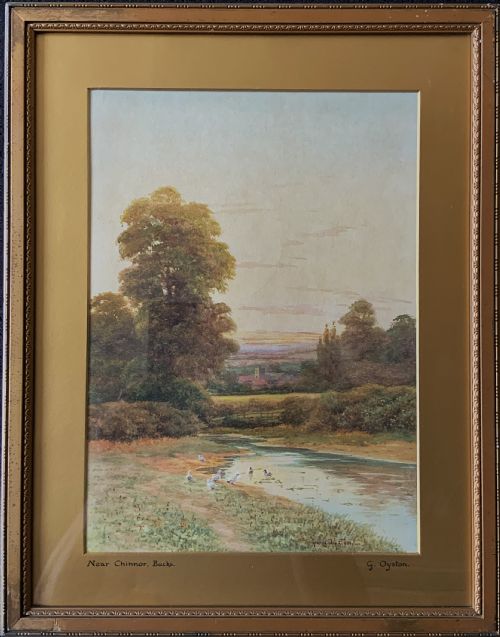
A gold framed pastoral painting presents rural life, agricultural labour, and agricultural animals within traditional decorative surrounds. Collectors seeking a gold framed pastoral painting generally encounter works executed in oil on canvas or watercolour, spanning the eighteenth century through to the early twentieth century.
The selection includes British and continental European scenes featuring shepherds, cattle, sheep, and harvest fields. These artworks originate from distinct regional schools such as the Norwich School, the Barbizon School, and various Victorian British and continental traditions.
How they were made
Artists utilised oil on canvas, oil on board, and watercolour on paper to capture rustic landscapes and rural figures. Canvases and wooden panels were mounted in frames constructed from wood, gesso, and giltwood, finished with applications of gold leaf.
Framing techniques relied on moulded gesso applied to wooden foundations before gilding, creating ornate decorative borders that complemented the rural subject matter within.
The listings feature oil on canvas, watercolour, and oil on board, housed within gesso, wood, and giltwood frames.
What varies in quality
Quality rests upon the artist's handling of light, anatomical precision in depicting animals and figures, and the depth of the landscape composition. Works by established named painters demonstrate superior brushwork and compositional balance compared to anonymous school pieces.
The craftsmanship of the surrounding frame also contributes significantly, with hand-carved giltwood and intricate gesso work representing higher manufacturing standards than simpler wooden mouldings.
Eugène Verboeckhoven·John Horace Hooper·William Joseph Shayer Senior·Mark William Langlois·David Bates·Walter Heath Williams·Th.Thibault·Jacob Philipp Hackert·Thomas Sidney Cooper·George Oyston·Frederick James Kerr·Albert Rieger·William Watson Jnr·Douglas Cameron·Johann Friedrich Voltz·Robert Watson·T C Hofland·Henry H Parker·Miles Birkett Foster·Charles Henry Slater·Henry Schouten·Jan Miel·George Morland·Charles Edward Wilson·Johannes de Haas
The Gold Framed Pastoral Painting Glossary
- Giltwood
- Wood carved and coated with gold leaf or gold paint. This material forms the primary structure of many decorative antique picture frames.
- Gesso
- A plaster mixture applied to wood surfaces to create a smooth base for gilding. It allows craftsmen to mould intricate relief patterns onto picture frames.
- Pastoral
- An artistic genre depicting rural life, shepherds, and agricultural landscapes. These scenes romanticise country living and farming traditions.
- Barbizon School
- A nineteenth-century French art movement focused on realism in landscape painting. Painters in this group drew inspiration from direct observation of nature and rural labourers.
Gold Framed Pastoral Painting: Frequently Asked Questions
What periods do these paintings date from?
The available artworks predominantly span the eighteenth, nineteenth, and early twentieth centuries, encompassing Georgian, Victorian, and Edwardian eras. Painters of these periods focused heavily on rural realism and traditional agricultural scenes.
Specific dates within listings range from late eighteenth-century compositions to works created in the nineteen-twenties, reflecting shifting European artistic movements over a broad timeframe.
How do I identify the school of painting?
School attribution relies on stylistic traits, subject matter, and regional painting techniques recorded in the artwork. British and continental European traditions exhibit distinct approaches to lighting and landscape composition.
Examining the brushwork and the handling of rural subjects often reveals connections to established groups such as the Norwich School or the Barbizon School.
How should I hang a gilt framed artwork?
Gilt framed works require secure wall fixings suited to the combined weight of the wooden stretcher, canvas, and heavy gesso frame. Placement should avoid direct sunlight to protect pigments and the underlying gold leaf.
Maintaining stable room humidity prevents warping in the wooden panels, canvas supports, and ornate plaster mouldings of the frame.
What materials make up the frames?
Frames are constructed primarily from wood coated with gesso, a plaster-like substance that holds intricate moulded designs. Layers of gold leaf are then applied over the prepared gesso surface.
This traditional construction method gives the frames their characteristic metallic sheen and textured decorative relief.