



Victorian Cattle Landscape Art
Victorian cattle landscape art captures pastoral scenes of farm animals and rural vistas, offering buyers a glimpse into nineteenth-century agricultural life through traditional paintings.
Victorian Cattle Landscape Art
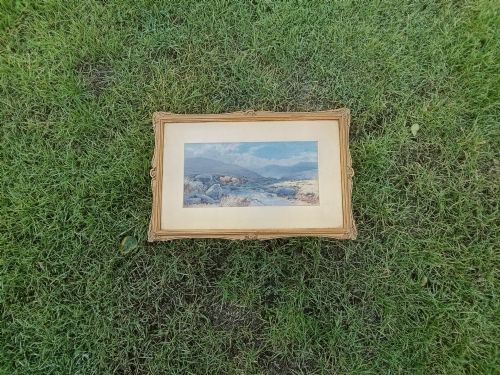
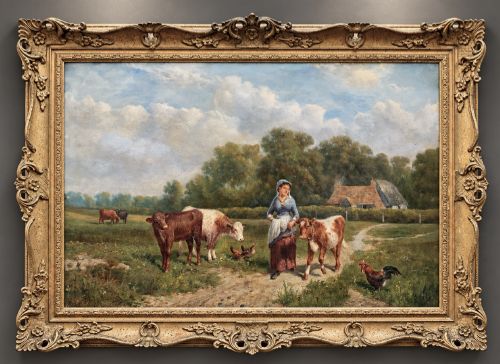
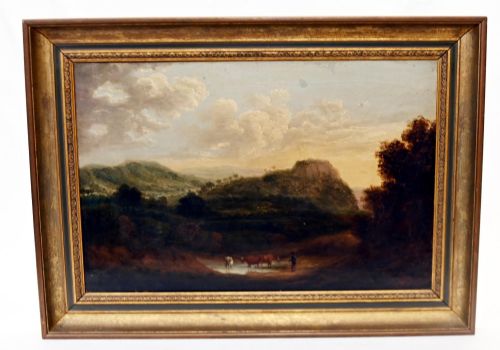
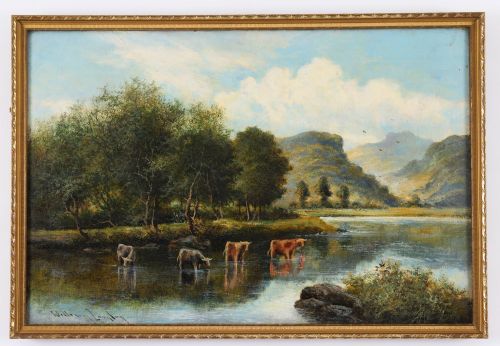
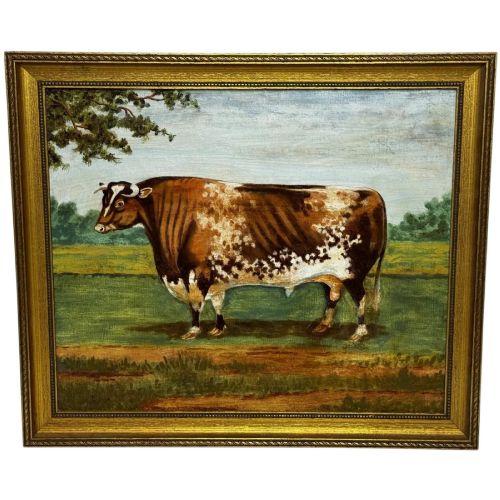
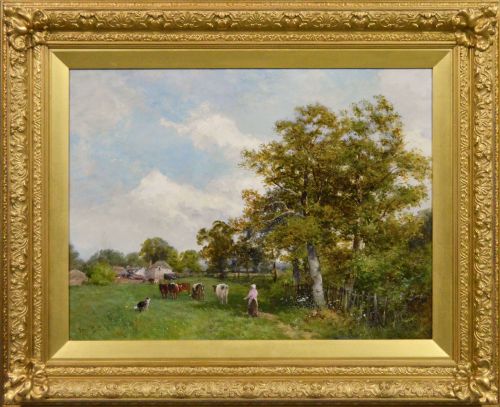
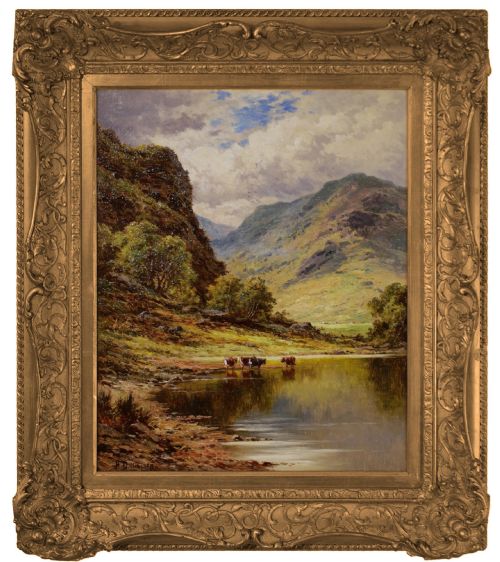
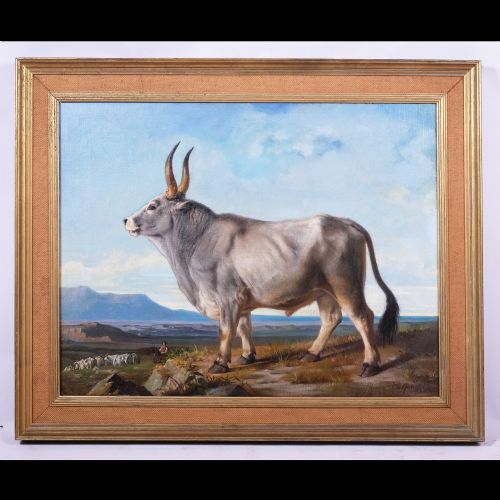
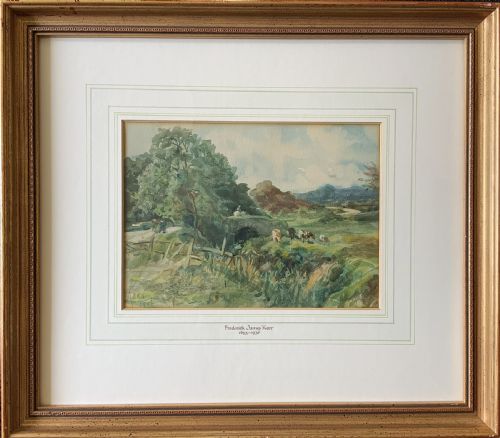
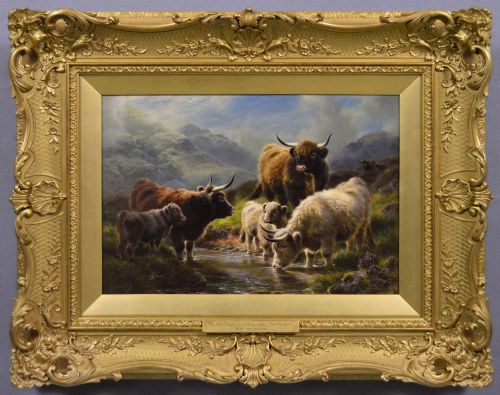
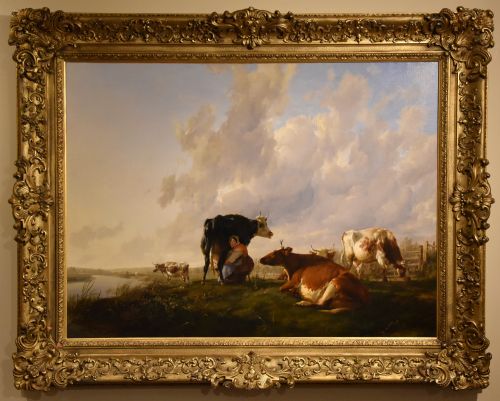
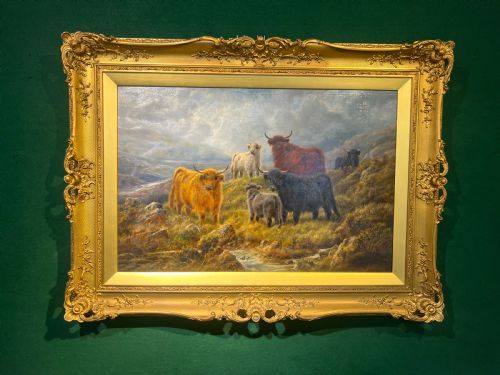
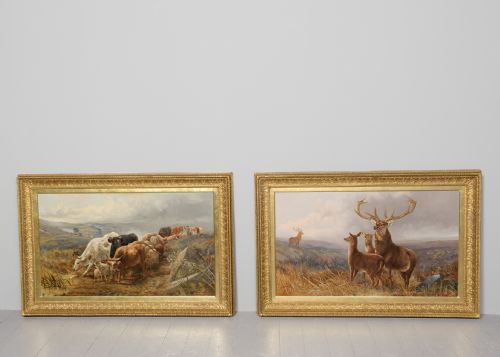
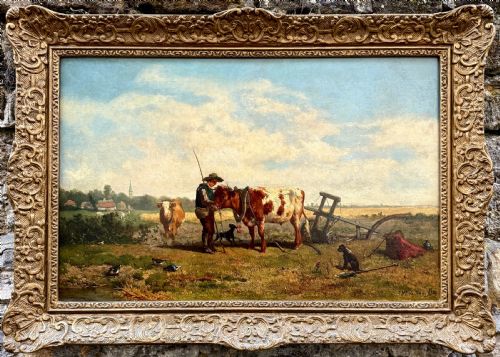
Victorian cattle landscape art comprises oil paintings and watercolour paintings produced across the nineteenth and early twentieth centuries. These works frequently depict shorthorn bulls, dairy cows, and Highland cattle positioned within pastoral, river, or mountain landscapes.
The pieces on this page span the Victorian, Edwardian, and nineteenth-century realist traditions. They range from intimate farmyard studies to large framed Highland scenes set beside Scottish lochs or along Welsh rivers.
Makers represented in these listings include established painters of the British and Irish schools who specialised in animal portraits and rural topographical views. Buyers will encounter both solitary canvas works and paired paintings recording rural life.
Materials and methods
Artists of this period utilised oil paint on canvas as well as watercolour on paper to construct these rural subjects. Canvases were frequently mounted within decorative giltwood or gesso frames that complemented the tonal palette of the pastoral scenes.
Brushwork varies from tight realist detail in the depiction of animal anatomy to looser applications seen in British impressionism and watercolour washes. The underlying wooden stretchers and paper supports reflect standard studio practices of the nineteenth century.
Victorian Cattle Landscape Art Retail Price Guide 2026
Typical asking prices for victorian cattle landscape art among the pieces listed under this phrase on Sellingantiques today, from the lower quarter to the upper quarter. They describe what is for sale here now, not the wider market.
The inventory records regional British and European scenes including Highland cattle in Scotland and pastoral riverbanks in Wales.
Distinctions in quality
Quality in these pastoral paintings rests upon the artist's ability to render animal form with anatomical conviction while integrating the livestock naturally into the surrounding landscape. Stronger examples display considered handling of light across water, hide, and foliage, whereas lesser works rely on repetitive composition.
The treatment of the background topography and atmospheric conditions also separates standard decorative watercolours from accomplished fine art paintings by listed Victorian practitioners.
David Bates·Thomas Sidney Cooper·Frederick James Kerr·Henry H Parker·Robert Watson·William Watson Jnr·Robert Cleminson·Johann Friedrich Voltz·Johannes de Haas·A M Gauci·Henry Robinson Hall·Henry Hillier Parker·Samuel Joseph Clark·William Sydney Cooper·Thomas Hunn·George Vicat Cole·Andre de Moller·Sidney Richard Percy·Frederick James Knowles·Robert Thorne Waite·Alfred Grey·Pierre Emmanuel Dielmans·Harold Lawes·George Cole·Thomas Baker
The Victorian Cattle Landscape Art Glossary
- Oil on Canvas
- Pigment mixed with drying oil applied to a woven fabric support. This was the primary medium for substantial nineteenth-century landscape and animal paintings.
- Giltwood
- Wood carved and coated with gold leaf or a gold-coloured metallic finish. It is commonly found on the frames housing Victorian fine art.
- Gesso
- A paint mixture consisting of a binder mixed with chalk, gypsum, or pigment. It was applied to wooden frames to provide a smooth surface for gilding.
- Watercolour
- Paint consisting of colour pigments suspended in a water-soluble vehicle. Artists used this medium on paper for both finished topographical views and rapid field studies.
- Pastoral Scene
- An artistic work depicting rural life, shepherds, cattle, and idealized agricultural landscapes. These subjects reflected contemporary nineteenth-century romanticism towards the countryside.
Victorian Cattle Landscape Art: Frequently Asked Questions
What subjects appear in these paintings?
These artworks depict cattle, sheep, and horses situated within rural landscapes, riverbanks, and mountain ranges. Shorthorn bulls and Highland cattle are common focal points alongside farmworkers and milkmaids.
Many compositions draw inspiration from pastoral environments across Scotland, Wales, and the English countryside during the Victorian era.
How do I identify the period of a painting?
Dating relies upon artist lifespan records, framing styles, and stretcher construction typical of the nineteenth and early twentieth centuries. Signatures and exhibition dates recorded on the canvas reverse also provide chronological markers.
Pictorial style moves from mid-century realism toward looser impressionist tendencies by the Edwardian period.
Were these works intended for domestic display?
Nineteenth-century buyers purchased these pastoral oils and watercolours to decorate townhouses and country residences. Large framed canvases served as principal drawing-room pieces.
Smaller watercolours offered manageable options for parlour display or portfolio collection.
How should I care for antique canvas and watercolour?
Display these works away from direct sunlight and excessive humidity to protect oil paint and paper supports. Maintaining stable indoor temperatures prevents warping in wooden stretchers and giltwood frames.
Professional framing conservation ensures pigments and paper remain stable over time.