




Antique Livestock Oil Picture
An antique livestock oil picture captures rural wealth and pastoral character in oil paint on canvas, offering buyers a genuine window into historical agriculture.
Antique Livestock Oil Picture
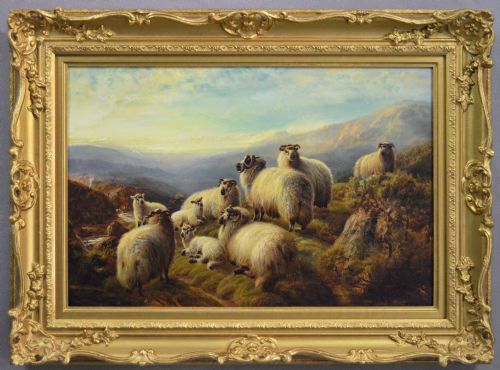
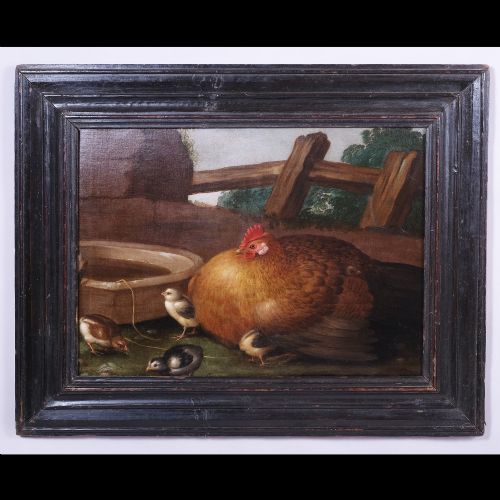
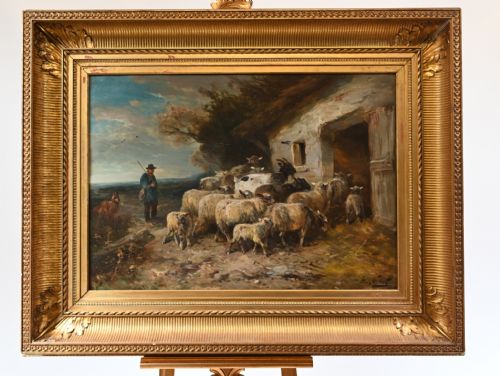
An antique livestock oil picture brings nineteenth-century and early twentieth-century rural scenes directly into a room, depicting cattle, sheep, and farmyard animals. These works capture the agrarian focus of their periods through detailed portrayals of livestock in natural landscapes.
The selections available here span from the eighteenth century through to the early twentieth century, taking in Victorian realism and pastoral styles. Buyers most frequently encounter framed nineteenth-century canvases showcasing sheep, cattle, and farmyard poultry.
Makers and followers represented across these oil paintings include notable names such as Robert Watson, Henry Schouten, and Thomas Sidney Cooper. Each canvas preserves a specific artistic interpretation of rural life, rendered with the traditional techniques of the period.
Materials and construction
These works are painted using oil paint applied to canvas supports, which are stretched over wooden frames and often housed within giltwood and gesso frames. The combination of oil on canvas allows for subtle blending of tones and rich texture in both animal coats and pastoral backgrounds.
Many of the frames utilise moulded plaster and gold leaf ornamentation to accent the oil painting within. The underlying wood and canvas construction follows traditional framing methods established across the nineteenth and early twentieth centuries.
Antique Livestock Oil Picture Retail Price Guide 2026
Typical asking prices for livestock oil picture among the pieces listed under this phrase on Sellingantiques today, from the lower quarter to the upper quarter. They describe what is for sale here now, not the wider market.
Several canvases record the quiet daily business of cockerels, chicks, and calves sharing a riverbank.
Distinctions in quality
Quality in an antique livestock oil picture rests upon the precision of brushwork in rendering the anatomy and texture of the animals. Finer examples display careful attention to light on wool or hide, alongside well-composed landscape or farmyard surroundings.
The integrity of the canvas and the preservation of the original oil paint layers distinguish superior works from lesser examples. Additionally, the craftsmanship of the accompanying giltwood and gesso frame contributes significantly to the overall standing of the piece.
Robert Watson·Henry Schouten·A M Gauci·Thomas Sidney Cooper·Eugene Verboeckhoven·Andre de Moller·Arthur Charles Dodd·Claude Cardon·Edgar Hunt·Henry Cheadle·William Sidney Cooper·Louis Marie Dominique Robbe·Thomas E Francis
The Antique Livestock Oil Picture Glossary
- Oil on canvas
- A traditional painting medium where oil-based pigments are applied to a woven canvas stretched over a wooden frame. This method provides durability and allows artists to build rich layers of colour.
- Giltwood
- Wood that has been treated with a thin layer of gold leaf or gold paint. It forms the decorative surface of many traditional picture frames.
- Gesso
- A plaster-like mixture applied to wooden frames as a base for moulding ornamental details before gilding. It creates a smooth surface for intricate decorative relief work.
- Victorian Realism
- An artistic approach popular during the Victorian era that aimed to represent subjects accurately and truthfully without artificiality. In livestock paintings, this meant portraying animals and farmyards with close observational detail.
- Animalier
- A nineteenth-century artistic genre dedicated to the realistic portrayal of animals. Artists working in this style specialised in capturing the form and character of livestock and wildlife.
Antique Livestock Oil Picture: Frequently Asked Questions
How do I care for an antique oil painting?
Keep the canvas away from direct sunlight and steady temperature fluctuations to prevent the oil paint from cracking. Dust the surface gently with a dry, soft cloth without applying pressure.
Avoid using liquid cleaners or water on the canvas or the giltwood frame. Professional conservation should be sought if the paint layer requires cleaning or stabilisation.
What periods do these paintings come from?
The available pieces originate primarily from the nineteenth century and the early twentieth century, with occasional examples from the eighteenth century. Victorian and Edwardian pastoral scenes form the core of the selection.
Dates are established through stylistic analysis, artist signatures, and the physical materials of the canvas and frame.
How were these frames constructed?
Frames are typically made of wood fitted with moulded plaster known as gesso, then finished with gold leaf or gilt. This traditional construction method provided sturdy housing and decorative framing for oil paintings.
Original frames often show age-related wear that corresponds to the period of the canvas they enclose.
Where should I hang a livestock picture?
These pastoral scenes suit dining rooms, studies, or living spaces where traditional or country house aesthetics are preferred. Position them on interior walls away from moisture sources and direct heat.
Ensure the hanging wire and wall fixings are secure, as framed canvases with wood and gesso frames can carry significant weight.