


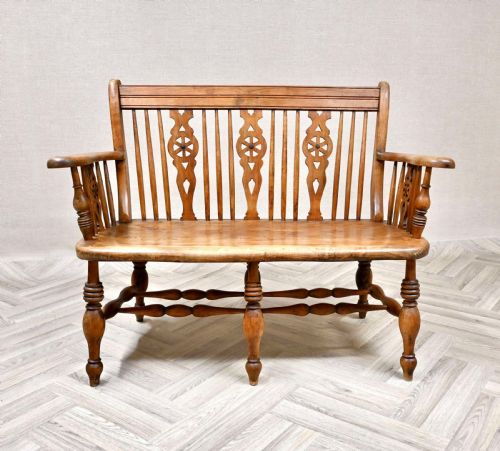
Antique Wooden Sofa
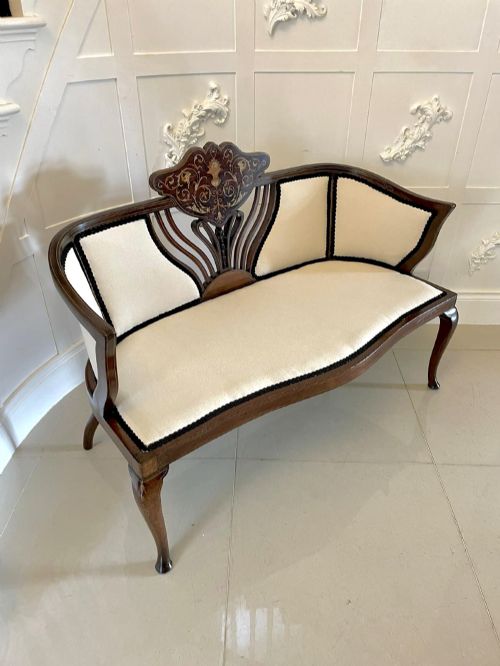
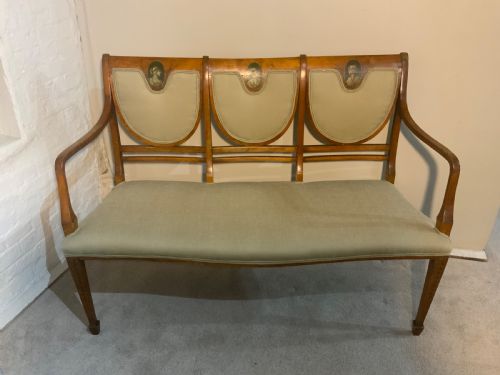
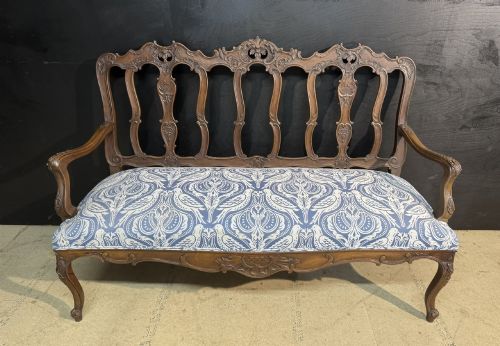
An antique wooden sofa brings the rich timber grains and traditional forms of past centuries directly into a modern sitting room.
Materials and construction
Cabinet makers relied heavily on durable timbers like mahogany, walnut, oak, and rosewood to build the structural frames of these settees and couches. These woods were chosen for their strength and ability to take fine carvings, often enhanced by decorative elements like satinwood inlay or ebonised wood details.
Joinery methods involved traditional techniques that allowed timber to withstand daily use while maintaining rigid frames. Surfaces were frequently polished to highlight the natural grain of the wood, whether dealing with flame mahogany, burr walnut, or solid oak.
Distinguishing quality in timber seating
The distinction between standard examples and the finest pieces often lies in the selection of the timber and the crispness of the carved details. Superior sofas display carefully matched grain patterns, such as figured mahogany or burr walnut, alongside deeply undercut woodwork rather than shallow mouldings.
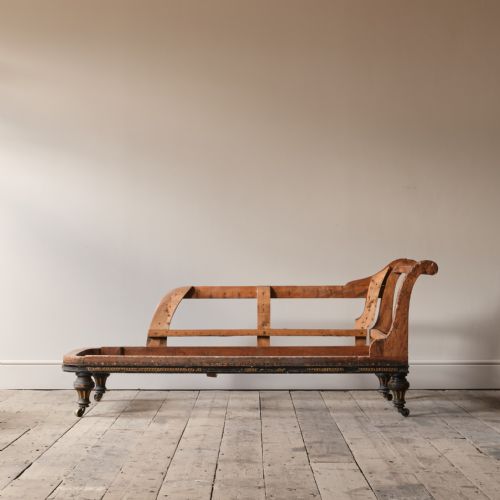
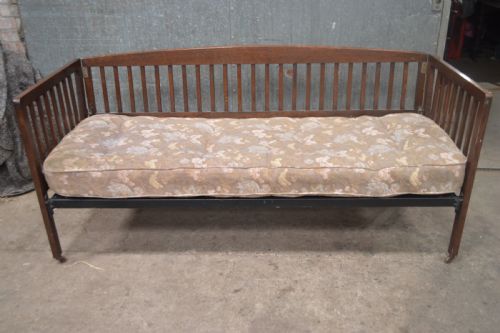
Some Edwardian day beds feature fold-down mechanisms designed for a quick afternoon nap without disturbing the parlour.
Holland And Sons
The Antique Wooden Sofa Glossary
- Settee
- A long upholstered seat for more than one person, typically featuring a wooden frame and backrest. These pieces served as primary seating in formal rooms.
- Day bed
- A long chair or bed-like structure designed for resting during daylight hours. They often incorporate fold-down mechanisms or simple wooden frames.
- Satinwood
- A durable, yellowish timber prized for its smooth grain and polished finish. It was frequently used for fine inlay work on late eighteenth and nineteenth-century furniture.
- Carolean style
- A revival furniture style emulating the rich carving and ornate design of the mid to late seventeenth century. Pieces in this style often feature elaborately pierced woodwork and turned legs.
- Flame mahogany
- Mahogany timber marked by a distinct, flickering grain pattern resembling flames. Cabinet makers selected these boards for prominent display on tabletops and furniture fronts.
Antique Wooden Sofa: Frequently Asked Questions
What periods do these wooden sofas date from?
The seating on this page spans several centuries, with particular representation from the Georgian, Regency, Victorian, and Edwardian eras. Pieces range from early nineteenth-century chair-back settees to twentieth-century day beds.
Each period brought distinct aesthetic preferences, shifting from the substantial carved frames of the nineteenth century to lighter Edwardian interpretations.
How do I identify a Victorian wooden sofa?
Victorian settees and couches typically employ dense timbers such as walnut and mahogany, often featuring dark finishes and robust construction. Their designs frequently incorporate elements of revival styles like Rococo or Gothic.
Looking closely at the turned wooden supports and carved crest rails helps distinguish these mid to late nineteenth-century examples from earlier Georgian or later Edwardian furniture.
Where were these settees placed historically?
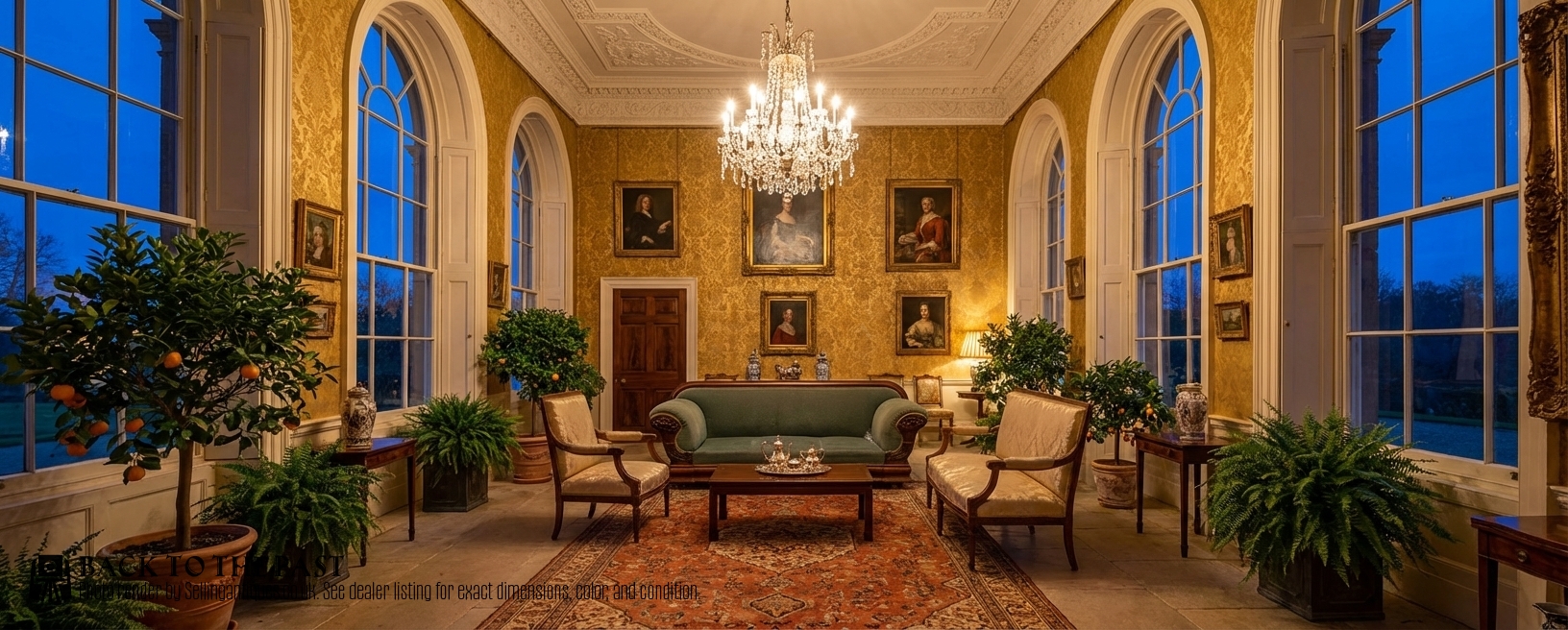
Historically, wooden sofas and settees were positioned in principal reception rooms, parlours, and drawing rooms as both seating and decorative centerpieces. Larger homes utilised them in libraries or private sitting rooms.
Their placement depended on the formality of the household, with ornate carved frames displayed prominently for guests.
How should I care for an antique wooden frame?
Maintaining an antique wooden sofa involves keeping the timber away from direct heat sources and sudden humidity changes to prevent splitting. Regular dusting with a soft, dry cloth preserves the polished finish.
Avoiding modern chemical polishes ensures the historical patina on woods like mahogany and walnut remains undisturbed over time.