
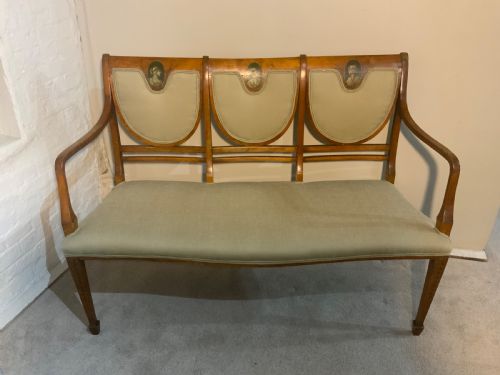
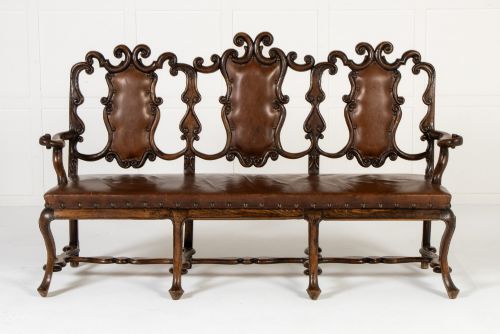


Triple Chair Back Settee
These triple chair back settee pieces combine multi-back seating frames with extended timber lengths to offer functional elegance for traditional interiors.

Identifying a triple chair back settee
A triple chair back settee presents a continuous seating frame designed to resemble three conjoined chairs in a single extended form. Buyers searching for a triple chair back settee encounter notable variations spanning eighteenth-century origins through nineteenth-century revivals.
The material palette recorded across these pieces relies primarily on mahogany and walnut timbers, complemented by cane panels, painted wood, and gold leaf. Surviving examples reflect historical styles ranging from Regency and Chippendale to Carolean Revival, Dutch Rococo, and Sheraton Revival.
Makers often adapted formal dining chair aesthetics into domestic seating forms suitable for salons and reception rooms. These seating pieces survive in various states of upholstery and timber finish, preserving centuries of craftsmanship.
Materials and construction
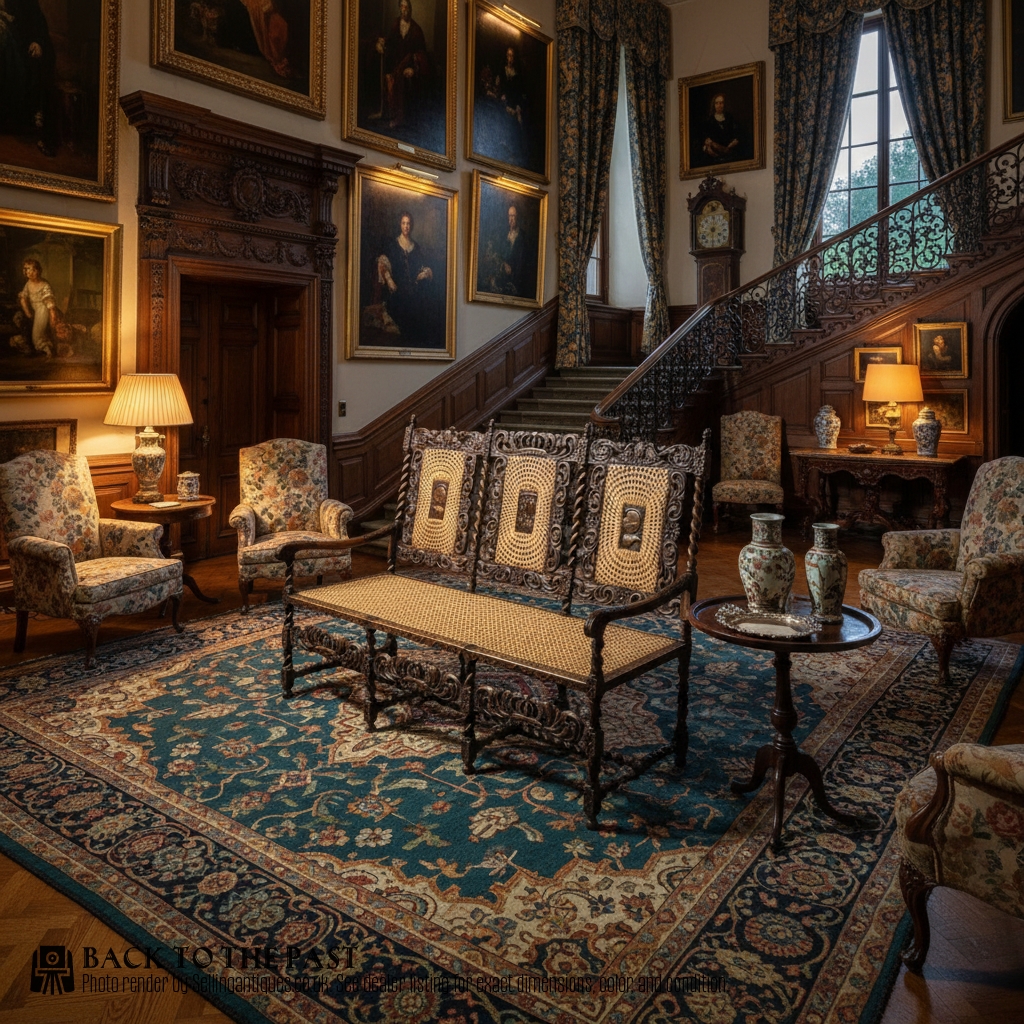
Cabinetmakers constructed these seating frames using dense hardwoods like mahogany and walnut, which provided the structural integrity required for pierced splats and slender stiles. Skilled hands shaped the timber through traditional joinery techniques, ensuring the multi-back framework remained rigid under daily use.
Surface decoration incorporated inlaid wood veneers, hand-applied gold leaf, and painted wood finishes to elevate the visual appeal of the seating. Upholstery, fabric, and textile additions provided seating comfort, often supported by integrated cane panels within the backrests.
Retail Price Guide 2026
Typical UK retail prices for triple chair back settee, calculated from the Sellingantiques database of over a million retail prices indexed since 2003. This retail price guide relies exclusively on Sellingantiques data; no external sources or auction records are used, so the figures do not describe the wider market.
Listings feature pieces spanning the eighteenth and nineteenth centuries, utilising mahogany, walnut, cane, and upholstery.
Judging quality and execution
Quality separates basic revival furniture from superior cabinetwork through the crispness of carved details on the splats and the selection of figured timber veneers. Superior examples display refined proportions and harmonious integration between the three back sections.
The handling of secondary materials, such as finely woven cane work or precisely fitted upholstery foundations, distinguishes higher tier production. Original surface patination and restrained decorative flourishes indicate disciplined workshop standards.
The Triple Chair Back Settee Glossary
- Splat
- The vertical central strip of wood within a chair back. It often bears carved ornamentation or pierced scrollwork.
- Settee
- A long wooden or upholstered seat with a back and arms, designed for multiple occupants. This form bridges the gap between individual chairs and larger sofas.
- Cane
- Woven rattan or plant material used for lightweight panel inserts in chair backs. It provides flexible support while maintaining visual lightness.
- Veneer
- A thin slice of ornamental wood applied over a secondary timber base. This technique allows cabinetmakers to display rich grain patterns economically.
Frequently Asked Questions
What is a triple chair back settee?
A triple chair back settee is an extended seating form featuring a backrest constructed as three conjoined chair frames. It offers the visual rhythm of multiple chairs unified into a single bench.
Cabinetmakers produced these pieces across several centuries, incorporating revival styles alongside eighteenth-century originals.
Where were these settees used?
These seating pieces traditionally furnished formal drawing rooms, parlours, and large reception halls. Their decorative backs made them suitable for placement against walls or within open room layouts.
Domestic interiors utilised them to provide ample seating without the visual bulk of fully upholstered sofas.
How do I identify the style?
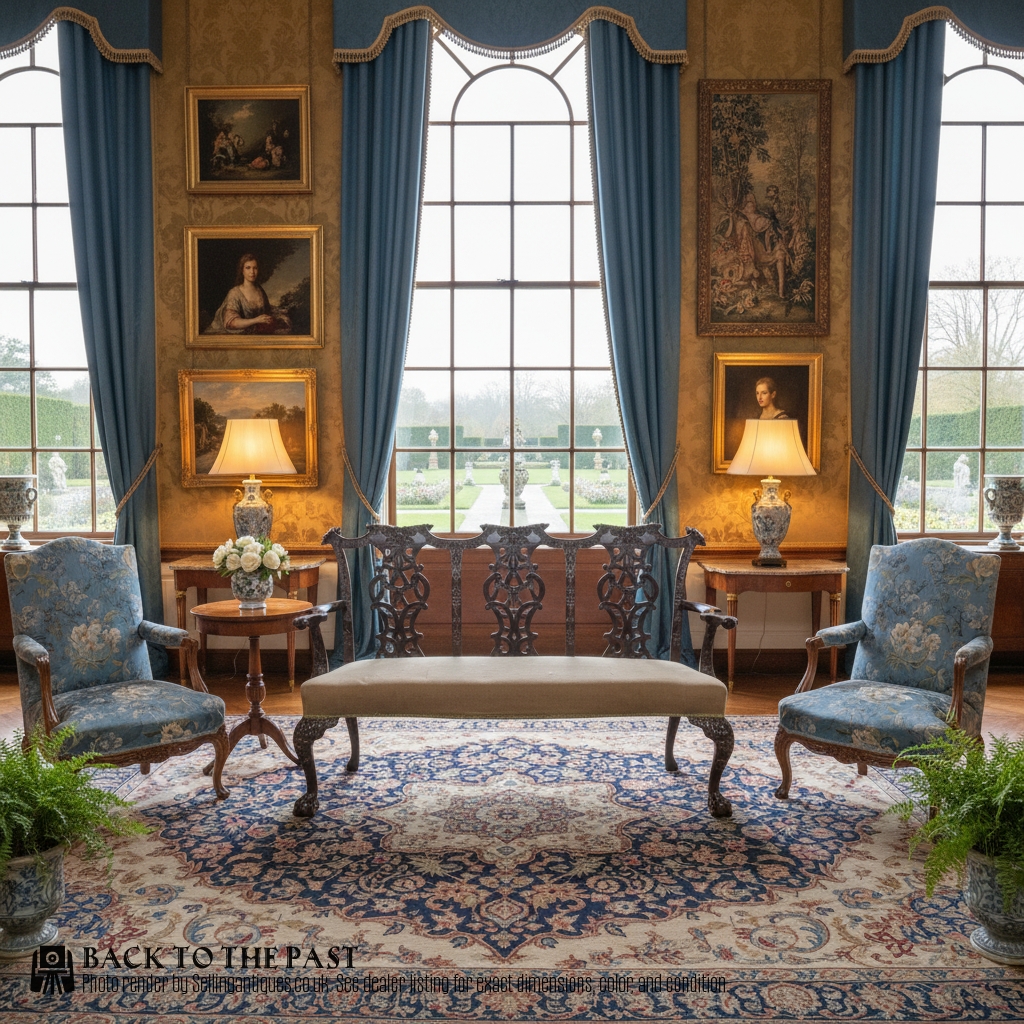
Style identification relies on examining the carved motifs, leg forms, and backrest contours. Chippendale influences display intricate pierced splats, while Regency examples lean towards classical restraint and painted finishes.
Comparing the decorative vocabulary against known historical periods clarifies the specific design lineage of each piece.
How do I care for antique timber?
Maintaining antique timber requires stable indoor humidity levels and protection from direct sunlight. Regular dusting with a soft, dry cloth preserves the finish without abrasive chemicals.
Avoid placing wooden furniture near active heat sources to prevent timber shrinkage and veneer separation.