



Antique Green Settee
An antique green settee brings colour and historic seating into a room, spanning periods from Regency to Edwardian.
Antique Green Settee
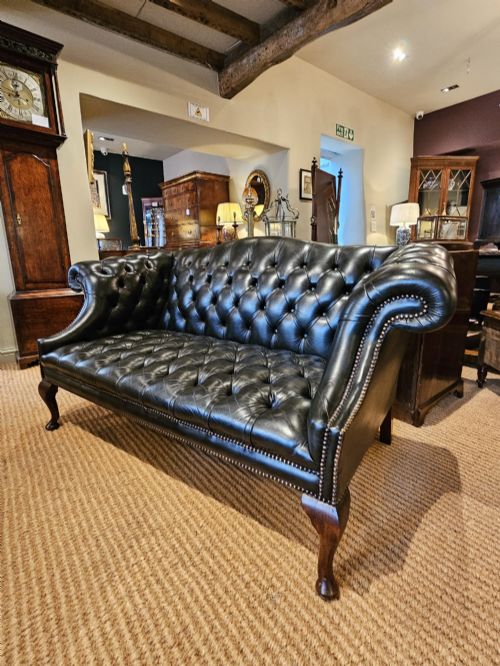
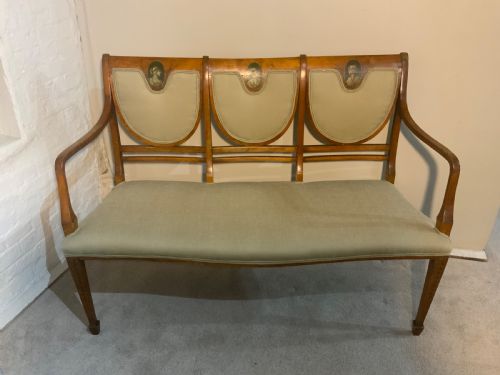
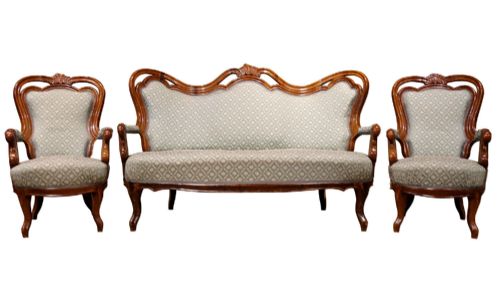
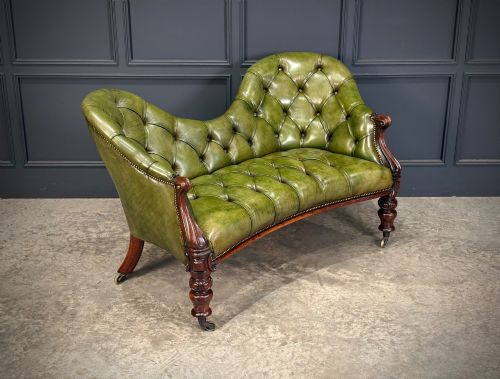
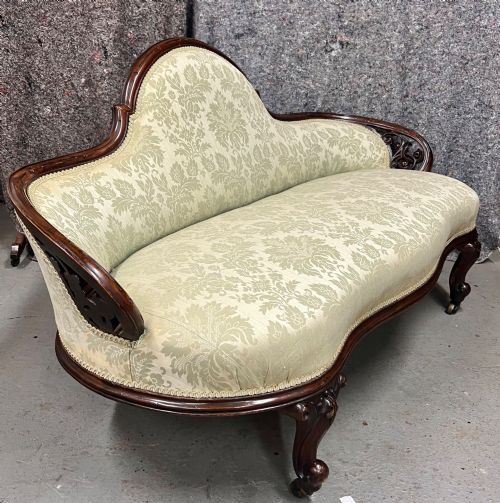
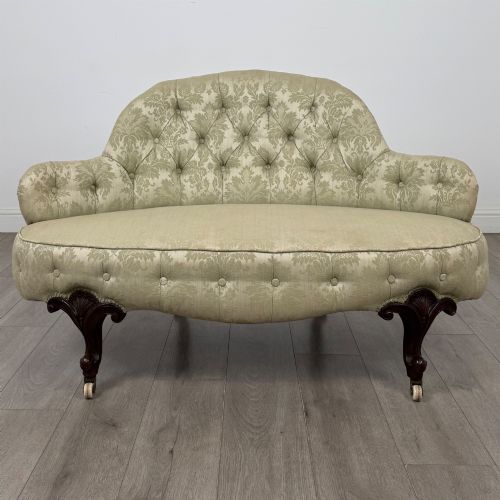
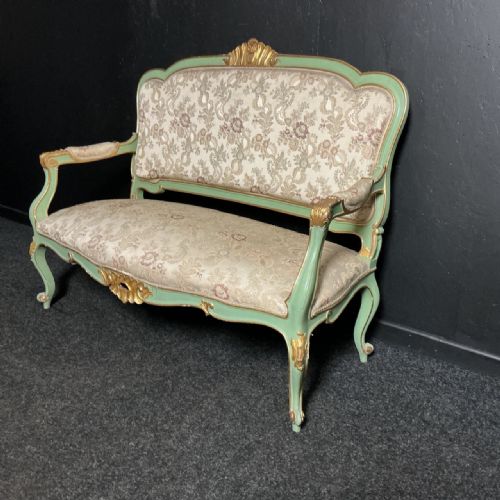
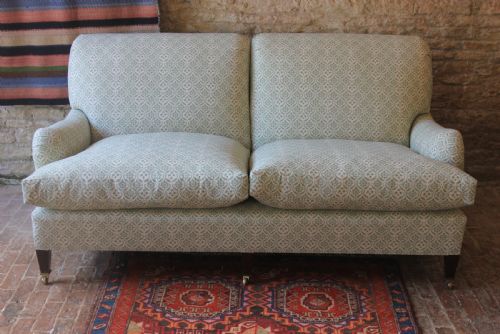
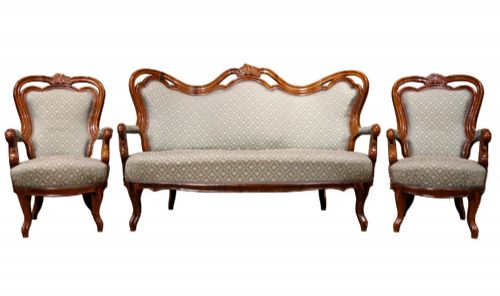
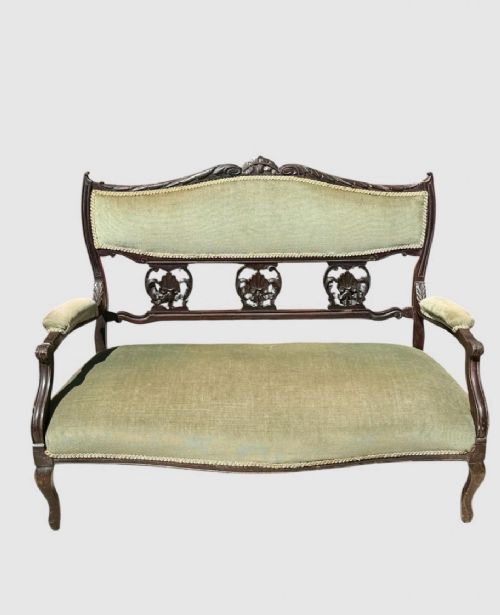
An antique green settee covers a range of upholstered seating forms, including Victorian buttoned leather sofas, Edwardian two-seaters, and Regency scroll-end designs. Buyers searching for an antique green settee will encounter various styles such as Rococo Revival, Louis XV Revival, and English Country House models. The selection extends from compact chair-back settees to large Chesterfield sofas and salon suites upholstered in green fabric, velvet, and leather.
Victorian examples dominate the material evidence, often featuring walnut, mahogany, or rosewood frames paired with deep buttoning. Edwardian and later pieces tend to offer smaller proportions, while Regency items display refined scroll ends and polished wood structures. Each period contributes distinct silhouette characteristics, from the carved woodwork of the nineteenth century to the cleaner lines of early twentieth-century pieces.
Distinguishing quality
Quality rests in the harmony of the timber frame carving, the precision of the joinery, and the integrity of the surviving upholstery materials. Finer pieces demonstrate crisp hand-carving on walnut or mahogany structures and retain high-grade leather, velvet, or silk textiles.
Proportion and execution separate standard production from exceptional examples, particularly in revival styles like George II and Louis XV. The weight of the wood, the depth of buttoning, and the refinement of scroll ends indicate the level of craftsmanship invested in the piece.
Listings feature frames in mahogany, walnut, rosewood, oak, and satinwood alongside velvet, leather, and silk textiles.
Howard and Sons·Jas James Shoolbred
The Antique Green Settee Glossary
- Settee
- An upholstered long seat with a back and arms, designed for more than one person. This form appears across Victorian, Edwardian, and Georgian periods.
- Chaise longue
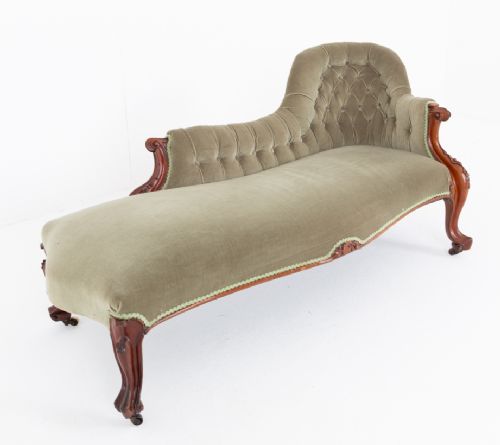
- An upholstered sofa in the shape of a chair with a long seat for reclining. These often feature single scrolled ends and exposed wood frames.
- Salon suite
- A matched set typically comprising a sofa and matching armchairs designed for formal entertaining. These frequently date from the Victorian and aesthetic periods.
- Button-back
- An upholstery technique where buttons are pulled deep into the padding to create a quilted diamond pattern. This method is common on Victorian leather and velvet sofas.
- Scroll end
- A sweeping, curved arm or frame terminal characteristic of Regency and revival furniture. It adds a classical silhouette to the ends of the seat.
Antique Green Settee: Frequently Asked Questions
How do I date an antique settee?
Dating relies on examining the secondary timbers, the style of the carved woodwork, and the upholstery methods used in the construction. Specific design details like Regency scroll arms or Victorian buttoning point to distinct manufacturing eras.
Comparing the frame style against documented revival periods helps narrow down the decade of origin. Hardware such as brass castors further assists in confirming the correct historical period.
Where should I place a green settee?
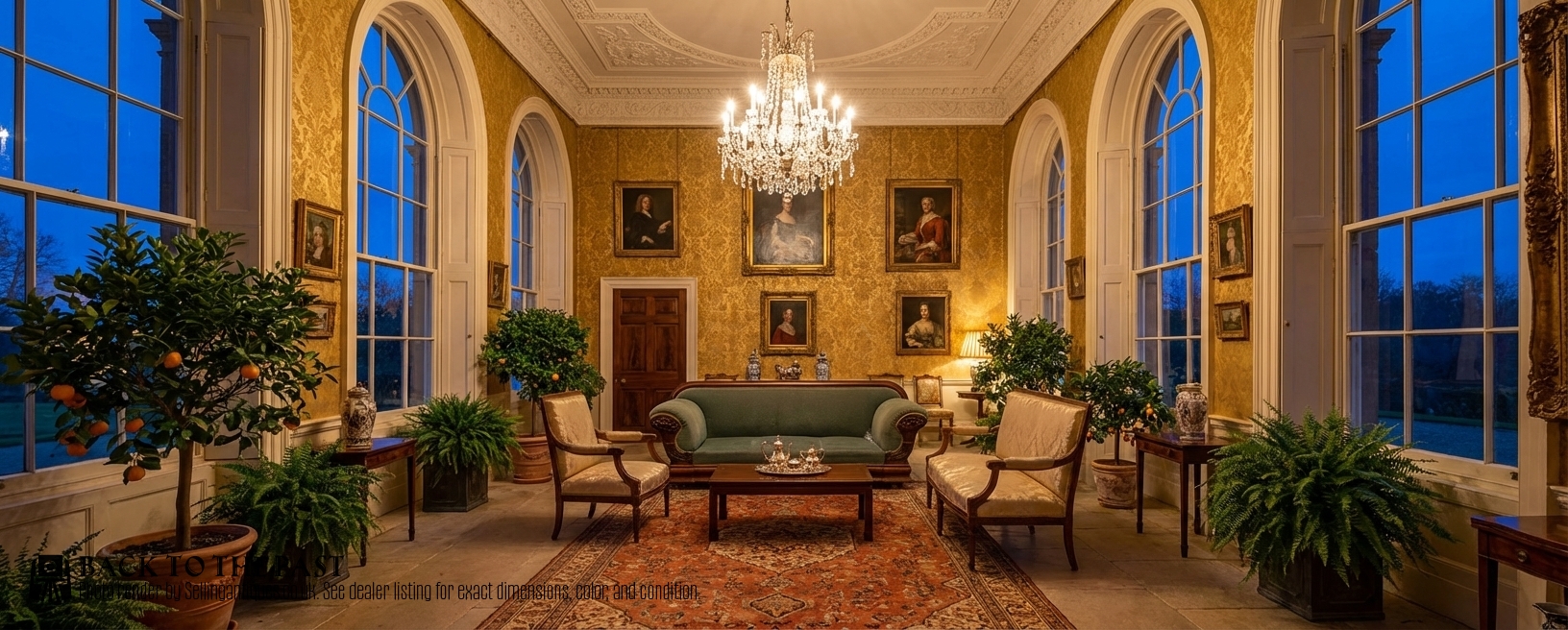
These settees function effectively as focal seating in a living room, a bedroom end-of-bed seat, or a reception hallway. Their green upholstery complements both neutral walls and rich historic interior colour schemes.
Smaller Edwardian and petite salon models suit compact spaces, while large Chesterfield or country house sofas require broader rooms. The choice of wood frame and fabric finish guides the surrounding interior palette.
What is the difference between a sofa and a settee?
Historically, a settee denotes an upholstered wooden seat for two or more people, often featuring an exposed wood frame. A sofa traditionally refers to a fully upholstered piece designed for lounging.
Over time, the terms became interchangeable in antique descriptions, covering everything from chair-back settees to large reception couches.
How do I care for leather upholstery?
Leather surfaces benefit from regular dusting with a soft, dry cloth and occasional treatment with appropriate leather conditioners to prevent drying. Keeping the piece away from direct sunlight preserves the original green tone.
Avoid using harsh chemical cleaners that can strip the natural finish of antique leather. Gentle maintenance protects both the hide and the underlying buttoned structure.