



Antique Bedroom Sofa
An antique bedroom sofa brings elegance to a private chamber, offering a compact place to sit or lay garments at the foot of a bed.
Antique Bedroom Sofa
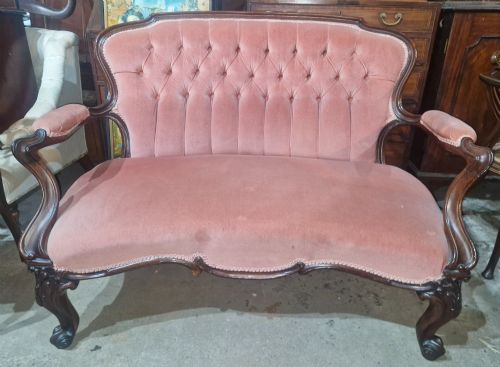
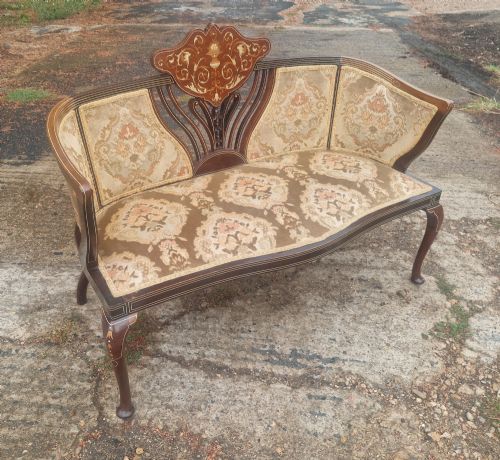
An antique bedroom sofa encompasses small settees, window seats, daybeds, and end-of-bed benches designed specifically for private chambers rather than grand reception rooms. The pieces appearing most frequently on this page date from the Victorian and Edwardian eras, spanning mahogany frames to painted canework.
Makers shaped these items to fit smaller spaces, producing petite proportions, chair-back end-of-bed seats, and chaise longues with concealed storage. Styles range from Regency and Victorian to Edwardian neoclassical revival and Louis XVI style, reflecting the changing tastes of domestic interior decoration.
Buyers often encounter variations that include drop-arm mechanisms, boudoir suites, and window seats trimmed in velvet, damask, or linen. These functional forms served for resting during dressing or holding cushions and throws at the foot of the bedstead.
Materials and Construction
Cabinetmakers built these frames predominantly using solid mahogany, satinwood, and oak, occasionally embellishing surfaces with delicate bone inlay or painted finishes. Canework panels appear on lighter couches, providing texture and ventilation to smaller frames.
Upholstery techniques involved traditional stuffing covered in fabrics such as velvet, damask, linen, and satin, sometimes finished with tassel trims. Frames ranged from structural rosewood and mahogany to lighter bent or turned wooden supports designed for ease of movement.
Periods represented on this page stretch from the Regency era through Victorian and Edwardian times up to the 1930s.
Distinctions in Quality
The degree of craftsmanship shows in the crispness of inlaid bone and satinwood stringing, as well as the structural integrity of carved rosewood and mahogany frames. Superior examples maintain tight joinery and retain their original decorative surfaces without excessive restoration.
The choice of covering materials and the execution of frame carving divide standard pieces from finer works. Pieces featuring detailed canework or matching boudoir suite elements demonstrate higher levels of coordinated design from their period.
The Antique Bedroom Sofa Glossary
- Settee
- A small upholstered bench with a back and arms, designed to seat two or more people comfortably. These pieces frequently appear in bedroom settings.
- Chaise Longue
- An upholstered long chair for reclining, often featuring a single raised end for the head. Versions from the nineteenth century sometimes include concealed storage beneath.
- Canework
- Woven rattan or cane applied to chair backs and seat frames for a decorative, lightweight finish. It provides a distinct texture found on painted daybeds and couches.
- Inlay
- A technique where contrasting materials such as satinwood or bone are inserted into depressions in the primary wood surface to create decorative patterns.
- Window Seat
- A long, narrow bench constructed to fit the width of a window recess or to sit at the foot of a bed.
Antique Bedroom Sofa: Frequently Asked Questions
Where did people place these sofas?
These seating pieces were positioned at the foot of a bed, beside a fireplace, or beneath a bedroom window for quiet repose during dressing.
Their compact proportions allowed them to fit comfortably into private chambers without dominating the room layout.
How do I care for antique upholstery?
Maintenance requires gentle vacuuming using a low suction brush attachment to remove dust from delicate fabrics like velvet and damask.
Keeping the frame out of direct sunlight prevents the mahogany or satinwood from fading over time.
Can I use an antique daybed daily?
Most surviving daybeds and small settees remain sturdy enough for regular sitting when placed on level flooring.
However, fragile canework or antique silk damask covers benefit from careful use rather than heavy daily lounging.
What defines Edwardian bedroom seating?
Edwardian pieces often feature lighter woods like satinwood, delicate bone inlay, and painted surfaces that reflect a preference for airy interiors.
They frequently take the form of specialised end-of-bed seats or petite boudoir sofas rather than heavy Victorian frames.