


Antique Wooden Slope
An antique wooden slope provides a portable writing surface that folds to reveal secret drawers, compartmented storage and a sloped writing desk.

Identifying an antique wooden slope
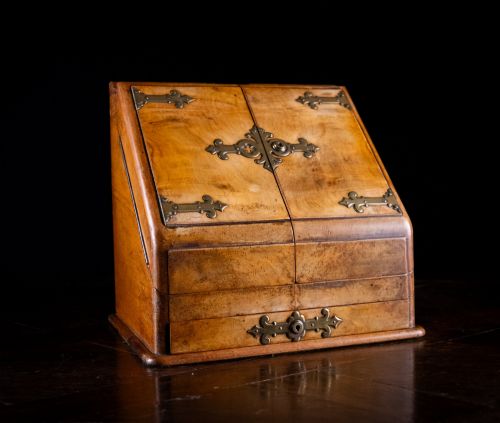
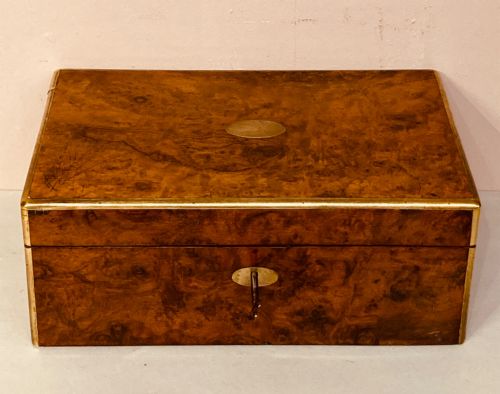
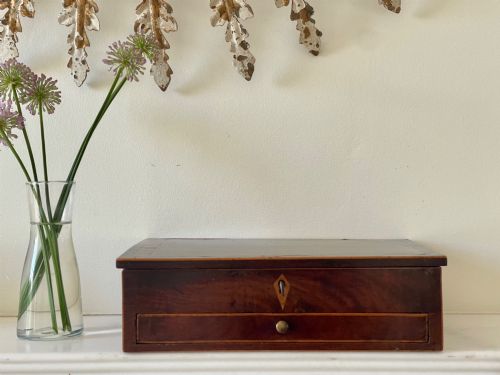
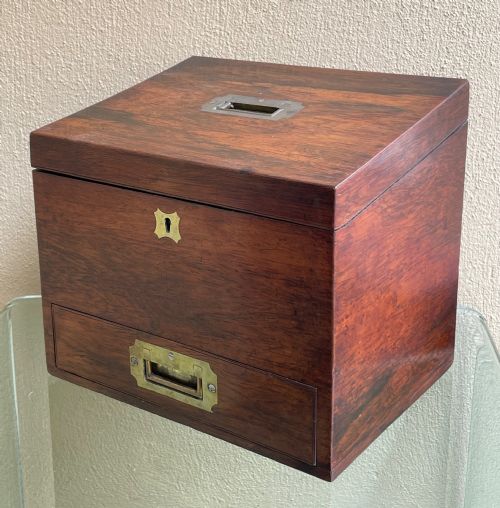
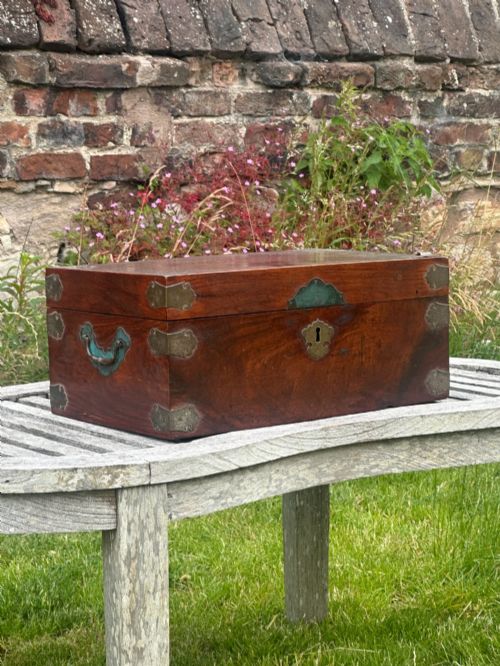
An antique wooden slope is a portable desktop writing box that opens to reveal an angled writing surface and storage compartments for paper and ink. These pieces appear across the Georgian, Victorian and nineteenth century periods in various timber forms. Buyers searching for an antique wooden slope encounter rectangular boxes that fold shut for travel or storage.
The selection on this page includes standard writing boxes, stationery boxes and specialised forms with secret drawers. Examples span Georgian, Victorian, Victorian Colonial and Victorian Killarney Ware styles. Origins range from domestic British workshops to colonial contexts such as Jamaica and Ireland.
Most items on this page date to the nineteenth century, including specific years like eighteen-fifty and eighteen-seventy alongside broader Georgian and Victorian classifications. Hardwoods dominate the construction, often enhanced with contrasting veneers and metal inlay. Each piece reflects the functional writing requirements of its period before the rise of fitted stationery cabinets.
Materials and construction
Cabinet makers utilised a range of dense timbers including mahogany, rosewood, coromandel, satinwood, figured walnut and general hardwood. These woods were chosen for their rich grain patterns and durability under daily use. Many surfaces feature fine veneer work applied over a stable secondary wood base.
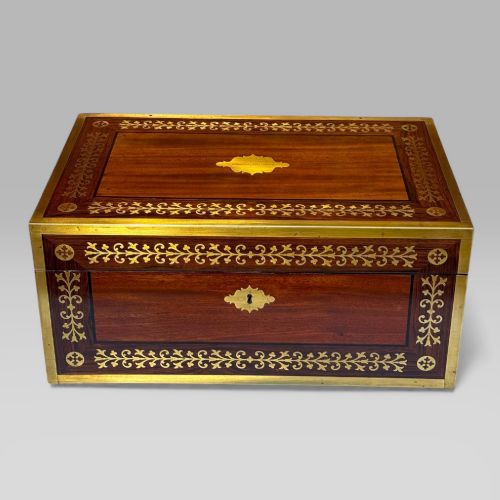
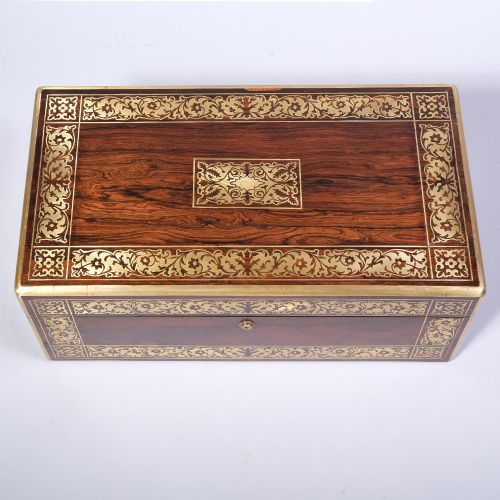
Decoration relied on contrasting materials set directly into the wood. Brass banding, corner brackets and intricate inlay work appear frequently across the pieces. Secret drawers and internal compartments required precise joinery concealed within the folding carcass.
Retail Price Guide 2026
Typical UK retail prices for wooden slope, calculated from the Sellingantiques database of over a million retail prices indexed since 2003. This retail price guide relies exclusively on Sellingantiques data; no external sources or auction records are used, so the figures do not describe the wider market.
Materials recorded on this page include mahogany, rosewood, coromandel, satinwood, figured walnut, brass and general hardwood.
Assessing quality in writing boxes
Quality in these slope forms rests upon the selection of timber and the precision of the internal mechanisms. Finer examples display highly figured grain in woods like coromandel, walnut and rosewood rather than plain domestic timber. The integration of secret drawers and complex internal stationery compartments distinguishes superior workshop production.
Decorative embellishment also separates the tiers of manufacture. Elaborate brass inlay, brass bound edges and regional decorative traditions such as Killarney Ware demonstrate advanced artisan skill. Substantial proportions and heavy gauge brass furniture indicate higher status commissions compared to simpler utilitarian boxes.
The Antique Wooden Slope Glossary
- Writing slope
- A portable box with a hinged sloping lid designed to hold writing materials and provide an inclined surface for writing letters. These boxes fold flat when not in use.
- Secret drawer
- A concealed compartment hidden behind other drawers or panels within a piece of furniture. They are accessed by releasing hidden spring catches or removing false bottoms.
- Veneer
- A thin slice of decorative wood glued over a structurally stable base timber to create complex grain patterns. Figured walnut and satinwood veneers enhance the exterior appearance.
- Coromandel
- A dense, heavy tropical hardwood featuring dark brown and black stripes. This exotic timber was favoured for high-status nineteenth century luxury boxes.
- Killarney Ware
- Decorative woodwork originating from Ireland featuring intricate inlaid marquetry of native timbers such as arbutus. Pieces often display local motifs and architectural landmarks.
Frequently Asked Questions
What is an antique wooden slope used for?
An antique wooden slope served as a portable desk for writing letters, storing stationery and keeping correspondence secure during travel or at home. The hinged lid folded down to create a firm, angled writing surface.
Inside, compartments held inkwells, nibs, stamps and paper. Wealthy individuals carried them between country estates and townhouses.
How do you find the secret drawers?
Secret drawers are typically hidden behind internal partitions, pen trays or false drawer dividers within the main compartment. Accessing them often requires removing specific small drawers to release a spring catch.
Cabinet makers designed these hidden spaces to secure valuables, private letters and small currency.
What are the common woods used?
Makers constructed these boxes from dense hardwoods such as mahogany, rosewood, walnut and coromandel. Exotic timbers like satinwood and figured walnut frequently appear as decorative veneers.
Brass banding and inlay were added to reinforce corners and enhance the exterior visual appeal.
How do Georgian and Victorian slopes differ?
Georgian slopes tend to feature simpler lines with linear brass stringing and robust mahogany or walnut construction. They often focus on utilitarian elegance.
Victorian examples frequently introduce exotic veneers like coromandel, elaborate brass work and regional styles such as Killarney Ware or colonial interpretations.