
Antique Wooden Music Rack
An antique wooden music rack holds sheets and scores in style, bringing period craft and character to a room.
Antique Wooden Music Rack
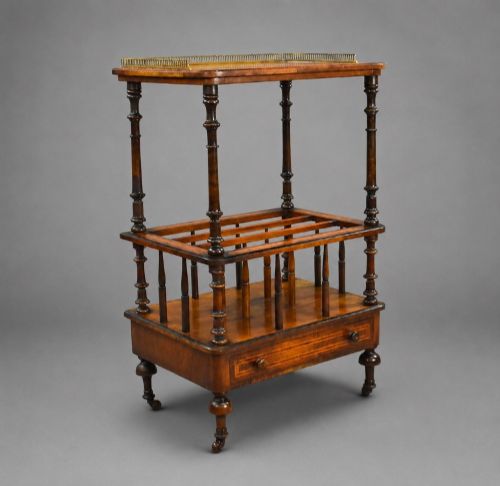
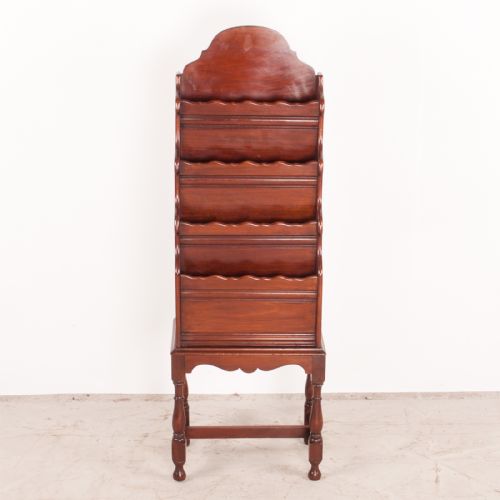
An antique wooden music rack encompasses several distinct forms designed to hold scores, sheets, and periodicals, with the antique wooden music rack being a versatile piece of furniture found in various period homes. The selection on this page centres heavily on canterburys, magazine racks, music stands, and whatnots originating from Georgian, Regency, William IV, Victorian, and Edwardian eras.
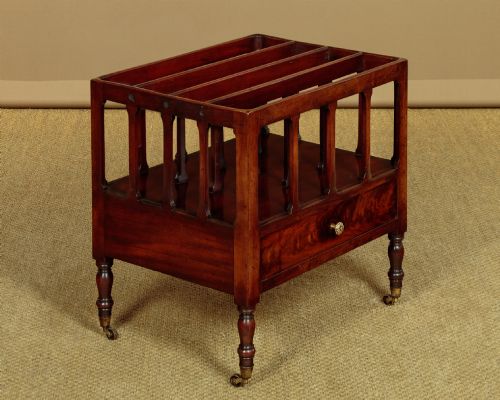
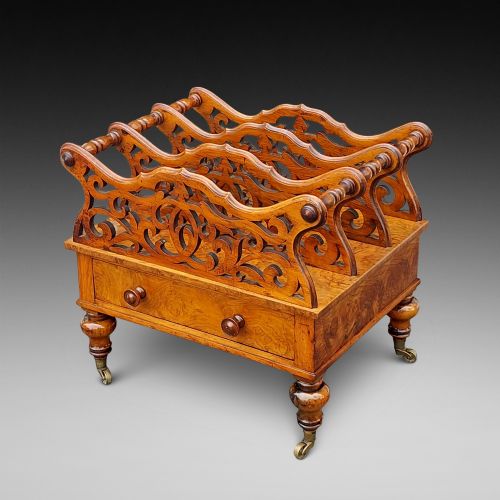
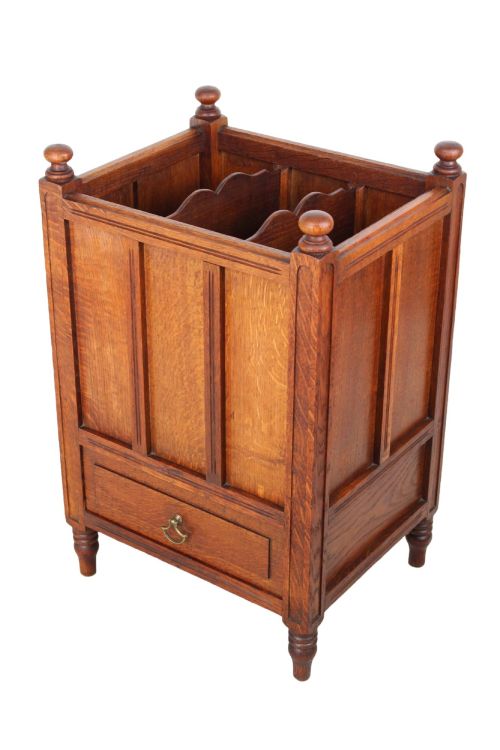
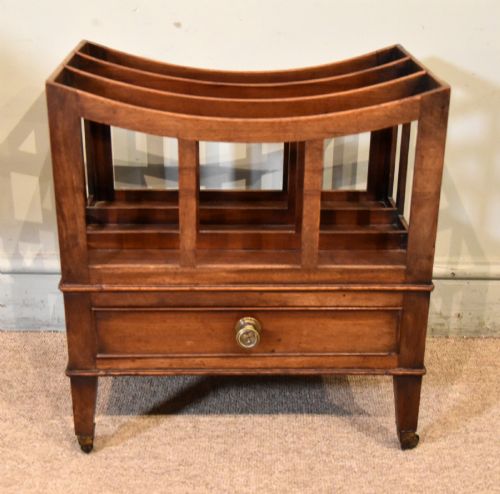
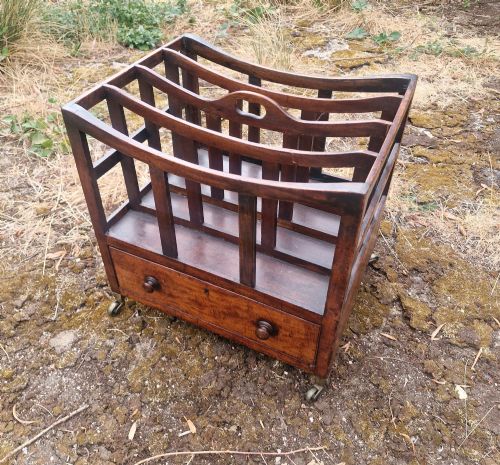
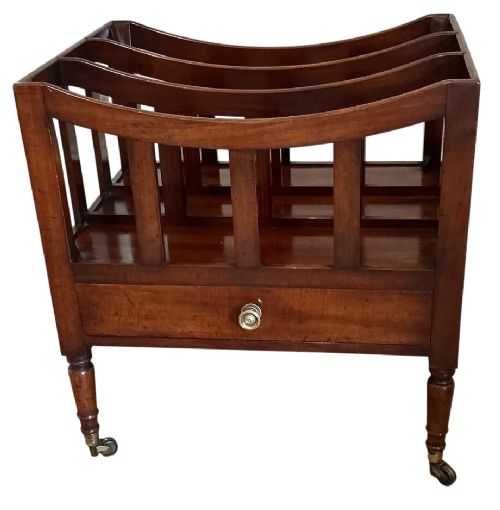
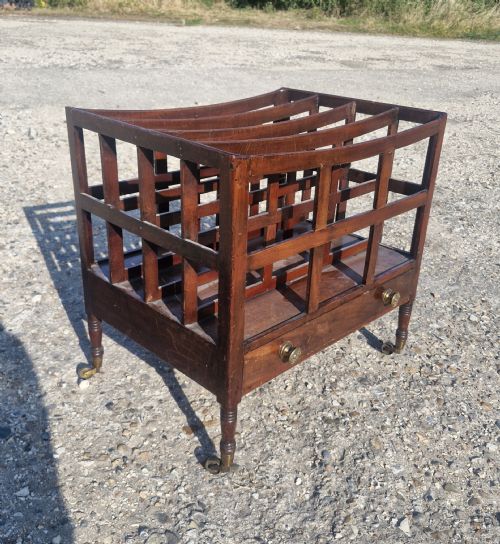
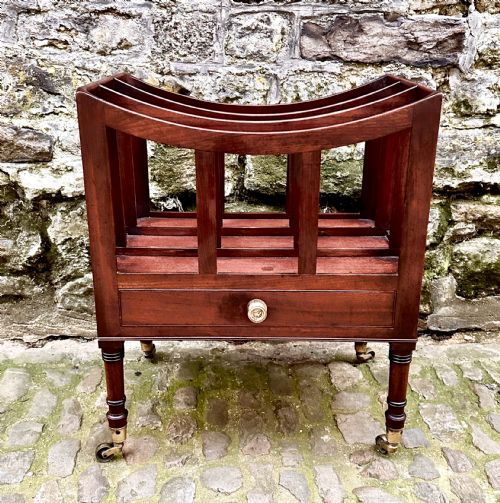
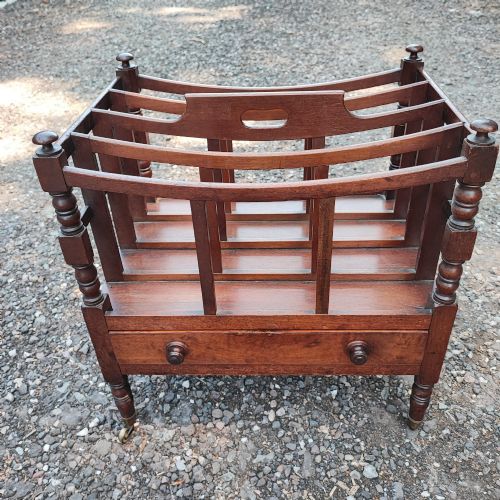
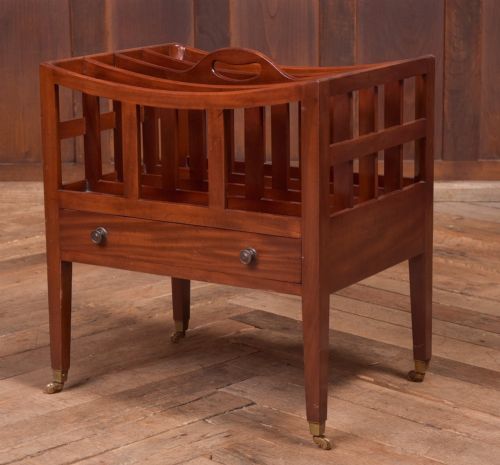
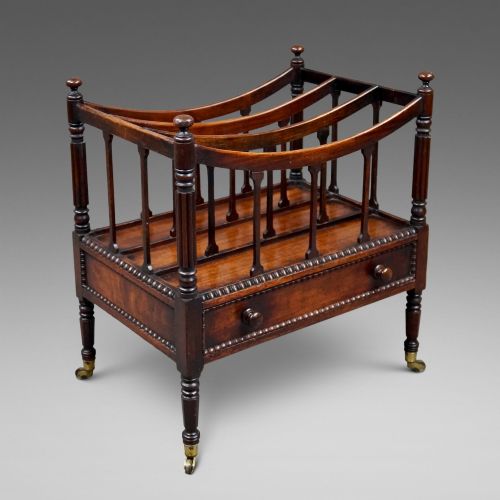
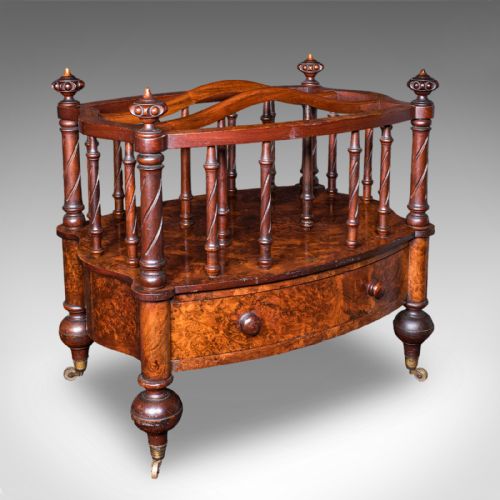
Canterburys appear most frequently among these listings, often featuring divided sections for papers above a single drawer, supported on turned legs with castors. Buyers also encounter dedicated music stands, lyre-form stands, and duet stands, alongside occasional tables that double as storage for reading materials.
How they were made
Cabinetmakers utilised rich timber species including mahogany, walnut, burr walnut, rosewood, oak, and Cuban mahogany, often selecting figured veneers to create striking visual movement on surfaces. Structural elements incorporate brass details such as castors and handles, while decorative flourishes sometimes include ceramic or porcelain components.
Construction techniques involve careful joinery for the slatted or divided partitions that organise music sheets and periodicals. Turning, carving, and inlay work define the stylistic vocabulary of pieces spanning the George III period through to the Edwardian era.
Listings span multiple historical periods, uniting Georgian, Regency, William IV, Victorian, and Edwardian craftsmanship under wooden music storage forms.
What varies in quality
The choice of timber underpins the grade of the piece, with richly figured burr walnut, rosewood, and dense Cuban mahogany commanding higher regard than standard domestic woods. The sophistication of the carpentry, from delicate lyre-shaped fretwork to finely turned legs and quality brass castors, dictates the refinement of the object.
Proportion and execution distinguish standard utilitarian items from finer examples commissioned for prominent interiors. Subtle details such as intricate inlays, cleanly dovetailed drawers, and well-balanced frames separate simpler country house pieces from high-style Regency and Victorian masterworks.
The Antique Wooden Music Rack Glossary
- Canterbury
- A low, open-partitioned stand designed for holding sheet music, books, or periodicals, usually fitted with a drawer at the base. These pieces often feature carrying handles and small wheels for mobility.
- Lyre-form
- A decorative framework shaped like an ancient lyre, frequently utilised in the vertical supports of music stands and the divisions of canterburys. This classical motif appears often in Regency and William IV pieces.
- Whatnot
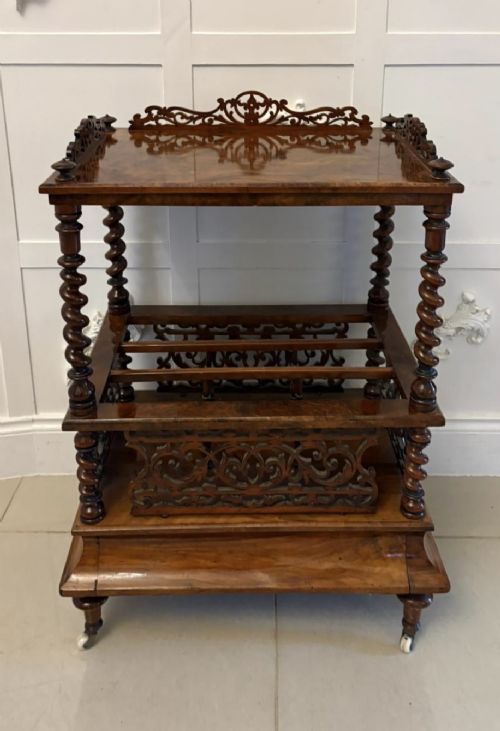
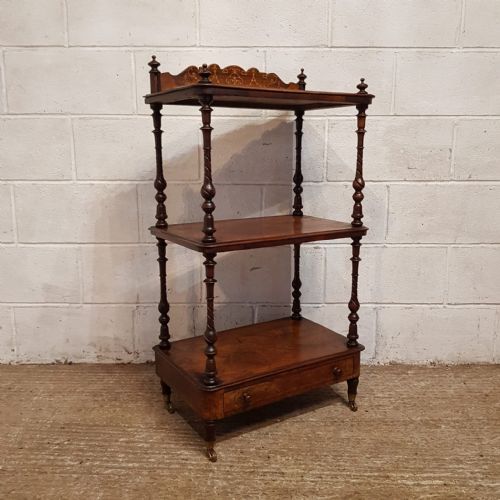
- A piece of open shelving furniture with multiple tiers used for displaying or storing books, sheet music, and decorative objects. They emerge across the Victorian era in mahogany and walnut.
- Castor
- A small wheel mounted in a swivel housing attached to the base of furniture legs to permit easy movement. Brass castors are typical on finer Regency and Victorian canterburys.
Antique Wooden Music Rack: Frequently Asked Questions
What is an antique wooden music rack used for?
These pieces served historically to organise sheet music, scores, and periodicals near a piano or seating area. Today, owners utilise them similarly to store magazines, books, and daily reading materials.
Their compartmented design keeps papers upright and tidy, combining practical storage with decorative period presence in a living space.
How do I distinguish a Regency music rack?
Regency pieces often display classical motifs such as lyre shapes, sabre legs, or elegant turned supports with brass castors. The timber selection typically favours rich mahogany with clean, classical lines.
Proportions tend to be refined and architectural, reflecting the design sensibilities of the early nineteenth century.
Where should I place a music rack at home?
These versatile stands suit placement beside a piano, armchair, or sofa where reading materials accumulate. Their compact footprints allow them to fit easily into corners or beside fireplaces.
Freestanding designs look best viewed from all angles, particularly when positioned away from walls to show off figured walnut or mahogany grain.
What is the difference between a canterbury and a music stand?
A canterbury is a low, multi-compartmented stand built primarily for horizontal or vertical storage of sheet music and magazines, often incorporating a drawer. A music stand is taller and designed to hold an open score at a readable angle for a musician.
Some exceptional items combine elements of both, serving as adjustable stands or music cabinets with integrated storage.