



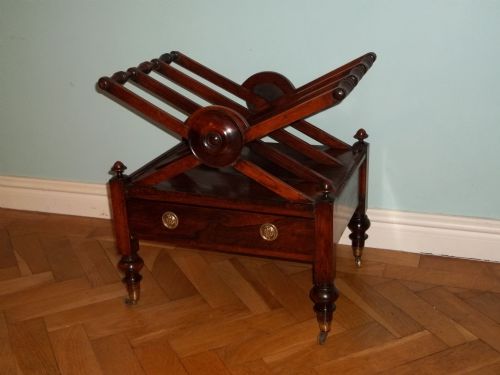


Victorian Rosewood Canterbury
These robust pieces of furniture, collected under the banner of the Victorian rosewood canterbury, offer a refined way to organise scores, periodicals and papers.
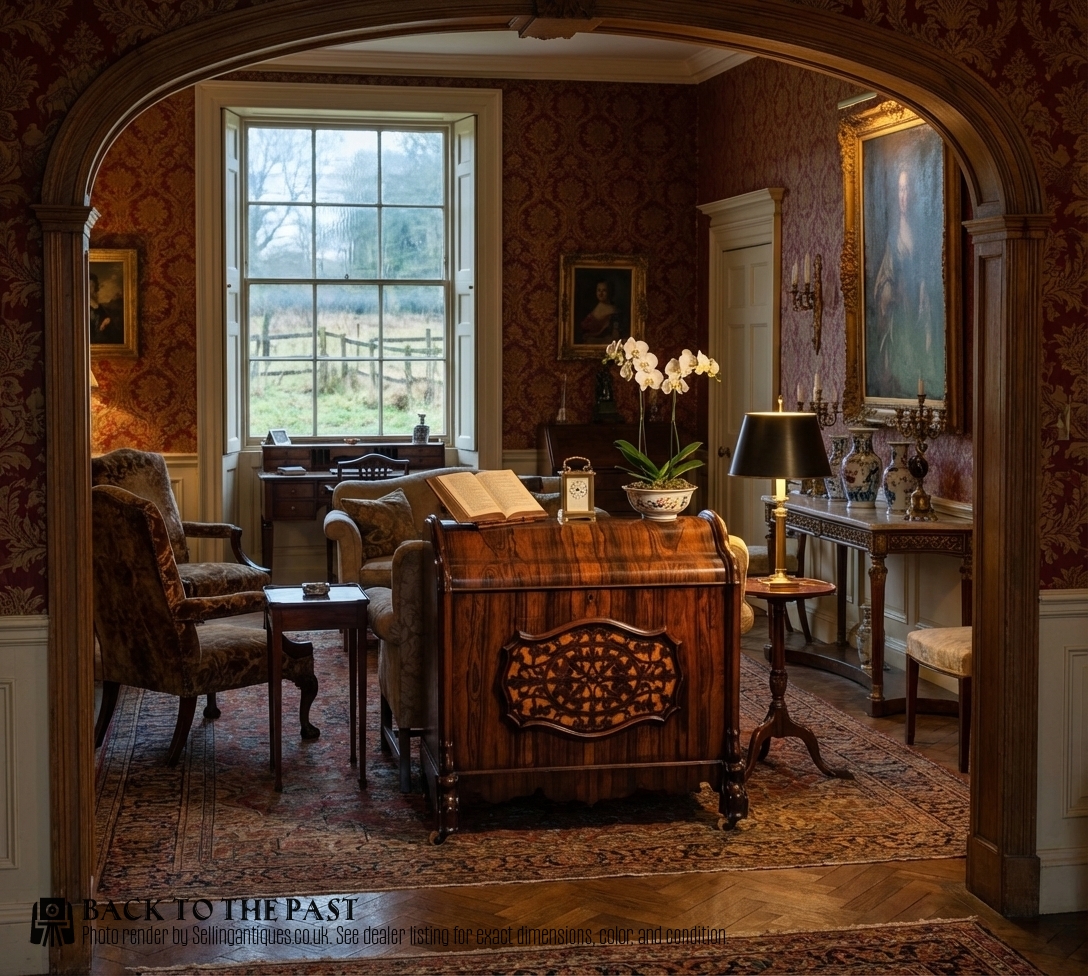
Victorian Rosewood Canterbury
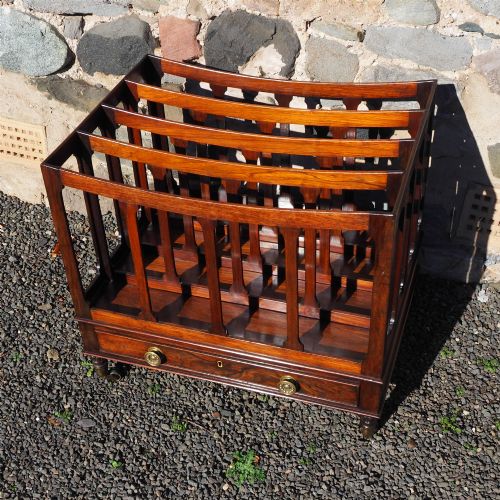
A victorian rosewood canterbury is typically encountered as an upright compartmented rack designed for sheet music, magazines or newspapers, frequently combined with a low drawer or a shelving tier below. The evidence shows these objects spanning periods from the Regency and William IV eras into late Victorian times, yet the core form remains consistent in its utility.
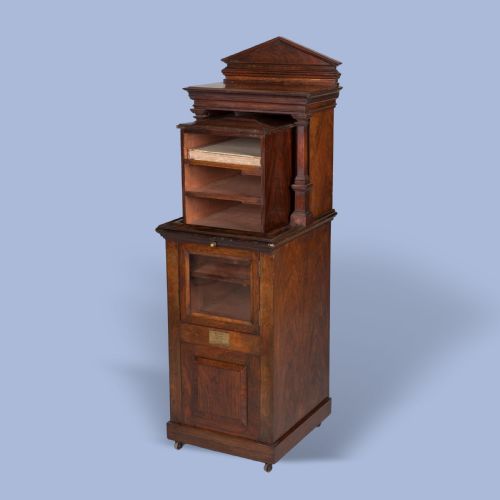
Makers adapted the design into multifaceted items such as combination whatnots, side cabinets and music stands, incorporating glass, ceramic elements and mirror panels. These variations reveal how the simple rack evolved into a prominent display piece for the Victorian parlour.
How they were made
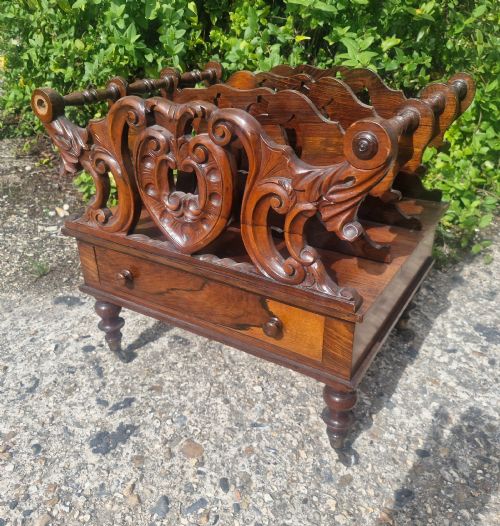
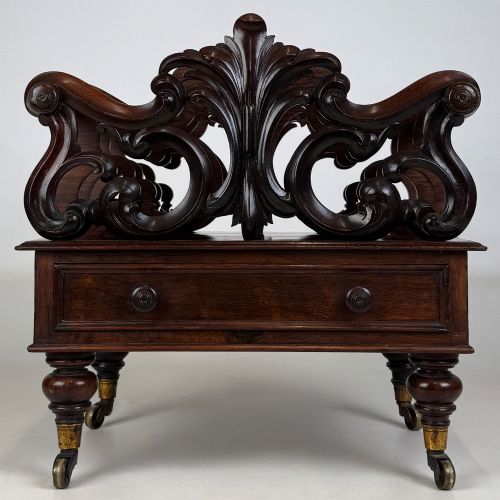
Constructed primarily from rich, dark rosewood, these stands often incorporate marquetry inlay, carved detailing and brass elements such as castors. Woodworkers also utilised goncalo Alves and mahogany in related cabinet pieces.
Makers integrated turned supports, fretwork and drawer mechanisms, mounting the larger multi-tier whatnots on castors to permit movement across carpeted drawing rooms.
Victorian Rosewood Canterbury Retail Price Guide 2026
Typical asking prices for victorian rosewood canterbury among the pieces listed under this phrase on Sellingantiques today, from the lower quarter to the upper quarter. They describe what is for sale here now, not the wider market.
Some versatile nineteenth-century iterations doubled as music cabinets, piano stools, or dressing boxes with enclosed storage.
What varies in quality
The distinction between standard examples and superior pieces rests on the crispness of the wood carving, the precision of the marquetry inlay and the integration of secondary woods. Heavier structural design and the presence of stamped castors separate ambitious workshop output from routine production.
Scale and multi-functional capability also dictate the standing of a piece, with combined music cabinets and layered whatnot stands representing a higher tier of cabinetmaking ambition.
The Victorian Rosewood Canterbury Glossary
- Canterbury
- A low, open-partitioned stand used originally for holding sheet music or books, typically fitted with carrying handles and small feet.
- Whatnot
- A set of open shelves standing one above another, used for displaying ornaments or holding books and papers.
- Marquetry inlay
- Decorative patterns formed by inserting pieces of contrasting wood or other materials into a veneer surface.
- Castors
- Small swivel wheels attached to the legs of furniture to facilitate easy rolling across the floor.
Victorian Rosewood Canterbury: Frequently Asked Questions
What is a victorian rosewood canterbury used for?
These pieces served primarily to hold sheet music, periodicals and newspapers close to the piano or seating area in the parlour.
Many examples include a base drawer for smaller items, while combination whatnot versions provided extra tiers for display.
How do I identify a william iv canterbury?
William IV period pieces generally display robust carved details and heavier proportions aligned with the design transition from Regency to early Victorian.
They rely heavily on dense rosewood grains and often incorporate sturdy turned supports.
What is the difference between a canterbury and a whatnot?
A traditional canterbury focuses on vertical partitioned sections designed specifically for holding loose papers or music folios upright.
A whatnot consists of multiple horizontal display shelves, though makers frequently combined both forms into a single hybrid piece.
Where should I place a rosewood canterbury at home?
These stands suit living spaces and music rooms where their partitioned racks can hold current magazines, books or sheet music.
Their finished rosewood surfaces allow them to stand freestanding near desks or seating groups.