
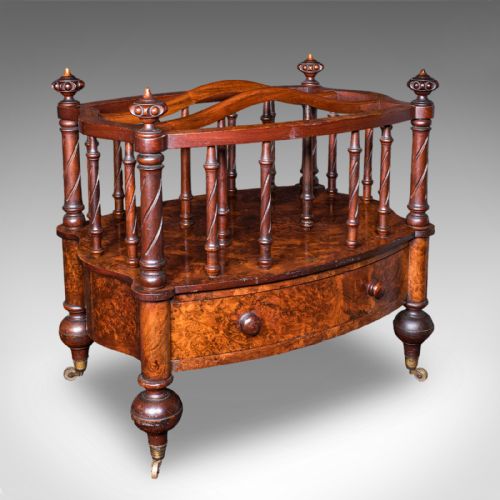


Victorian Canterbury with Drawer
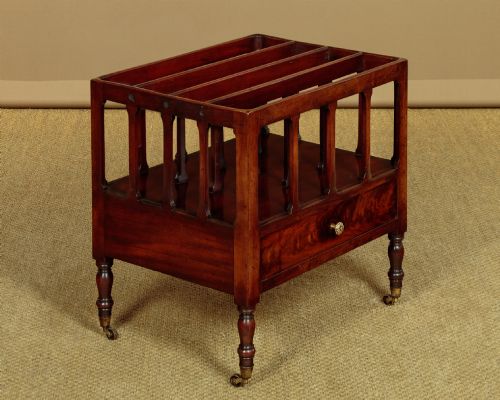
A Victorian canterbury with drawer combines partitioned vertical storage for folios or journals with a low under-tier drawer, offering both practical tidiness and refined nineteenth-century timberwork.
Victorian Canterbury with Drawer
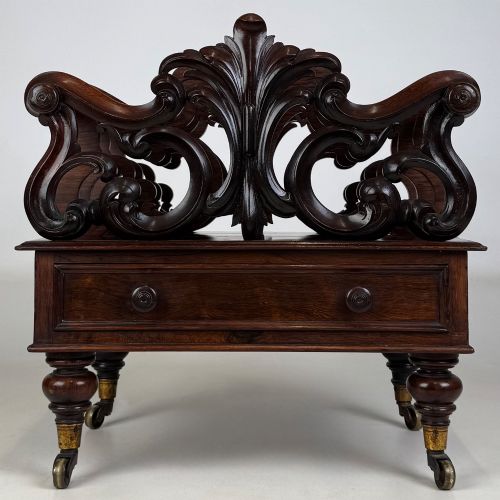
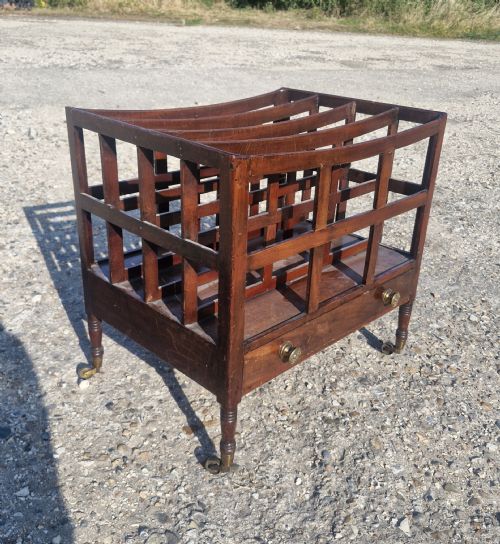
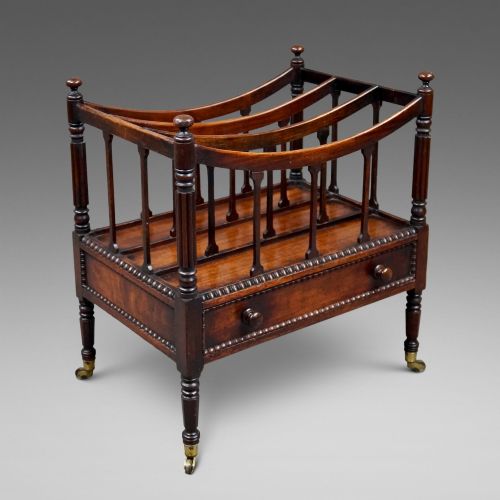
A Victorian canterbury with drawer sits firmly within nineteenth-century furniture production, appearing alongside Regency and Edwardian variants on this page. These pieces typically feature partitioned dividers above a shallow base drawer, serving originally to hold sheet music or periodicals.
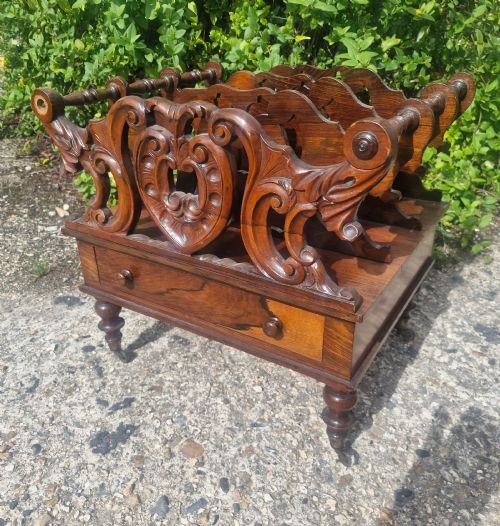
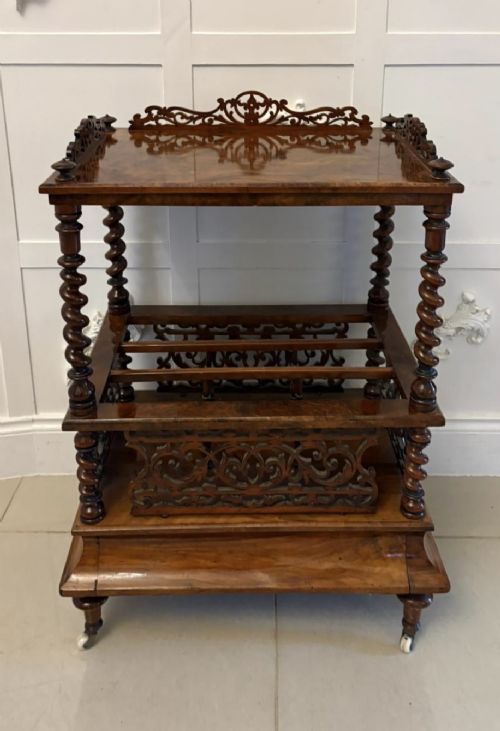
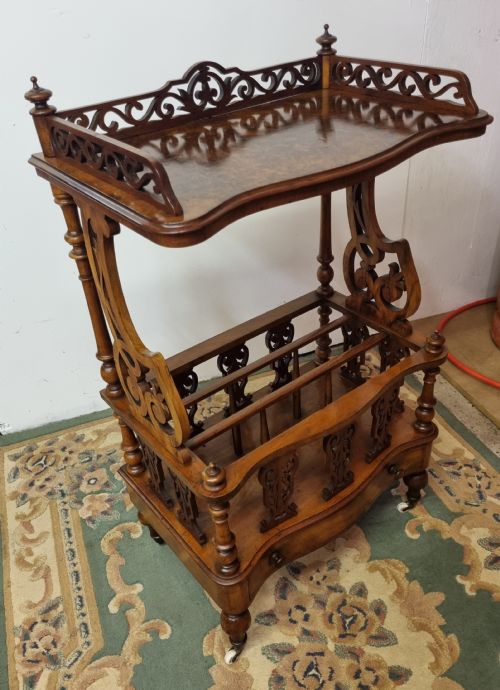
The materials span mahogany, rosewood, and walnut, frequently supplemented by burr walnut veneers, satinwood, and ebony stringing. Formations range from simple three-section open racks to elaborate what-nots combining shelf tiers with enclosed lower storage.
Construction and materials
Cabinetmakers utilised dense hardwoods such as mahogany, rosewood, and walnut as the primary structural chassis for these pieces. Turned uprights, pierced scroll divisions, and fretwork panels give the upper rack its characteristic compartmented shape.
The base drawer employs traditional dovetailed joinery and frequently rides upon brass castors. Inlaid details, ebony stringing, and applied foliate motifs embellish the exterior surfaces of walnut and burr walnut examples.
Current listings feature pieces constructed from mahogany, walnut, burr walnut, rosewood, and satinwood, spanning the Regency, Victorian, and Edwardian eras.
Distinctions in execution and finish
Finer examples distinguish themselves through the choice of timber figures, such as heavily figured burr walnut or richly grained rosewood veneers. The intricacy of the fretwork and the precision of the turned supports also separate standard workshop output from exceptional cabinet work.
Hardware details contribute significantly to the overall merit of a piece. Original brass castors, well-fitted drawer construction, and restrained use of marquetry or inlay indicate superior period manufacture.
Edwards and Roberts·Howard and Sons of London
The Victorian Canterbury with Drawer Glossary
- Canterbury
- A low stand fitted with upright divisions for holding music folios, newspapers, or books, usually incorporating a single drawer beneath. The name derives from the Archbishop of Canterbury, who supposedly commissioned the first such piece.
- What-not
- A set of open shelves standing one above another, used for displaying ornaments or books. In several listings, this form combines with the traditional canterbury rack and drawer.
- Fretwork
- Ornamental design executed by cutting patterns through thin timber panels. This technique appears on the vertical divisions of many nineteenth-century rack sections.
- Stringing
- Inlaid lines of contrasting timber used to outline panels or edges. This decorative method frequently appears on walnut and satinwood pieces.
- Castors
- Small swiveling wheels attached to the base legs for ease of movement. Many period examples retain their original brass mountings.
Victorian Canterbury with Drawer: Frequently Asked Questions
What were canterburys originally used for?
These pieces served primarily to store sheet music, folios, and periodicals near a piano or seating area in nineteenth-century drawing rooms. The upright partitions kept unbound papers organised and accessible.
The inclusion of a lower drawer provided additional enclosed space for smaller items such as writing implements or musical accessories.
How do I distinguish walnut from rosewood?
Walnut displays a rich brown tone with varied grain patterns and occasional burr figuring, whereas rosewood exhibits a darker, denser reddish-brown hue with pronounced dark streaks.
Over time, rosewood develops a deep, polished patina, while walnut maintains a slightly softer, warmer visual texture.
Where should I place a canterbury in a modern room?
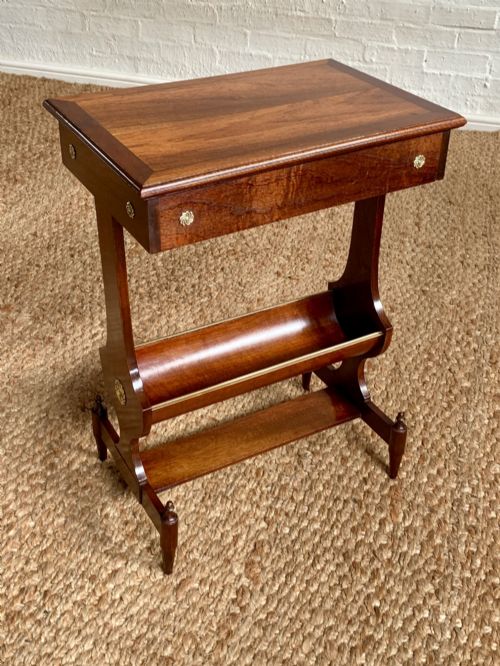
A canterbury functions well beside a sofa or armchair as a slim side table that also holds magazines and books. Its compact footprint allows it to fit into narrow spaces where traditional cabinetry might prove too bulky.
The open upper racks provide an airy silhouette that prevents the piece from feeling heavy in a contemporary interior.
How do I identify a Victorian piece from an Edwardian copy?
Victorian examples generally employ heavier timbers, hand-cut dovetails in the drawer boxes, and deeper natural patination on surfaces of walnut or mahogany. Edwardian reproductions often utilise lighter internal construction and slightly different finishing techniques.
Examining the secondary woods inside the drawer and the style of the turned uprights helps clarify the period of manufacture.